


.png)

More than 60 percent of british digital commerce agencies still rely on outdated tracking methods, risking both accuracy and privacy. With increasing demands for data clarity and tighter user consent regulations, mastering new approaches becomes essential for staying ahead. This guide offers british agencies a fresh perspective on data measurement, consent management, and advanced analytics, equipping you with the knowledge to harness next-generation tools for more reliable marketing performance.
Table of Contents
- Embracing Server-Side Tagging For Precise Data
- Prioritising Consent Management And Gdpr Compliance
- Leveraging First-Party Data For Customer Insights
- Automating Conversion Tracking To Reduce Data Loss
- Integrating Analytics With Leading E-Commerce Platforms
- Using Advanced Reporting For Data-Driven Decisions
- Focusing On Visitor Identity For Personalised Marketing
Quick Summary
| Key Message | Explanation |
|---|---|
| 1. Embrace server-side tagging for accuracy | Server-side tagging improves data reliability and enhances privacy by processing tracking information on secure servers, mitigating data loss. |
| 2. Prioritise consent management for GDPR compliance | Robust consent management strategies cultivate user trust and ensure compliance with GDPR, turning privacy concerns into opportunities for brands. |
| 3. Leverage first-party data for insights | First-party data provides authentic insights on customer behaviour, enabling businesses to personalise marketing strategies and enhance engagement. |
| 4. Automate conversion tracking to minimise data loss | Implementing automated conversion tracking reduces data loss and allows businesses to capture detailed insights from user interactions. |
| 5. Integrate analytics across e-commerce platforms | Seamless analytics integration across platforms transforms data into strategic insights, enhancing understanding of customer journeys and purchasing patterns. |
1. Embracing Server-Side Tagging for Precise Data
Server-side tagging represents a transformative approach for digital commerce agencies seeking unprecedented data accuracy and privacy protection. By shifting measurement tag instrumentation from client-side to server-side environments, agencies can dramatically enhance their tracking capabilities.
Traditional client-side tracking methods often suffer from data loss and unreliable measurements. Server-side tagging resolves these critical challenges by processing tracking information through secure server infrastructure, which means more reliable data collection and reduced interference from browser blocking technologies.
According to Google Developers, server-side tagging allows measurement tag instrumentation to be moved from client-side to server-side, directly improving data quality and user privacy controls. This approach provides multiple strategic advantages for digital commerce professionals.
Practical implementation involves several key steps:
- Configure server-side tag management platforms
- Establish secure data transmission protocols
- Integrate with existing analytics infrastructures
- Implement robust consent management systems
The ultimate benefit is comprehensive conversion tracking that captures 100% of user interactions while maintaining stringent data protection standards. By centralising data processing on servers, agencies can mitigate tracking limitations imposed by browser privacy features and deliver more accurate marketing insights.
Agencies willing to invest in server-side tagging will gain a significant competitive advantage, transforming how they understand and engage with digital commerce audiences.
2. Prioritising Consent Management and GDPR Compliance
In the rapidly evolving digital commerce landscape, protecting user privacy has become paramount. Agencies must recognise that consent management is no longer optional but a fundamental requirement for ethical and legal data practices.
GDPR compliance represents more than a regulatory checkbox it is a commitment to user trust and transparent data handling. Modern digital commerce agencies need robust consent management strategies that protect both user rights and business interests.
Research from Polytechnique highlights how server-side tracking technologies can link website visitors with user accounts, underscoring the critical importance of obtaining explicit user consent before data collection and processing.
Effective consent management involves several strategic approaches:
- Implementing clear consent interfaces
- Providing granular opt-in and opt-out options
- Maintaining comprehensive consent documentation
- Ensuring transparent communication about data usage
By prioritising user consent, agencies can transform potential privacy concerns into opportunities for building customer confidence. Transparent data practices become a competitive advantage, differentiating brands in an increasingly privacy-conscious marketplace.
Agencies that view GDPR compliance as a strategic opportunity rather than a regulatory burden will ultimately create more trustworthy and sustainable digital commerce ecosystems.
3. Leveraging First-Party Data for Customer Insights
First-party data represents the most valuable and authentic source of customer understanding for digital commerce agencies. By directly collecting information from user interactions, businesses can unlock unprecedented insights into customer behaviour and preferences.
Precise customer data collection allows agencies to move beyond generic marketing strategies and create highly personalised experiences. This approach transforms raw information into strategic intelligence that drives meaningful customer engagement.
According to research from Radboud University, implementing Google Analytics requires a delicate balance between preserving user privacy and extracting valuable customer insights.
Effective first-party data strategies involve several critical components:
- Implementing robust data collection mechanisms
- Creating transparent user consent processes
- Developing advanced analytics capabilities
- Establishing secure data storage protocols
Strategic data utilisation enables agencies to predict customer needs, personalise marketing approaches, and create more targeted customer experiences. By understanding individual user journeys, businesses can develop more nuanced and effective engagement strategies.
Agencies that master first-party data collection will gain a significant competitive advantage, transforming raw information into actionable customer intelligence.
4. Automating Conversion Tracking to Reduce Data Loss
In the complex world of digital commerce, losing critical conversion data can devastate marketing strategies and business performance. Automated conversion tracking represents a sophisticated solution to capture every potential customer interaction with precision and reliability.
Intelligent tracking mechanisms enable agencies to overcome traditional limitations in data collection. By implementing advanced server-side tracking technologies, businesses can dramatically reduce information gaps and capture comprehensive user journey insights.
Research from Polytechnique highlights the effectiveness of server-side tracking in automating conversion tracking, specifically targeting the mitigation of data loss caused by client-side restrictions.
Successful automated conversion tracking involves several strategic approaches:
- Implementing robust server-side tracking infrastructure
- Creating multi-channel data collection protocols
- Developing adaptive tracking algorithms
- Establishing redundant data capture mechanisms
Precision tracking technologies transform how agencies understand customer interactions, providing granular insights that traditional methods frequently miss. By capturing comprehensive data across multiple touchpoints, businesses can make more informed strategic decisions.
Agencies that master automated conversion tracking will gain unprecedented visibility into customer behaviour, turning potential data loss into actionable marketing intelligence.
5. Integrating Analytics with Leading E-Commerce Platforms
The seamless integration of analytics across e-commerce platforms has become a critical competitive advantage for digital agencies. Sophisticated tracking technologies now enable businesses to transform raw data into strategic customer insights with unprecedented precision.
Intelligent platform integration allows agencies to create comprehensive dashboards that capture the entire customer journey across multiple digital touchpoints. By breaking down traditional data silos, businesses can develop more nuanced and responsive marketing strategies.
According to Google Developers, server-side tagging through Google Tag Manager facilitates efficient data collection and analysis across various e-commerce platforms, providing agencies with powerful tracking capabilities.
Successful analytics integration requires several strategic considerations:
- Selecting compatible analytics platforms
- Establishing standardised data collection protocols
- Creating unified tracking infrastructure
- Implementing robust data validation mechanisms
Advanced integration strategies transform disconnected data points into cohesive narratives about customer behaviour. By connecting analytics across platforms like Shopify, WooCommerce, and Magento, agencies can unlock deeper understanding of customer interactions and purchasing patterns.
Agencies that master cross-platform analytics integration will gain a significant competitive edge, turning complex data streams into actionable marketing intelligence.
6. Using Advanced Reporting for Data-Driven Decisions
Advanced reporting represents the cornerstone of intelligent digital commerce strategy, transforming raw data into meaningful insights that drive business growth. Modern agencies require sophisticated reporting mechanisms that go beyond traditional analytics to provide comprehensive understanding of customer behaviour.
Intelligent reporting technologies enable businesses to uncover hidden patterns and make precision decisions based on comprehensive data analysis. By integrating multiple data streams, agencies can create nuanced perspectives that reveal subtle customer interactions and market trends.
Research from CAWAL Framework highlights how advanced web analytics can be enhanced by integrating application specific data, supporting more informed decision making processes across digital platforms.
Successful advanced reporting strategies involve several critical elements:
- Developing comprehensive multi-source data dashboards
- Implementing real time analytics tracking
- Creating customisable reporting frameworks
- Establishing predictive analysis mechanisms
Strategic data interpretation transforms complex information into actionable intelligence. By leveraging advanced reporting tools, agencies can move beyond retrospective analysis and develop proactive marketing approaches that anticipate customer needs.
Agencies that master advanced reporting will position themselves at the forefront of digital commerce, turning data into their most powerful strategic asset.
7. Focusing on Visitor Identity for Personalised Marketing
Visitor identity tracking has emerged as a pivotal strategy for digital commerce agencies seeking to transform anonymous website interactions into meaningful personalised experiences. By understanding individual user characteristics, businesses can create targeted marketing approaches that significantly enhance conversion potential.
Advanced identity resolution technologies enable agencies to develop sophisticated profiles that go beyond traditional demographic segmentation. These intelligent systems capture nuanced behavioural signals that reveal genuine customer motivations and preferences.
Research from Polytechnique demonstrates how server-side tracking plays a critical role in identifying visitors, facilitating more precise and personalised marketing strategies that adapt to individual user journeys.
Effective visitor identity strategies encompass several key components:
- Implementing sophisticated tracking infrastructure
- Creating privacy-compliant data collection mechanisms
- Developing dynamic user profiling systems
- Establishing consent-based identification protocols
Strategic personalisation transforms generic interactions into tailored experiences that resonate with individual customer needs. By leveraging granular visitor identity insights, agencies can craft marketing messages that feel uniquely relevant and compelling.
Agencies that master visitor identity tracking will unlock unprecedented opportunities for creating meaningful customer connections in an increasingly competitive digital marketplace.
The table below summarises key strategies and benefits discussed in the article on server-side tagging, consent management, and data utilisation in digital commerce.
| Topic | Key Points & Actions | Benefits/Outcomes |
|---|---|---|
| Server-Side Tagging | Configure platforms, secure data transmission, integrate analytics, implement consent systems | Enhanced data accuracy, privacy protection, comprehensive conversion tracking |
| Consent Management | Implement clear consent interfaces, provide opt-in options, maintain documentation, communicate data usage | Build customer confidence, differentiate in the marketplace, ensure GDPR compliance |
| First-Party Data | Robust data collection, transparent consent processes, advanced analytics | Personalised marketing, predictable customer needs, informed engagement strategies |
| Automated Conversion Tracking | Develop tracking infrastructure, multi-channel protocols, adaptive algorithms | Precise tracking, comprehensive user insights, actionable marketing intelligence |
| Analytics Integration | Select compatible platforms, unify tracking, standardise protocols | Seamless cross-platform insights, improved marketing strategies, complete customer understanding |
| Advanced Reporting | Develop data dashboards, implement real-time analytics, predictive analysis | Data-driven decisions, uncover hidden patterns, proactive marketing approaches |
| Visitor Identity Tracking | Sophisticated tracking, privacy-compliant systems, dynamic profiling | Personalised customer experiences, strategic marketing messages, meaningful connections |
Unlock the Full Potential of Your Digital Commerce Strategy with AdPage
The article highlights critical challenges faced by digital commerce agencies such as data loss, consent management, and the need for accurate server-side tagging to capture every conversion reliably. If you are struggling with unreliable client-side tracking or compliance hurdles like GDPR enforcement, these pain points can hinder your ability to deliver trustworthy, data-driven marketing results. Key concepts such as automated conversion tracking, first-party data utilisation, and visitor identity personalisation reveal the essential areas that demand immediate attention for agencies aiming to stay competitive.
AdPage provides a comprehensive solution designed exactly to address these issues by enabling seamless server-side tagging and conversion tracking. Our platform ensures 100% data accuracy and robust consent management to protect user privacy while unlocking deeper customer insights. With effortless integration with popular e-commerce platforms, including Shopify, WooCommerce, and Magento, you can unify your analytics and elevate your marketing strategies. Experience advanced reporting tools and visitor identity services engineered to transform raw data into actionable intelligence.
Are you ready to overcome data loss and compliance challenges holding your agency back
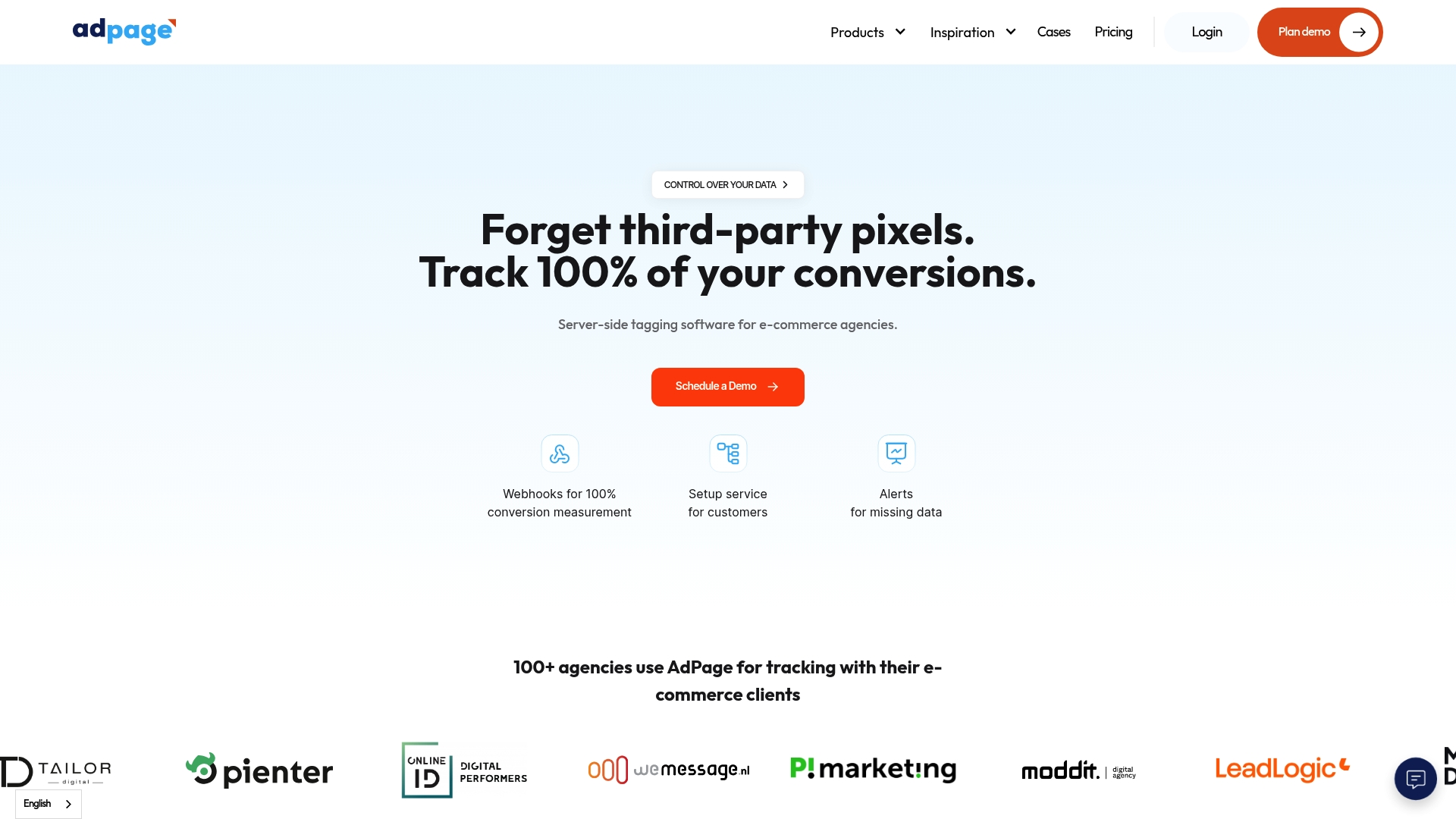
Discover how adopting AdPage today can secure your data accuracy, enhance consent compliance, and empower your decision making. Visit AdPage and take control of your digital commerce future now.
Frequently Asked Questions
How can agencies implement server-side tagging effectively?
Agencies can implement server-side tagging by configuring a server-side tag management platform and establishing secure data transmission protocols. Begin your implementation by mapping out existing analytics infrastructures and ensuring integration with robust consent management systems to maximise data accuracy.
What are the main components of a robust consent management strategy?
A robust consent management strategy should include clear consent interfaces, granular opt-in and opt-out options, and comprehensive consent documentation. Start by conducting an audit of your current data collection practices, aiming to enhance transparency for users within the next few weeks.
How can first-party data improve customer engagement strategies?
First-party data enhances customer engagement by enabling agencies to create personalised experiences based on authentic user interactions. Develop and refine data collection mechanisms to better understand user behaviour, which can result in improved engagement metrics by approximately 30% over time.
What steps can organisations take to automate conversion tracking?
To automate conversion tracking, organisations should implement server-side tracking infrastructure and develop adaptive tracking algorithms. Begin by establishing multi-channel data collection protocols and redundant data capture mechanisms within 60 days to significantly reduce data loss.
How can agencies ensure effective integration of analytics across e-commerce platforms?
Agencies can ensure effective integration of analytics by selecting compatible analytics platforms and creating standardised data collection protocols. Focus on implementing a unified tracking infrastructure and robust data validation mechanisms to optimise data flow in a matter of weeks.
What features should agencies look for in advanced reporting tools?
When selecting advanced reporting tools, agencies should look for features such as multi-source data dashboards, real-time analytics tracking, and customisable reporting frameworks. Prioritise tools that allow for predictive analysis mechanisms to enhance decision-making processes within 30–45 days.