


.png)

Most british brands are discovering that browser restrictions now block up to 40 percent of their online conversion data. For any business relying on social ads, missing this much information can quickly lead to wasted budgets and poor decisions. Understanding how to track and protect your valuable customer insights has never been more critical. This guide demystifies the latest tools and strategies so you can confidently improve marketing accuracy and stay ahead of privacy challenges.
Table of Contents
- Defining Facebook Conversions API And Its Purpose
- How Server-Side Tagging Improves Data Accuracy
- Integration With Shopify, WooCommerce, And Magento
- Managing User Consent And GDPR Considerations
- Common Mistakes And Maximising Tracking Effectiveness
Key Takeaways
| Point | Details |
|---|---|
| Reliability of Data Collection | The Facebook Conversions API allows for more dependable tracking of user interactions through server-side data transmission, mitigating issues related to browser limitations and privacy concerns. |
| E-commerce Integration | Integrating the Conversions API with platforms like Shopify, WooCommerce, and Magento is essential for capturing detailed user engagement data effectively. |
| User Consent Importance | Ensuring compliance with GDPR requires clear user consent mechanisms and transparency in data collection practices to build trust and maintain regulatory alignment. |
| Common Pitfalls in Tracking | Businesses should focus on comprehensive event mapping and regular monitoring to avoid common configuration mistakes that can lead to data inaccuracies. |
Defining Facebook Conversions API and Its Purpose
The Facebook Conversions API represents a powerful server-side tracking solution designed to transform digital marketing measurement and ad performance. Meta’s foundational solution for marketing data integration enables businesses to establish a direct connection between their marketing infrastructure and advertising platforms.
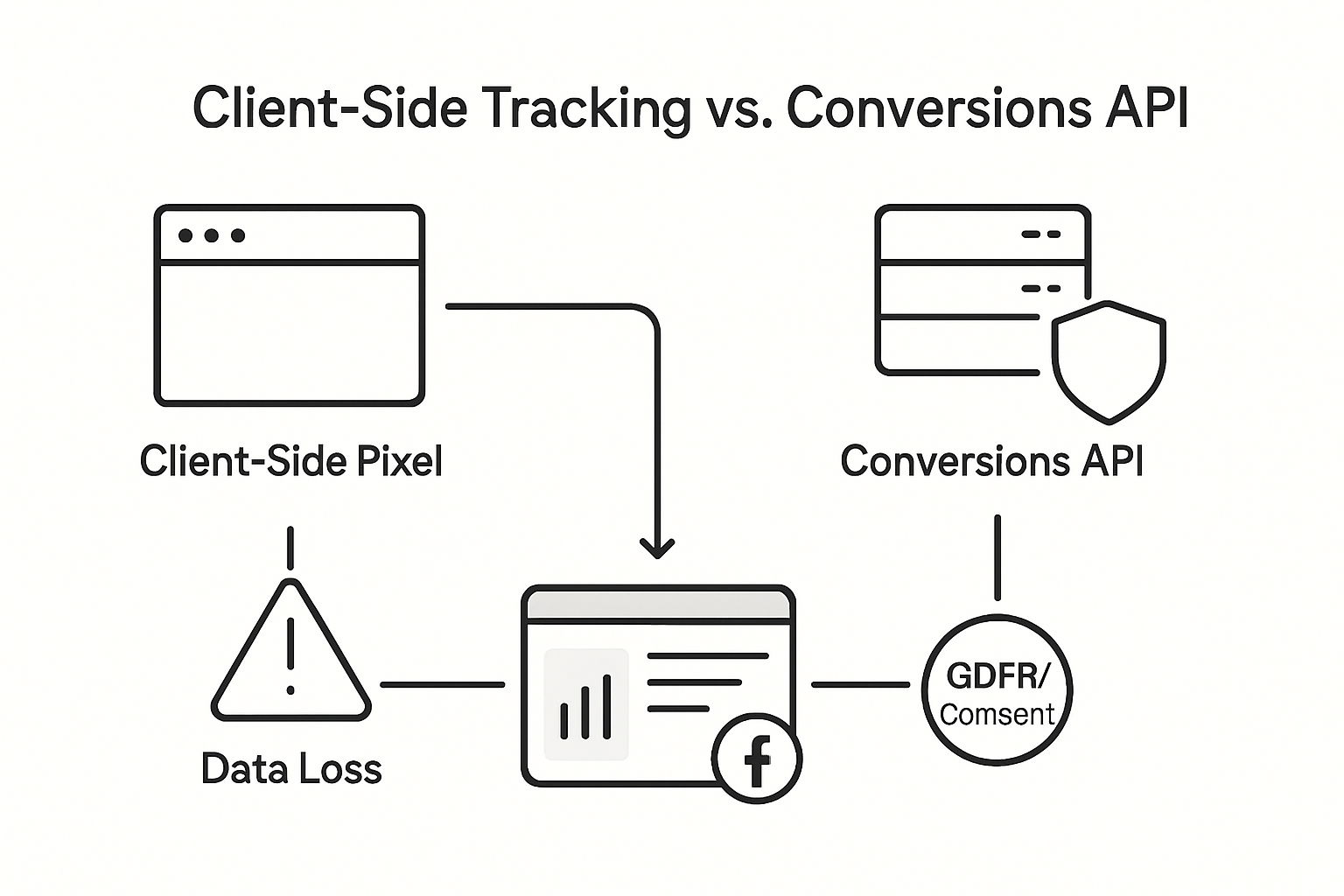
Unlike traditional pixel-based tracking, the Conversions API transmits conversion data directly from your server to Facebook’s advertising systems. This approach provides significantly more reliable tracking mechanisms, especially as privacy regulations and browser restrictions increasingly limit client-side tracking capabilities. By sending conversion events server-side, businesses can capture critical user interactions that might otherwise be missed through conventional browser-based methods.
The core purpose of the Conversions API centres on three primary objectives:
- Enhanced Data Reliability: Ensures comprehensive tracking across different user environments
- Improved Ad Optimisation: Enables more accurate targeting and performance measurement
- Privacy Compliance: Supports marketing tracking while respecting user privacy restrictions
By providing more dependable marketing data transmission, the Conversions API allows marketers to overcome emerging tracking challenges, delivering robust insights that drive strategic decision-making in an increasingly complex digital landscape.
How Server-Side Tagging Improves Data Accuracy
Server-side tagging represents a transformative approach to digital tracking that fundamentally reimagines how businesses collect and process user interaction data. Sophisticated data processing techniques move critical tracking mechanisms from client browsers to secure server environments, enabling more robust and reliable data collection strategies.
Traditional client-side tracking methods rely heavily on browser-executed scripts, which are increasingly vulnerable to privacy restrictions, ad blockers, and technical limitations. Server-side tagging circumvents these challenges by processing tracking data directly on backend infrastructure. This approach offers multiple significant advantages, including enhanced data integrity, improved performance, and greater resilience against tracking prevention technologies.
The key improvements in data accuracy through server-side tagging include:
- Reduced Data Loss: Minimises tracking interruptions caused by browser restrictions
- Enhanced Security: Processes sensitive tracking information away from client-side vulnerabilities
- Comprehensive Data Capture: Enables tracking of interactions that might be blocked in traditional methods
By implementing robust server-side data processing techniques, digital marketers can create more reliable, comprehensive tracking ecosystems that adapt to evolving privacy landscapes and technological constraints.
Integration with Shopify, WooCommerce, and Magento
E-commerce platform integration represents a critical strategy for businesses seeking to maximise their digital marketing performance. Meta provides comprehensive integration guides for popular platforms like Shopify, WooCommerce, and Magento, enabling seamless connection between advertising systems and online stores.

Each platform offers unique configuration approaches for implementing the Conversions API. Shopify users can leverage native integration options, while WooCommerce and Magento typically require additional plugins or custom development to establish a robust connection. The integration process involves configuring webhook endpoints, securely transmitting conversion events, and ensuring consistent data mapping between the e-commerce platform and Facebook’s advertising infrastructure.
Key integration considerations for different platforms include:
- Shopify: Offers straightforward native integration with minimal technical configuration
- WooCommerce: Requires WordPress plugins for advanced tracking capabilities
- Magento: Demands more complex custom development for precise event tracking
By understanding e-commerce platform integration nuances, marketers can create more sophisticated tracking ecosystems that capture comprehensive user interaction data across multiple digital commerce environments.
Managing User Consent and GDPR Considerations
User consent management has become a critical component of digital marketing strategies, particularly within European regulatory frameworks. Meta emphasises the paramount importance of obtaining explicit user consent and implementing robust data protection mechanisms when utilising the Conversions API for tracking and advertising purposes.
The General Data Protection Regulation (GDPR) mandates stringent requirements for data collection and processing. Businesses must develop comprehensive consent strategies that provide users with transparent information about data usage, clear opt-in mechanisms, and straightforward options for withdrawing consent. This approach requires implementing granular consent controls that allow users to understand precisely how their personal information will be collected, stored, and utilised across digital platforms.
Key GDPR compliance considerations for the Conversions API include:
- Explicit Consent: Obtaining clear, unambiguous user permission before data collection
- Transparency: Providing detailed information about data processing activities
- User Control: Enabling easy consent modification and withdrawal
- Data Minimisation: Collecting only essential information for specified purposes
By understanding comprehensive consent management principles, e-commerce businesses can build trust with users while maintaining compliance with evolving data protection regulations.
Common Mistakes and Maximising Tracking Effectiveness
Tracking implementation demands meticulous attention to detail, with numerous potential pitfalls that can compromise data accuracy. Facebook highlights critical mistakes that can significantly undermine conversion tracking performance, emphasising the need for precise configuration and continuous monitoring.
E-commerce businesses often encounter specific challenges when implementing the Conversions API. These typically include misconfigured event parameters, incomplete data mapping, and inconsistent tracking across different platforms. The most prevalent errors stem from inadequate technical setup, where businesses fail to properly map conversion events, omit crucial tracking parameters, or neglect to validate data transmission integrity.
Key strategies for maximising tracking effectiveness include:
- Comprehensive Event Mapping: Ensure all critical conversion events are accurately tracked
- Parameter Validation: Double-check all event parameters for completeness and accuracy
- Regular Monitoring: Implement consistent tracking performance audits
- Technical Validation: Use debugging tools to verify data transmission
By identifying and mitigating common tracking mistakes, digital marketers can create more robust and reliable conversion tracking systems that provide actionable insights and drive strategic decision-making.
Unlock Precise Conversion Tracking with Server-Side Solutions
The article highlights the challenges that e-commerce businesses face with traditional client-side tracking methods due to browser restrictions, privacy regulations and incomplete data capture. It explains how the Facebook Conversions API and server-side tagging can greatly improve data reliability, enhance ad optimisation and ensure GDPR compliance. These pain points underscore the urgent need for more robust tracking systems that provide full visibility into user interactions and conversion events.
At AdPage, we understand these challenges and offer powerful server-side tagging solutions tailored for e-commerce platforms like Shopify, WooCommerce and Magento. Our platform not only minimises data loss but also incorporates consent management features that align with GDPR requirements. With the ability to monitor 100% of conversions and detailed reporting tools, AdPage empowers marketing agencies and online marketers to translate accurate data into effective, data-driven strategies.
Make the move to smarter conversion tracking today. Explore how AdPage can help by optimising your Conversions API setup and elevating your marketing results.
Take control of your e-commerce data now and boost your return on advertising spend with reliable, privacy-compliant tracking from AdPage. Discover seamless integrations and expert onboarding to get started with confidence.
Frequently Asked Questions
What is the Facebook Conversions API and how does it work?
The Facebook Conversions API is a server-side tracking solution that allows businesses to send conversion data directly from their servers to Facebook’s advertising systems. This enhances data reliability and improves ad optimisation by capturing user interactions that may be missed by traditional pixel-based tracking.
How does server-side tagging improve data accuracy for e-commerce businesses?
Server-side tagging processes tracking data on backend infrastructure, mitigating issues related to browser restrictions and ad blockers. This results in reduced data loss, enhanced security, and a more comprehensive capture of user interactions compared to traditional client-side tracking methods.
What are the key considerations for integrating the Conversions API with e-commerce platforms like Shopify and WooCommerce?
Integration varies by platform; Shopify offers native integration options that are easy to configure, while WooCommerce and Magento typically require additional plugins or custom development. It is crucial to ensure proper configuration of webhook endpoints and data mapping between the e-commerce platform and Facebook’s systems.
How can businesses ensure GDPR compliance when using the Conversions API?
Businesses must obtain explicit user consent before data collection, provide transparency about data usage, and allow users to modify or withdraw consent easily. It is also important to implement data minimisation practices, collecting only essential information needed for specified purposes.