


.png)

Most british e-commerce businesses now face stricter privacy rules and rising technical barriers that can cause over 25 percent data loss in traditional tracking. When your marketing relies on shaky numbers, it is impossible to make confident decisions, manage consent, or stay ahead of competitors. This guide explains the latest advances shaping digital measurement, from server-side tagging to AI-driven personalisation, showing how british companies can sharpen tracking, protect privacy, and uncover smarter ways to grow.
Table of Contents
- 1. Rise of Server-Side Tagging for Better Conversion Tracking
- 2. Enhanced Consent Management for Data Compliance
- 3. Advanced Identity Tracking to Reduce Data Loss
- 4. Seamless Integration Across Popular E-Commerce Platforms
- 5. Real-Time Reporting for Faster Marketing Decisions
- 6. AI-Driven Personalisation to Improve Conversion Rates
- 7. Privacy-First Analytics Meeting Growing GDPR Demands
Quick Summary
| Key Message | Explanation |
|---|---|
| 1. Embrace Server-Side Tagging | Improve conversion tracking by processing tags on the server, ensuring better accuracy and data reliability. |
| 2. Implement Robust Consent Management | Develop clear consent strategies to meet legal requirements and build customer trust in data handling practices. |
| 3. Leverage Advanced Identity Tracking | Use sophisticated tracking methods to reduce data loss and enhance understanding of user behaviour across platforms. |
| 4. Prioritise Seamless Platform Integration | Integrate tracking across e-commerce platforms to unify data collection and improve insights, aiding business growth. |
| 5. Adopt Real-Time Reporting | Enable faster decision-making with immediate access to performance metrics and campaign insights, enhancing marketing agility. |
1. Rise of Server-Side Tagging for Better Conversion Tracking
Server-side tracking represents a game-changing approach that transforms how e-commerce businesses collect and analyse user data. By processing tracking tags on the server instead of the user’s browser, this method dramatically improves conversion tracking accuracy.
Traditional browser-based tracking methods often suffer from significant data loss due to ad blockers, browser privacy settings, and technical limitations. Server-side tracking eliminates these challenges by moving critical data processing behind the scenes, ensuring more reliable and comprehensive data collection.
Understanding this shift is crucial. According to Unic, server-side tracking enhances data quality by processing tracking tags on a server rather than in the user’s browser, leading to improved conversion tracking accuracy.
Practically, this means your marketing team can now capture user interactions more precisely. Key advantages include:
- Improved tracking accuracy across multiple devices
- Better protection against ad blocking technologies
- Enhanced data privacy and compliance with regulations
- More reliable conversion attribution
For marketers and e-commerce professionals, implementing server-side tracking represents a strategic move towards more robust, reliable data analytics. Learn more about conversion tracking strategies to fully leverage this powerful approach.
2. Enhanced Consent Management for Data Compliance
In the rapidly evolving digital marketplace, consent management has become a critical cornerstone for e-commerce businesses seeking to build trust and maintain legal compliance. As privacy regulations continue to tighten, understanding and implementing robust consent strategies is no longer optional but essential.
Data privacy regulations like GDPR and CCPA have transformed how businesses collect, process, and store user data. These frameworks demand transparent, explicit user consent before any data tracking or processing can occur. For e-commerce platforms, this means developing sophisticated consent management systems that protect user rights while maintaining effective marketing capabilities.
Key components of effective consent management include:
- Clear and granular consent options
- Transparent communication about data usage
- Easy opt-out mechanisms
- Comprehensive user preference controls
Successful implementation requires more than just technical compliance. You need to create a user experience that feels respectful and empowering. Learn more about consent management strategies that can help your business navigate these complex requirements.
Businesses that prioritize user consent will not only avoid potential legal penalties but also build stronger, more trusting relationships with their customers. By treating user data as a privilege rather than a right, you demonstrate a commitment to ethical digital practices that can significantly enhance your brand reputation.
3. Advanced Identity Tracking to Reduce Data Loss
Advanced identity tracking represents a sophisticated approach to understanding user behaviour across complex digital ecosystems. By creating more nuanced connections between user interactions, e-commerce businesses can dramatically reduce data loss and improve marketing precision.
Research indicates that advanced tracking methods can infer sophisticated relationships between advertisers and online platforms. According to research from arXiv, these methods can enhance data collection and reduce information gaps in online advertising ecosystems.
Key strategies for advanced identity tracking include:
- Cross platform user identification
- Semantic retrieval of user interactions
- Machine learning based pattern recognition
- Privacy compliant tracking mechanisms
Personalized tracking systems go beyond traditional cookie based methods. As studies from arXiv suggest, semantic retrieval systems can improve identity tracking while simultaneously enhancing user experience.
Explore our guide to understanding visitor identity tracking to discover how your business can implement these cutting edge strategies. By embracing advanced identity tracking, you can transform raw data into meaningful insights that drive strategic decision making and improve overall marketing effectiveness.
4. Seamless Integration Across Popular E-Commerce Platforms
In the dynamic world of digital commerce, platform integration has become a critical success factor for businesses seeking to streamline operations and maximize data insights. The ability to seamlessly connect tracking systems across multiple e-commerce platforms is no longer a luxury but a necessity for modern online businesses.
Platform integration strategies allow businesses to create unified data ecosystems that transcend individual platform limitations. According to research from Growth Academy, server-side tracking can be effectively integrated across various e-commerce platforms, significantly enhancing data collection and analytics capabilities.
Key considerations for successful platform integration include:
- Compatibility with major platforms like Shopify, WooCommerce, and Magento
- Robust API connection mechanisms
- Standardized data mapping protocols
- Flexible tracking infrastructure
Explore our comprehensive guide to e-commerce platform integration to understand how your business can create more intelligent, interconnected digital ecosystems. By prioritizing seamless integration, you can transform fragmented data streams into powerful strategic insights that drive meaningful business growth.
5. Real-Time Reporting for Faster Marketing Decisions
In the high-speed digital marketplace, waiting for traditional reporting cycles can cost businesses critical competitive advantages. Real-time reporting has emerged as a game changing strategy that empowers marketing teams to make instantaneous, data driven decisions.
According to research from Tracking Case Study, server-side tagging enables near real-time key performance indicator evaluation, allowing for faster and more informed marketing decisions. This approach transforms how businesses understand and respond to customer interactions.
Strategic advantages of real-time reporting include:
- Immediate performance visibility
- Rapid campaign adjustment capabilities
- Precise audience segmentation
- Instant return on investment tracking
By leveraging advanced analytics infrastructure, businesses can transition from reactive to proactive marketing strategies. Discover top analytics reporting tools for success and unlock your team’s potential to make lightning-fast, intelligent marketing decisions that drive significant growth.
6. AI-Driven Personalisation to Improve Conversion Rates
In the competitive digital marketplace, generic marketing approaches are quickly becoming obsolete. AI-driven personalization represents a transformative strategy that allows businesses to create highly targeted, individual customer experiences at unprecedented scale.
Research from arXiv reveals that AI-driven personalization in recommender systems can unbias conversion rate predictions, leading to significantly improved performance in e-commerce platforms. By leveraging advanced machine learning algorithms, businesses can develop incredibly precise customer interaction models.
Key elements of effective AI personalization include:
- Dynamic product recommendations
- Individual customer journey mapping
- Predictive behavior analysis
- Contextual content adaptation
Advanced embedding learning techniques enable semantic retrieval that goes beyond traditional segmentation methods. Explore personalization strategies for e-commerce success to understand how intelligent systems can transform your customer engagement approach and drive substantial conversion rate improvements.
7. Privacy-First Analytics Meeting Growing GDPR Demands
As digital privacy regulations become increasingly stringent, e-commerce businesses must pivot towards privacy-first analytics that protect user data while maintaining robust marketing insights. The era of unchecked data collection is over businesses must now prioritize transparency and user consent.
Privacy-first analytics represents a fundamental shift from traditional tracking methods. This approach requires businesses to collect and process data with explicit user permission, ensuring complete compliance with regulations like GDPR and maintaining customer trust.
Critical components of privacy-first analytics include:
- Transparent data collection practices
- User consent management systems
- Anonymized data processing
- Granular privacy control mechanisms
Learn more about understanding the impact of GDPR on analytics to navigate these complex regulatory landscapes. By embracing privacy-first strategies, businesses can transform data protection from a compliance burden into a competitive advantage that builds genuine customer confidence.
Below is a comprehensive table summarizing the strategies and advantages discussed throughout the article.
| Topic | Description | Key Considerations |
|---|---|---|
| Server-Side Tracking | Processes tracking tags on server, improving conversion tracking accuracy. | Enhanced data quality, protection from ad blockers, and privacy compliance. |
| Consent Management | Strategic approach to ensure compliance with regulations like GDPR and CCPA. | Offers clear consent options, easy opt-out, and transparent communication. |
| Advanced Identity Tracking | Improves marketing precision by understanding user behaviour across platforms. | Utilises cross platform identification and machine learning for better connectivity. |
| Platform Integration | Ensures seamless tracking systems across e-commerce platforms. | Requires compatibility with major platforms and robust APIs. |
| Real-Time Reporting | Enables instantaneous data-driven decisions by evaluating performance metrics. | Provides immediate visibility and rapid campaign adjustments. |
| AI-Driven Personalisation | Creates targeted customer experiences with AI and machine learning. | Focuses on dynamic recommendations and predictive behaviour analysis. |
| Privacy-First Analytics | Aligns data practices with strict privacy laws like GDPR. | Involves transparent data collection and user consent management. |
Unlock Your E-Commerce Potential with Accurate Conversion Tracking
The article outlines key challenges such as data loss from traditional analytics and the critical need for robust server-side tagging and consent management to stay ahead in 2025. Your business goals should include reducing tracking inaccuracies caused by ad blockers and browser restrictions while maintaining strict GDPR compliance and building customer trust. By addressing these pain points with advanced identity tracking and seamless platform integration, you enhance data quality and marketing decisions.
AdPage offers an all-in-one platform tailored to tackle these exact challenges. With tools that monitor 100% of conversions, ensure privacy-first data handling, and provide smooth integration with Shopify, WooCommerce, and Magento, you can finally gain full visibility on your marketing efforts and confidently improve conversion rates.
Take charge of your e-commerce success today with server-side tagging solutions designed for marketing agencies and online marketers.
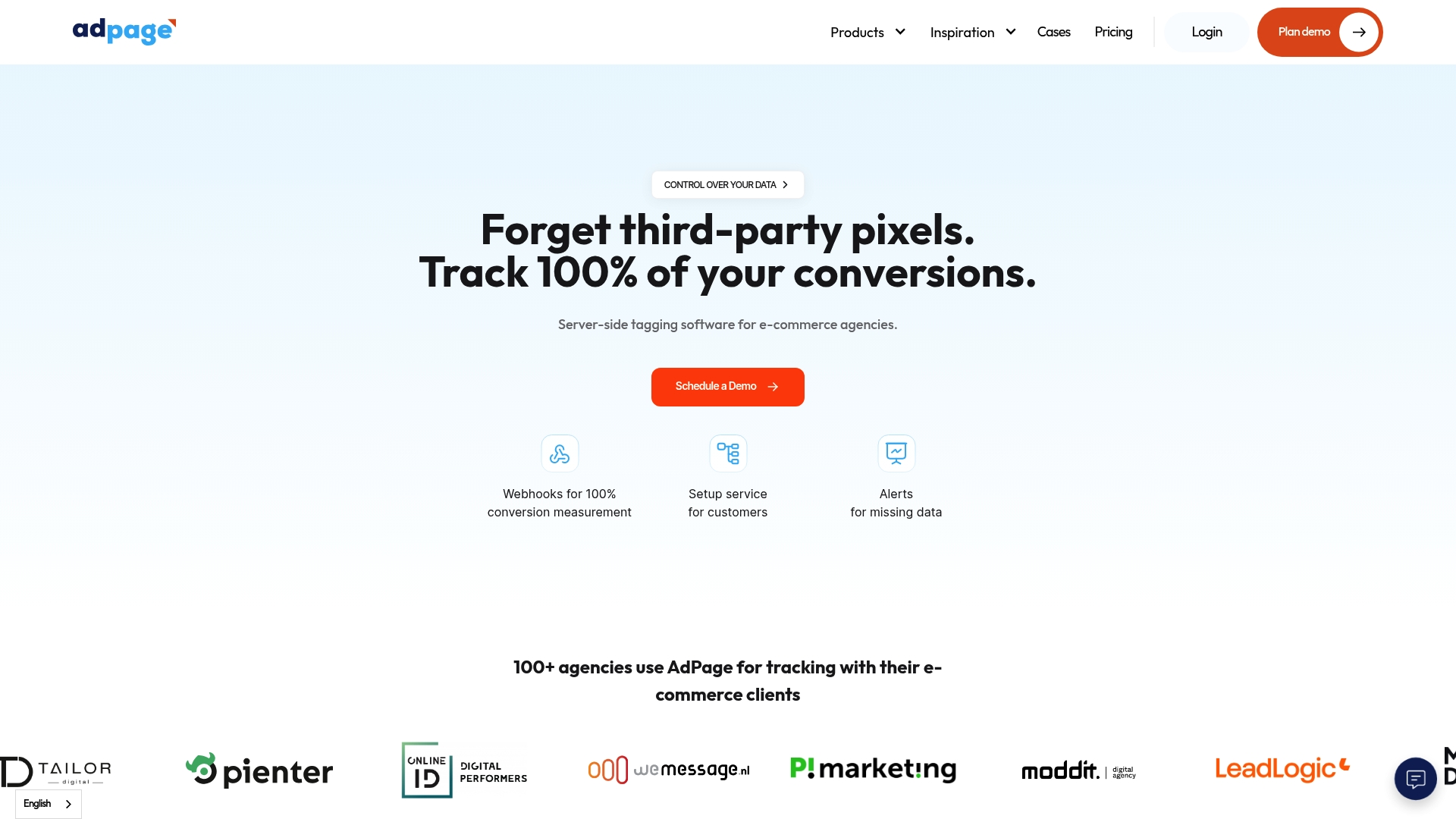
Want to eliminate data loss and master consent management while elevating your tracking systems? Visit AdPage now to start optimising your conversion tracking strategy and enjoy comprehensive onboarding support for a smooth transition. Learn more about how to implement conversion tracking strategies and build trustworthy customer relationships with effective consent management.
Frequently Asked Questions
What are the key advantages of server-side tagging in e-commerce?
Server-side tagging improves conversion tracking accuracy by processing data on the server rather than in the user’s browser. Implement server-side tagging to enhance tracking reliability and gain more comprehensive insights into user interactions.
How can businesses implement effective consent management strategies?
Effective consent management involves providing clear options for users to grant or deny consent for data tracking. Develop a user-friendly consent management system within your platform to meet privacy regulations and build trust with your customers.
What are advanced identity tracking methods and why are they important?
Advanced identity tracking methods create nuanced connections between user interactions, significantly reducing data loss. Implement cross-platform user identification to enhance understanding of customer behaviour and improve marketing precision.
How can real-time reporting benefit my marketing strategies?
Real-time reporting enables immediate performance visibility, allowing businesses to make faster and more informed marketing decisions. Build an analytics infrastructure that supports real-time reporting to enhance your campaign adjustment capabilities and improve audience targeting.
What role does AI-driven personalisation play in boosting conversion rates?
AI-driven personalisation allows businesses to create highly targeted customer experiences based on individual preferences and behaviours. Explore how dynamic product recommendations and predictive behaviour analysis can enhance user engagement and increase your conversion rates significantly.