


.png)

Tracking every conversion on your clients’ e-commerce sites can feel impossible with all the blockers, privacy rules, and complex systems involved. Even a single missed touchpoint can leave your marketing reports incomplete and your recommendations less effective. If you are tired of guessing why campaign performance drops, you are not alone.
You do not have to settle for patchy data or compliance headaches. This list covers real-world solutions that cover everything from server-side tagging to advanced reporting and onboarding strategies. Each approach is designed to give your agency accurate, privacy-compliant insights so you can take clear action and show real results.
Get ready to discover proven ways to capture more conversion data, protect client trust, and finally see the full value of your marketing efforts. Each point brings practical changes you can use right now.
Table of Contents
- 1. Implementing Server-Side Tagging For Full Conversion Coverage
- 2. Mastering Consent Management To Ensure Data Compliance
- 3. Integrating Seamless Tracking With E-Commerce Platforms
- 4. Utilising Advanced Reporting Tools For Actionable Insights
- 5. Enhancing Visitor Identity For Accurate Attribution
- 6. Onboarding Support And Continuous Optimisation For Agencies
Quick Summary
| Key Insight | Explanation |
|---|---|
| 1. Implement Server-Side Tagging | This approach captures all conversions, ensuring no missed data due to ad blockers or privacy regulations. |
| 2. Master Consent Management | Automating consent collection builds trust and ensures compliance with privacy laws, allowing effective data use. |
| 3. Integrate E-commerce Platforms | Seamless integration of tracking systems provides accurate real-time data and improves attribution accuracy. |
| 4. Use Advanced Reporting Tools | Unified dashboards offer clear insights that guide client decisions and improve marketing strategy effectiveness. |
| 5. Prioritise Strong Onboarding Processes | Structured onboarding fosters client trust, clearly defining success metrics and reducing churn risk. |
1. Implementing Server-Side Tagging for Full Conversion Coverage
Server-side tagging is transforming how marketing agencies track conversions. Instead of relying on browser-based tracking, tags fire from your own server, capturing data directly from the source.
Traditional client-side tracking has significant limitations. Ad blockers, cookie restrictions, and privacy regulations block valuable conversion signals. These gaps leave you missing real customer actions and ROI data.
Why server-side tagging matters for your agency:
- Captures conversions that client-side methods miss entirely
- Ensures compliance with GDPR and evolving privacy laws
- Provides first-party data collection independent of third-party cookies
- Gives you complete control over what data you share with platforms
- Maintains tracking accuracy as Apple and Google phase out tracking cookies
Server-side tagging fundamentals explain how this approach overcomes ad blockers and cookie restrictions by collecting data directly from servers rather than user browsers.
Your clients rely on conversion data to make decisions. When tracking breaks down, they lose visibility into what actually drives sales. Server-side tagging restores that visibility.
For e-commerce agencies especially, this shift is non-negotiable. Your clients’ Shopify stores, WooCommerce sites, and Magento platforms generate transaction data that needs accurate tracking. Server-side solutions ensure every purchase, every cart abandonment, every user interaction flows into your analytics systems cleanly.
Server-side tagging captures conversions that traditional methods miss, giving you complete visibility into customer actions and campaign performance.
Implementing this approach requires three key steps:
- Set up a server container to receive and process conversion data
- Configure your e-commerce platform to send transaction information to your server
- Route cleaned, verified data to your analytics and advertising platforms
The complexity varies depending on your current setup. Some platforms offer straightforward integrations. Others require custom development. Starting with a clear audit of your current data loss points helps prioritise where to focus.
Key benefits your clients will notice:
- 100% conversion coverage instead of 70-85% with client-side tracking
- Faster data delivery to advertising platforms
- Better attribution accuracy across multiple touchpoints
- Reduced dependency on fragile third-party cookies
Pro tip: Begin with your highest-value clients or accounts where data loss is costing real revenue. Implement server-side tagging there first, measure the improvement in conversion visibility and accuracy, then expand to other accounts using that proof of performance.
2. Mastering Consent Management to Ensure Data Compliance
Consent management is no longer optional for marketing agencies. Global privacy laws like GDPR and CCPA demand that you collect, store, and manage user consent transparently and legally.
Without proper consent management, your agency risks hefty fines and damaged client relationships. More importantly, you lose the trust that underpins long-term customer relationships and sustainable growth.
Why consent management transforms your agency:
- Ensures compliance with regulations across all markets your clients operate in
- Automates consent collection so you capture it at the right moments
- Provides audit trails documenting exactly what users consented to and when
- Reduces legal exposure and costly compliance violations
- Builds customer trust through transparency and control
Consent management platforms enable organisations to collect and process consent in ways that uphold user privacy whilst allowing marketing efforts to continue effectively.
Consent isn’t just a checkbox anymore. Users expect granular control over their data. They want to know what you collect, why you collect it, and how you use it. When you provide this transparency, conversion rates often improve because customers feel safer engaging with your brand.
Your clients’ e-commerce platforms need this badly. Shopify stores, WooCommerce sites, and Magento implementations generate mountains of customer data. Without clear consent, that data is legally unusable for personalisation, retargeting, or analytics.
Proper consent management transforms compliance from a burden into a trust-building opportunity that actually enhances customer relationships and conversion performance.
Implementing consent management involves four core steps:
- Audit all data collection points across your clients’ digital properties
- Deploy a consent platform that manages preferences across devices and channels
- Configure your analytics and marketing tools to respect consent choices
- Document consent collection and retention for regulatory inspections
What makes consent management effective:
- Clear, plain language that customers actually understand
- Easy-to-find consent options without hidden or pre-ticked boxes
- Real-time updates when customers change their preferences
- Integration with all your marketing and analytics tools
- Regular audits to ensure ongoing compliance as regulations evolve
Many agencies struggle here because they treat consent as a legal problem rather than a customer experience opportunity. The best performers use consent data to segment audiences, personalise communications, and actually improve conversion rates for consenting users.
Pro tip: Start by auditing which of your clients’ campaigns are currently running without proper consent documentation, then prioritise implementing consent management for those accounts first where compliance gaps pose the greatest legal and financial risk.
3. Integrating Seamless Tracking with E-commerce Platforms
E-commerce tracking without platform integration is like flying blind. Your clients’ Shopify, WooCommerce, and Magento stores generate valuable conversion data that needs to flow directly into your tracking systems automatically.
When tracking isn’t properly integrated, data silos form. Your CRM knows one story, your analytics tool knows another, and your advertising platform sees something completely different. This fragmentation destroys campaign accuracy and wastes marketing spend.
Why seamless integration matters:
- Real-time synchronisation of order data across all systems
- Automatic inventory updates preventing overselling and customer disappointment
- Accurate conversion attribution across the entire customer journey
- Elimination of manual data entry and spreadsheet chaos
- Complete visibility into which campaigns actually drive sales
E-commerce integration platforms connect multiple business systems such as CRMs, ERPs, payment gateways, and marketing tools, enabling seamless data synchronisation across your entire marketing ecosystem.
Without integration, your conversion tracking becomes unreliable. A customer purchases on the client’s store, but that transaction takes hours to reach your analytics platform. By then, you’ve already optimised yesterday’s campaigns based on incomplete data. Attribution gets messy. ROI calculations become guesses.
Proper integration means purchase data arrives instantly. You know within minutes which ads, keywords, and campaigns drove that sale. You can adjust bidding strategies immediately. You understand exactly which customer segments convert best.
Seamless platform integration transforms fragmented data into unified intelligence that powers faster decisions and better campaign performance.
Implementing integration requires these key components:
- Select integration tools compatible with your clients’ e-commerce platforms
- Map data fields between systems so information flows correctly
- Configure real-time syncing rather than batch uploads
- Test the entire workflow before going live with client campaigns
- Monitor data flow continuously to catch sync failures early
What seamless integration enables:
- Automated order management without manual intervention
- Customer communication triggered by purchase events
- Inventory optimisation based on real sales data
- Predictive analytics showing which products convert best
- Faster customer support responses with complete transaction history
- Accurate return on ad spend calculations
Your clients’ e-commerce success depends on data moving freely between systems. When you integrate tracking properly, conversion rates typically improve because you’re making decisions on accurate, real-time information rather than stale reports.
Pro tip: Audit your existing integrations to identify which client accounts have data sync delays or field mapping errors, then prioritise fixing those first where integration problems are costing the most lost conversion tracking data.
4. Utilising Advanced Reporting Tools for Actionable Insights
Reporting without insight is just noise. Your clients need clear, data-backed narratives showing exactly which campaigns drive conversions and which ones waste budget.
Traditional reports bury the story in spreadsheets. Numbers pile up without context. Your clients can’t see the patterns, trends, or opportunities hiding in the data. This confusion leads to poor decisions and wasted marketing spend.
Why advanced reporting transforms your agency:
- Unified dashboards aggregate data from all marketing channels in real time
- White-label reporting presents your agency as the expert to your clients
- Customisable reports show exactly what each client cares about most
- Automated alerts flag performance issues before they cost serious money
- Clear visualisations make complex data instantly understandable
Unified dashboards allow real-time performance monitoring across various marketing channels, enabling agencies to detect issues early and identify growth opportunities.
Without proper reporting tools, you’re stuck manually pulling data from Google Analytics, Facebook Ads Manager, email platforms, and conversion tracking systems. Hours disappear building reports that clients see once then ignore. Meanwhile, you miss critical insights buried across multiple platforms.
Advanced reporting tools do the heavy lifting automatically. Data flows in from all sources, gets organised intelligently, and presents insights your clients actually understand and act on. You spot conversion drops faster. You identify winning audiences before competitors do.
Advanced reporting transforms raw data into clear narratives that drive better client decisions and demonstrate genuine marketing value.
Key capabilities to prioritise in reporting tools:
- Real-time data updates so you’re always working with current information
- Customisable dashboards allowing each client to see their priorities
- Automated scheduling sending reports when clients want them
- Visual comparisons showing performance trends over time
- Segment analysis revealing which customer groups convert best
- ROI calculations proving marketing impact on revenue
What makes reporting actionable:
- Clear identification of top performing channels and campaigns
- Specific metrics linked to business objectives, not vanity metrics
- Trend analysis showing what’s improving and what’s declining
- Comparative data revealing how this month compares to last month
- Predictive indicators suggesting what comes next
- Recommended actions telling clients exactly what to do
Clients crave confidence. When you deliver reporting that clearly shows conversions increasing by 167% in a specific campaign, they trust your strategy. When reporting shows exactly which audience segments convert at highest rates, they approve budget increases confidently.
Pro tip: Build three standard report templates for your most common client types, then customise them monthly with actual client data so you can deliver insights faster whilst maintaining consistency across your agency portfolio.
5. Enhancing Visitor Identity for Accurate Attribution
You cannot optimise what you cannot measure. Without clear visitor identity across devices and channels, your attribution becomes guesswork and your budget allocation suffers.
Customers interact with your clients’ brands across multiple touchpoints. They see an ad on mobile, research on desktop, purchase on tablet. Traditional tracking treats these as separate visitors. You lose the complete picture of the customer journey.
Why visitor identity matters for attribution:
- Connects fragmented customer interactions into unified journeys
- Reveals which touchpoints actually influence conversions
- Prevents double-counting or misattributing conversions
- Enables accurate multi-touch attribution models
- Improves budget allocation decisions based on real influence
Accurate visitor identity resolution unifies fragmented data across multiple touchpoints, devices, and channels, enabling agencies to attribute conversions correctly and optimise marketing spend effectively.
Without proper identity resolution, your clients’ data looks like chaos. One customer appears as ten different visitors across devices. You cannot tell if search drove them or social did. Your attribution model assigns credit incorrectly. Budget flows toward channels that look better than they actually are.
When you enhance visitor identity, the fog clears. You see exactly which channels influence conversions. A customer who clicked social, then searched, then purchased gets proper credit to both channels. Your clients understand true ROI and allocate budget accordingly.
Unified visitor identity transforms fragmented data into clear attribution insights that drive smarter budget decisions and higher returns.
Building accurate visitor identity requires these steps:
- Implement consistent identification across all digital properties
- Use first-party data collection methods respecting privacy regulations
- Connect known users through login and registration data
- Apply identity resolution technology for anonymous visitors
- Test your attribution model against actual conversion data
- Refine continuously as customer behaviour evolves
How visitor identity improves your agency’s performance:
- Channel performance becomes measurable and comparable
- You identify undervalued channels driving conversions quietly
- Attribution accuracy improves by 40% plus compared to single-touch models
- Clients see genuine ROI instead of inflated metrics
- Budget recommendations gain credibility and get approved faster
- Multi-device customer journeys become visible and optimisable
Your e-commerce clients especially need this. A customer researches products on phone during lunch, adds items to cart on laptop at work, completes purchase on tablet at home. Without proper identity resolution, you think three different people bought one product. With it, you see one person’s journey across devices and understand every moment that influenced their purchase decision.
Pro tip: Audit your current attribution model by comparing what it credits to each channel against your actual customer survey data showing which touchpoint convinced them to buy, then adjust your model to match reality more closely.
6. Onboarding Support and Continuous Optimisation for Agencies
Onboarding is where client relationships are won or lost. A strong onboarding process sets clear expectations, builds trust, and creates momentum that carries through the entire partnership.
Most agencies rush onboarding. They get the client signed, hand over access credentials, and move on. Weeks later, confusion surfaces about what success looks like. Clients feel lost. Communication breaks down. Churn begins.
Why structured onboarding transforms your agency:
- Establishes clear success metrics so both parties agree on what matters
- Reduces time-to-value by streamlining information gathering
- Builds client confidence in your expertise and processes
- Prevents costly miscommunications later in the engagement
- Creates foundation for long-term, profitable relationships
- Enables data gathering needed for continuous optimisation
Effective onboarding in marketing agencies establishes clear expectations, defines success metrics, and aligns deliverables, which reduces churn and fosters long-term client relationships.
Your clients’ e-commerce success depends on proper implementation. They need to know exactly what tracking you’re setting up, which conversions you’re monitoring, and when they’ll see results. Without this clarity, they question your work and resist budget increases.
Structured onboarding also accelerates time-to-value. Instead of figuring things out slowly, you follow a proven workflow. Data flows correctly from day one. Tracking fires accurately. Reporting appears on schedule. Your client sees tangible results quickly and trusts your process.
Strong onboarding transforms new clients from uncertain to confident, setting the stage for continuous improvement and long-term profitability.
Your onboarding process should cover:
- Initial discovery call defining business goals and success metrics
- Technical audit assessing current tracking and data quality
- Implementation plan showing exactly what you’ll set up and when
- Training session ensuring client team understands new systems
- 30-day check-in reviewing initial performance and adjusting approach
- Monthly optimisation meetings sharing insights and improvements
What continuous optimisation requires:
- Regular access to performance data showing campaign results
- Scheduled review meetings with defined agendas
- Clear recommendations backed by data and client goals
- Rapid testing and iteration based on what’s working
- Documentation of changes so nothing gets lost
- Proactive alerts when performance drops significantly
Onboarding doesn’t end after day one. Real value comes from continuous optimisation. After implementation, you analyse results, identify opportunities, test improvements, and adjust strategy. Your clients see conversions increase month over month because you’re constantly refining.
Agencies that excel at this retain clients for years. Those that skip it lose clients within months. The difference is visible in your pipeline and revenue stability.
Pro tip: Create a standardised onboarding checklist with specific dates and deliverables, then automate reminders for each step so nothing falls through the cracks and every client gets the same high-quality experience regardless of which team member runs their onboarding.
Below is a comprehensive table summarising the key strategies and insights discussed throughout the article for improving conversion tracking, compliance, and efficiency within marketing agencies, especially in the e-commerce domain.
| Strategy | Implementation Steps | Key Benefits |
|---|---|---|
| Server-Side Tagging | Set up a server container, configuring platforms to send data to your server, ensuring data reliability before updating analytics. | Improves conversion tracking, compliance with privacy laws, enhances data accuracy, and is less reliant on browser changes. |
| Consent Management | Audit data collection points, use a consent platform, configure tools to respect preferences, and keep audit trails of consent records. | Ensures compliance with regulations and builds trust through transparent data handling, enhancing customer relationships and conversions. |
| E-commerce Platform Integration | Select compatible integration tools, map data fields, enable real-time syncing, and monitor synchronisation workflows regularly. | Enables accurate and timely data aggregation, improves customer relationships, and enhances decision-making. |
| Advanced Reporting Tools | Implement customisable dashboards, schedule automated reporting, and integrate data sources for real-time insights. | Provides clear performance metrics, increases client trust, and enables proactive campaign adjustments. |
| Visitor Identity Management | Utilise consistent identification mechanisms, employ first-party data, and integrate identity resolution technologies. | Enables accurate attribution, optimises campaign budgets, and provides visibility into customer behaviour. |
| Effective Onboarding Processes | Conduct initial assessments, establish clear success metrics, and maintain communication for continuous improvement. | Builds client confidence, improves relationships, and establishes strong foundations for future optimisation. |
Elevate Your Agency’s Conversion Tracking with AdPage Solutions
Marketing agencies face the challenge of achieving full conversion coverage while navigating client-side tracking limitations, data compliance, and fragmented e-commerce integrations. This article highlights crucial concepts like server-side tagging, consent management, and advanced reporting that marketing professionals must master to regain complete visibility of their clients’ campaigns and boost ROI effectively.
AdPage is designed precisely to solve these pain points by delivering an all-in-one platform that ensures 100% accurate conversion data collection. With AdPage’s seamless server-side tagging, you capture every transaction and user interaction without data loss caused by ad blockers or cookie restrictions. Its built-in consent management tool helps you stay compliant with GDPR and other privacy laws, building customer trust and improving campaign effectiveness. Plus, AdPage provides smooth integrations with Shopify, WooCommerce, Magento, and robust reporting tools to visualise actionable insights swiftly.
Transform your agency’s conversion tracking capabilities now and gain the confidence to deliver undeniable value to your e-commerce clients.
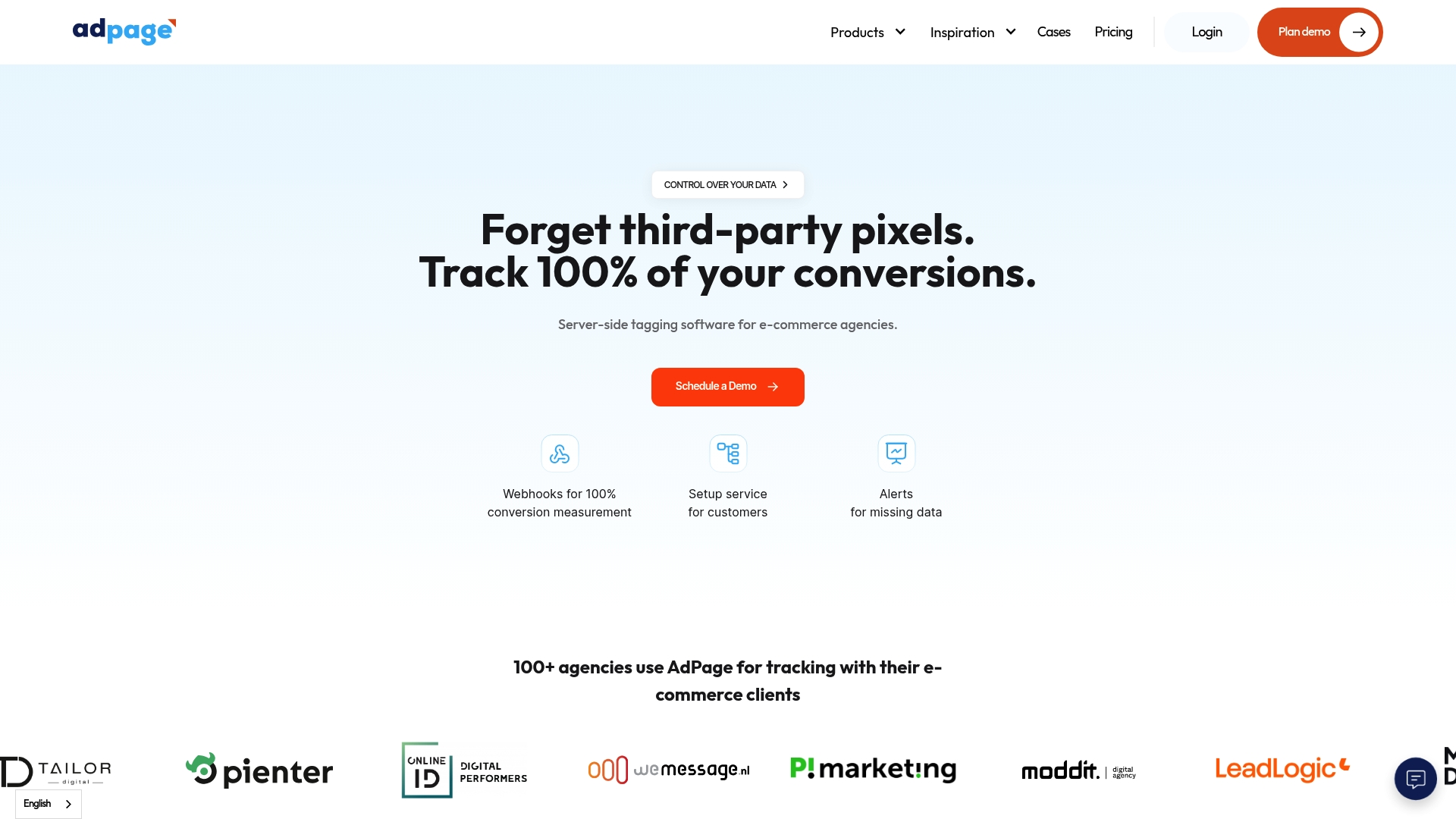
Explore how AdPage can future-proof your tracking infrastructure today by visiting AdPage. Start capturing every conversion with precision and compliance, giving your clients the data they truly deserve.
Frequently Asked Questions
What is server-side tagging and how can it help my marketing agency?
Server-side tagging is a method where conversion tracking occurs on your own server rather than relying on the user’s browser. This approach captures valuable data that traditional methods often miss, ensuring compliance with privacy laws and providing a clearer picture of customer actions. Implement server-side tagging to enhance conversion tracking accuracy within 30 days.
How can consent management improve client trust and compliance for my agency?
Effective consent management automates the process of collecting and managing user consent, helping your agency comply with privacy regulations. By providing transparency about data usage, clients are more likely to trust your agency, which can enhance conversion rates. Start implementing a consent management platform to ensure compliance and build customer trust quickly.
Why is seamless integration of e-commerce platforms important for tracking conversions?
Seamless integration connects your clients’ various marketing systems, allowing for real-time syncing of order and conversion data. This reduces the risk of data silos and inaccurate reporting, leading to better campaign decisions and improved ROI. Set up integrations for all systems within a month to optimise tracking and enhance data accuracy.
What key features should I look for in advanced reporting tools?
Advanced reporting tools should offer real-time data updates, customizable dashboards, and automated alerts to provide actionable insights. These features enable your agency to quickly identify performance trends and make informed decisions that can directly impact conversions. Evaluate reporting tools that include these capabilities to improve client reporting accuracy within 60 days.
How can enhancing visitor identity improve attribution accuracy for my clients?
By enhancing visitor identity resolution, you can connect customer interactions across different devices and channels. This helps in accurately attributing conversions to the correct touchpoints, allowing your agency to optimise marketing spend effectively. Start integrating visitor identity solutions to increase attribution accuracy by at least 40%.
What steps should my agency follow for effective client onboarding?
A structured onboarding process should include defining business goals, conducting a technical audit, and providing a clear implementation plan. This approach not only sets expectations but also accelerates the time-to-value for your clients, leading to a more successful partnership. Create an onboarding checklist and aim to complete initial steps within the first month.