


.png)

Facing unreliable conversion data after months of campaign optimisation can be frustrating for even the most experienced British or American agency teams. Accurate Facebook tracking is vital for refining advertising strategies and meeting strict European privacy rules. This guide reveals how advanced server-side tagging gives you more control over user data and helps your e-commerce clients achieve both precision and compliance, setting the stage for more confident performance decisions.
Table of Contents
- Defining Facebook Tracking And Key Concepts
- Client-side Versus Server-side Tagging
- How Facebook Tracking Works In 2026
- Gdpr, Consent, And Data Compliance Rules
- Common Risks And Integration Mistakes
- Future-proofing E-commerce Tracking Setups
Key Takeaways
| Point | Details |
|---|---|
| Understanding Facebook Tracking | Facebook tracking collects user interaction data through pixel tracking, conversion monitoring, and audience segmentation, enabling e-commerce businesses to optimise marketing strategies. |
| Client-side vs. Server-side Tagging | Server-side tagging improves data collection reliability and privacy compliance compared to traditional client-side methods, which are often blocked by browsers. |
| GDPR Compliance | E-commerce businesses must implement clear consent protocols for data collection to comply with the GDPR, ensuring transparency and user control over personal data. |
| Future-proofing Tracking Setups | Integrating advanced technologies like server-side tagging and AI can help businesses maintain accurate tracking capabilities amidst evolving digital and regulatory landscapes. |
Defining Facebook Tracking and Key Concepts
Facebook tracking represents a sophisticated digital measurement strategy enabling e-commerce businesses to capture comprehensive user interaction data across their advertising and marketing ecosystems. By integrating advanced tracking mechanisms, marketers gain insights into user behaviour, engagement patterns, and conversion potential through detailed web tracking metrics.
At its core, Facebook tracking involves collecting precise digital signals that map user journeys from initial advertisement exposure through to final purchase. These signals encompass multiple dimensions including user demographics, interaction timestamps, device information, and specific engagement metrics like clicks, views, and conversions. E-commerce professionals utilise these granular datapoints to refine targeting strategies, optimise advertising spend, and predict consumer purchasing behaviours with unprecedented accuracy.
Key tracking components include pixel tracking, conversion tracking, and audience segmentation tools. Pixel tracking allows businesses to place invisible tracking codes on websites, capturing user interactions and linking them back to specific Facebook advertising campaigns. Conversion tracking monitors specific actions such as product purchases, registration completions, or shopping cart additions, providing marketers with direct insights into campaign performance and return on investment.
Pro tip: Configure your Facebook pixel across multiple website pages to capture comprehensive user interaction data and maximise tracking precision.
Client-side Versus Server-side Tagging
The landscape of digital tracking technologies is fundamentally divided between client-side and server-side tagging approaches, each offering distinct methodologies for capturing user interaction data. Server-side tracking methods represent a sophisticated alternative to traditional client-side tracking, enabling more robust and privacy-compliant data collection strategies for e-commerce businesses.
Client-side tagging traditionally relies on browser-executed JavaScript pixels that collect user interactions directly within the user’s web browser. These tracking pixels execute scripts that transmit data about user behaviour, page views, and interaction events. However, this method has become increasingly problematic due to rising privacy regulations, browser tracking restrictions, and the implementation of advanced tracking prevention technologies by major web browsers.
Server-side tagging, conversely, shifts the data collection process away from the client’s browser to the website’s server infrastructure. This approach enables more precise tracking mechanisms that can bypass browser restrictions and provide more reliable data transmission. By routing tracking information through server endpoints, businesses can maintain more comprehensive user journey mappings while reducing the risk of data loss caused by browser-level blocking mechanisms.
Pro tip: Implement a hybrid tracking approach that combines both client-side and server-side methods to maximise data collection accuracy and resilience.
Here is a comparison of client-side and server-side tagging approaches for Facebook tracking:
| Aspect | Client-side Tagging | Server-side Tagging |
|---|---|---|
| Data Collection Point | User’s web browser | Website’s server infrastructure |
| Susceptibility to Ad Blockers | High, commonly blocked | Low, can bypass most blockers |
| Privacy Compliance | Lower, affected by browser rules | Higher, easier GDPR implementation |
| Data Accuracy | Can be impacted by browser limits | More reliable and consistent |
| Implementation Complexity | Easier, faster setup | More technical expertise required |
How Facebook Tracking Works in 2026
Facebook’s tracking ecosystem in 2026 represents a sophisticated convergence of advanced technologies designed to capture nuanced user interactions across digital platforms. Cross-platform tracking mechanisms now integrate multiple data sources to create comprehensive user profiles that transcend traditional browsing boundaries, enabling unprecedented insights into consumer behaviour.
The core of Facebook’s tracking infrastructure relies on a complex network of data collection technologies. Persistent cookies, URL parameters like FBCLID, and advanced pixel tracking work in concert to monitor user activities across websites and applications. By integrating artificial intelligence and machine learning algorithms, Facebook can reconstruct user journeys with remarkable precision, capturing detailed interaction signals such as engagement duration, click patterns, and contextual content preferences.

Moreover, Facebook’s algorithmic tracking has evolved to emphasise real-time personalisation and predictive analytics. The platform now captures granular user signals including watch time, comment sentiment, and micro-interactions to deliver hyper-targeted content and advertising experiences. This approach transforms tracking from a passive data collection method into an active mechanism for understanding and anticipating user needs across digital ecosystems.
Pro tip: Implement multi-layered consent mechanisms to provide users transparent control over their tracking preferences while maintaining data collection capabilities.
GDPR, Consent, and Data Compliance Rules
The evolving landscape of data privacy regulations has fundamentally transformed how businesses approach digital tracking and user consent. Consent management strategies have become critically important for e-commerce businesses seeking to maintain legal compliance while preserving effective marketing capabilities.
Under the General Data Protection Regulation (GDPR), organisations must navigate stringent requirements for processing personal data. The regulation mandates that consent must be freely given, specific, informed, and unambiguous. This means businesses cannot rely on pre-ticked boxes or assume consent through silence. Instead, users must take clear affirmative action to approve data collection, with explicit information about what data is being collected, how it will be used, and their rights to withdraw consent at any time.
For Facebook tracking specifically, e-commerce businesses must implement robust data compliance mechanisms that provide transparent user controls. This includes developing granular consent interfaces that allow users to understand and control their data sharing preferences. Businesses must maintain detailed records of user consent, ensuring that tracking technologies are applied only after receiving clear, documented permission from individual users.
Pro tip: Develop a comprehensive consent management framework that provides users with granular control over their data while maintaining clear, auditable consent records.
The table below highlights key GDPR consent requirements for Facebook tracking:
| Consent Requirement | Description | Business Impact |
|---|---|---|
| Affirmative Action | Users must opt in intentionally | Ensures lawful data collection |
| Specific Information | Clearly state what data is collected | Boosts transparency and trust |
| Right to Withdraw | Users can revoke consent at any time | Requires user-friendly process |
| Record-keeping | Store proof of each user’s consent | Essential for audits and fines |
Common Risks and Integration Mistakes
Facebook tracking for e-commerce businesses presents multiple complex challenges that can significantly undermine data accuracy and marketing performance. Common tracking mistakes often emerge from technical misconfiguration and inadequate understanding of pixel implementation strategies.
The most prevalent risks involve pixel misconfiguration and improper event tracking. E-commerce businesses frequently encounter challenges such as using incorrect pixel IDs, implementing overlapping tracking tags, and failing to properly segment audience data. These technical errors can lead to inflated advertising costs, distorted conversion metrics, and fundamentally unreliable marketing intelligence. Sophisticated tracking requires meticulous attention to configuration details, ensuring that each tracking element captures precise user interaction signals without creating redundant or conflicting data streams.
Additionally, businesses must develop robust integration strategies that account for cross-platform tracking complexities. This involves creating consistent tracking mechanisms across different digital touchpoints, managing consent protocols, and maintaining data integrity throughout the user journey. Organisations need to implement sophisticated validation processes that can detect and correct tracking anomalies in real-time, preventing data corruption and ensuring the reliability of marketing performance insights.
Pro tip: Conduct monthly comprehensive audits of your Facebook pixel configuration to identify and resolve potential tracking inconsistencies before they impact campaign performance.
Future-Proofing E-commerce Tracking Setups
The rapidly evolving digital landscape demands sophisticated strategies for setting up efficient tracking systems that can adapt to emerging technological and regulatory challenges. Future-proofing e-commerce tracking requires a holistic approach that integrates advanced technologies, privacy considerations, and flexible data management architectures.
Central to this approach is the adoption of server-side tagging and AI-powered personalization technologies. These advanced tracking mechanisms enable businesses to maintain robust data collection capabilities while navigating increasingly complex browser restrictions and privacy regulations. By implementing intelligent tracking infrastructures that can dynamically adjust to changing digital ecosystems, e-commerce businesses can ensure continuous, accurate user interaction monitoring without compromising user privacy or regulatory compliance.

Key strategies for future-proofing tracking setups include developing modular, scalable tracking architectures that can integrate multiple data sources, implementing sophisticated consent management protocols, and leveraging unified data platforms. This comprehensive approach allows businesses to create resilient tracking systems that can capture nuanced user interactions across diverse digital touchpoints while maintaining transparency and user trust. By anticipating technological shifts and regulatory changes, e-commerce businesses can develop tracking mechanisms that remain effective and adaptable in an increasingly complex digital landscape.
Pro tip: Implement a modular tracking architecture that allows for rapid configuration updates and supports seamless integration of emerging tracking technologies.
Unlock Precision in Facebook Tracking with AdPage Solutions
The challenges outlined in “Facebook Tracking for E-commerce – Data Accuracy in 2026” expose critical pain points such as pixel misconfigurations, data loss from browser restrictions, and GDPR compliance complexities. Marketing agencies and e-commerce professionals now face the urgent need to adopt server-side tagging, robust consent management, and comprehensive conversion tracking to maintain reliable and accurate data streams. These hurdles make it difficult to fully understand customer journeys and optimise advertising spend effectively.
AdPage offers an advanced platform designed exactly to tackle these issues by integrating server-side tracking solutions that bypass browser limitations and maximise data accuracy. With seamless integration options for platforms like Shopify, WooCommerce, and Magento, plus built-in GDPR-compliant consent management tools, AdPage empowers businesses to monitor 100% of conversions and avoid the costly pitfalls of traditional tracking methods. By choosing AdPage, marketers gain transparent insight into user interactions and the ability to future-proof their data strategies against evolving digital challenges.
Are you ready to elevate your Facebook tracking accuracy and compliance today with a trusted partner who understands the modern e-commerce landscape?
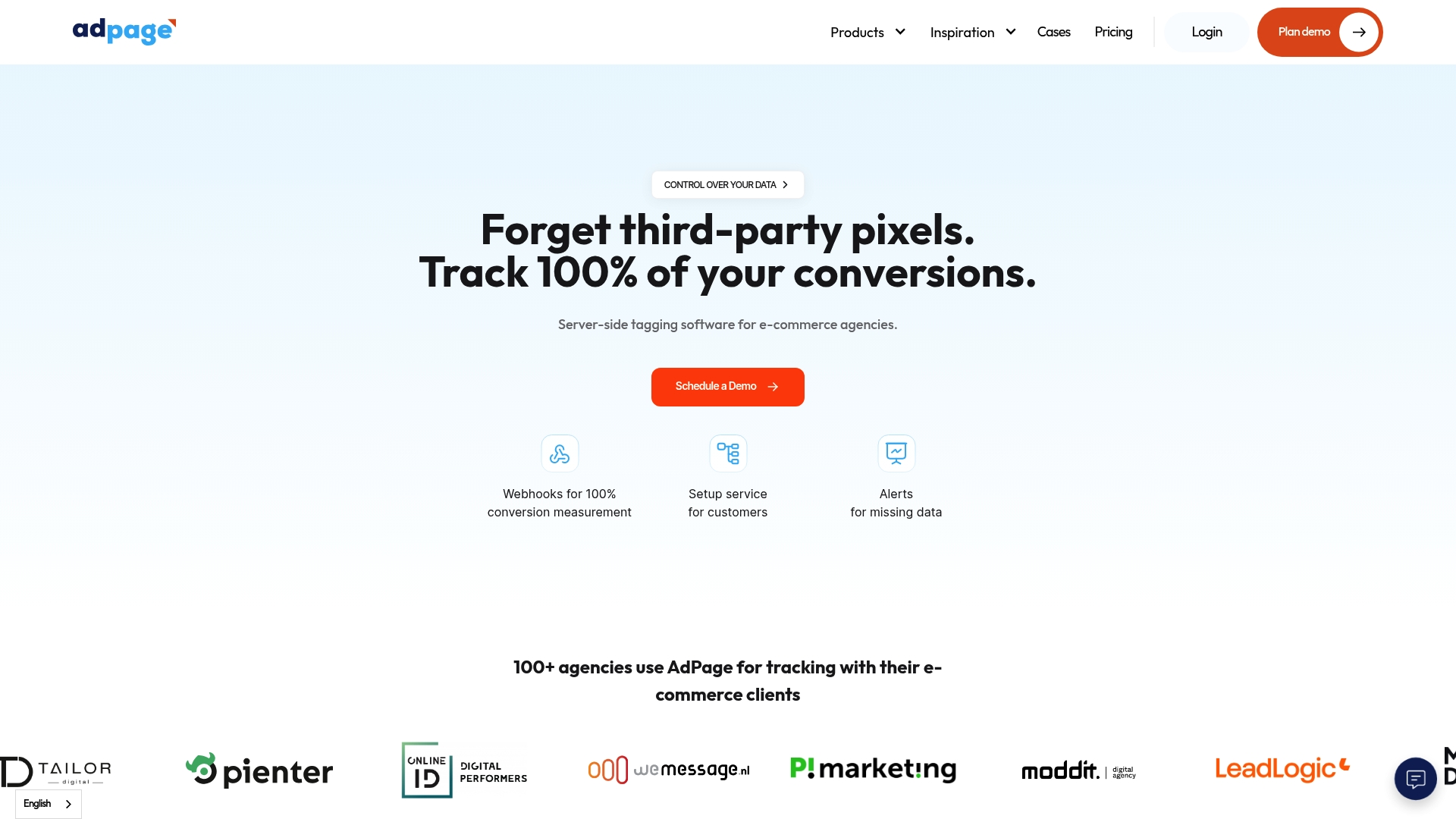
Explore how AdPage can transform your tracking setup and secure reliable data for smarter marketing decisions. Start optimising your conversion tracking now at AdPage and harness the power of server-side tagging for e-commerce success.
Frequently Asked Questions
What is Facebook tracking, and how does it benefit e-commerce businesses?
Facebook tracking involves the collection of data on user interactions across advertisements and websites. It benefits e-commerce businesses by providing insights into user behaviour, allowing for refined targeting strategies, optimisation of advertising spend, and better prediction of consumer purchasing behaviours.
What are the key components of Facebook tracking?
The key components include pixel tracking, conversion tracking, and audience segmentation tools. Pixel tracking captures user interactions by placing tracking codes on websites, while conversion tracking monitors specific user actions that indicate campaign performance.
How can businesses ensure compliance with data privacy regulations like GDPR when using Facebook tracking?
Businesses must implement robust consent management strategies that inform users about data collection, ensure consent is explicitly given, and provide options for users to withdraw consent at any time. Maintaining detailed records of user consent is also essential for legal compliance.
What common mistakes should businesses avoid when integrating Facebook tracking?
Common mistakes include pixel misconfiguration, using incorrect pixel IDs, and improper event tracking. These errors can lead to inflated advertising costs and unreliable marketing intelligence. Regular audits and careful implementation can help prevent these issues.