


.png)

More than 80 percent of British businesses rely on accurate digital analytics to guide critical decisions and drive growth. As online competition intensifies, understanding how users interact with your website becomes more vital than ever. Exploring the principles behind Google Analytics reveals how this platform turns raw visitor data into actionable insights, helping brands make smarter choices and elevate their digital strategy.
Table of Contents
- Google Analytics Definition And Core Principles
- How Google Analytics Works With E-commerce Data
- Types Of Google Analytics And Key Differences
- Server-Side Tagging Versus Traditional Tracking
- Ensuring Data Accuracy And GDPR Compliance
Key Takeaways
| Point | Details |
|---|---|
| Google Analytics Overview | Google Analytics provides essential insights into user behaviour, enabling businesses to track and optimise their digital performance. |
| E-commerce Application | E-commerce businesses utilise Google Analytics to analyse consumer interactions, improving conversion paths and enhancing user experience. |
| Evolution of Analytics | The shift from Universal Analytics to Google Analytics 4 marks a move towards event-driven tracking, providing deeper insights and better cross-platform integration. |
| Data Compliance Importance | Adhering to GDPR and ensuring data accuracy is crucial for building consumer trust and maintaining ethical data practices in digital analytics. |
Google Analytics Definition And Core Principles
Google Analytics is a sophisticated web analytics platform designed to provide comprehensive digital performance insights. Developed by Google, this powerful service enables businesses and website owners to track, measure, and analyse user interactions across digital platforms web analytics service.
At its core, Google Analytics offers robust tracking capabilities that capture critical user behaviour data. These insights include website traffic volume, user demographics, engagement metrics, traffic sources, and conversion pathways. The platform integrates seamlessly with other digital marketing tools, creating a holistic view of online performance tracks and reports website traffic.
Key features of Google Analytics encompass several fundamental tracking principles:
- Real-time user tracking and reporting
- Detailed audience segmentation
- Comprehensive conversion funnel analysis
- Multi-channel performance measurement
- Advanced traffic source identification
Professional marketers and e-commerce strategists leverage Google Analytics to understand user journeys, optimise website performance, and make data-driven strategic decisions. By providing granular insights into digital interactions, the platform enables businesses to refine their online strategies and improve overall digital experiences.
How Google Analytics Works With E-commerce Data
E-commerce businesses leverage Google Analytics as a sophisticated tracking system to understand and optimise digital performance. By integrating advanced tracking mechanisms, the platform enables detailed analysis of online consumer interactions, sales pathways, and purchasing behaviours machine learning system for predicting user behaviour.
The platform provides comprehensive e-commerce tracking through several key methodologies. Merchants can configure detailed measurement techniques that capture critical data points such as product views, cart additions, transaction completions, and revenue generation. These granular insights allow businesses to map entire customer journeys, identifying potential friction points and opportunities for conversion optimisation e-commerce measurement techniques.
Key e-commerce tracking capabilities include:
- Transaction-level revenue reporting
- Product performance analysis
- Customer purchase funnel visualisation
- Conversion rate tracking
- Detailed customer segmentation
By utilising these advanced tracking features, e-commerce organisations can develop data-driven strategies that enhance user experience, improve marketing efficiency, and ultimately drive sustainable revenue growth. The platform’s ability to transform raw digital interactions into actionable business intelligence makes it an indispensable tool for modern online retailers.
Types Of Google Analytics And Key Differences
Google Analytics has undergone significant transformations, with each iteration bringing more sophisticated tracking and analytical capabilities. The platform’s evolution represents a strategic approach to understanding digital interactions multiple updates in tracking technologies.

The most notable versions include Universal Analytics and the latest Google Analytics 4 (GA4), which marks a substantial shift in data collection methodology. While previous versions relied on session-based tracking, GA4 introduces an event-based model that provides more granular and flexible insights into user behaviour predictive insights through machine learning.
Key differences between Google Analytics versions include:
-
Tracking Methodology:
- Universal Analytics: Session-based tracking
- GA4: Event-driven, cross-platform tracking
-
Data Integration:
- Universal Analytics: Limited cross-platform integration
- GA4: Enhanced integration with Google BigQuery
-
Machine Learning Capabilities:
- Universal Analytics: Basic reporting
- GA4: Advanced predictive insights and automated recommendations
Businesses transitioning between these versions must understand the nuanced changes to ensure continuous, accurate data collection. GA4 represents a more holistic approach to analytics, enabling organisations to gain deeper, more actionable insights across multiple digital platforms and user touchpoints.
Server-Side Tagging Versus Traditional Tracking
Tracking methodologies in digital analytics have evolved significantly, with server-side tagging emerging as a sophisticated alternative to traditional client-side tracking approaches page tags and tracking mechanisms. Traditional tracking relies on JavaScript code embedded directly in web pages, which can be problematic due to various technical limitations and user configurations.
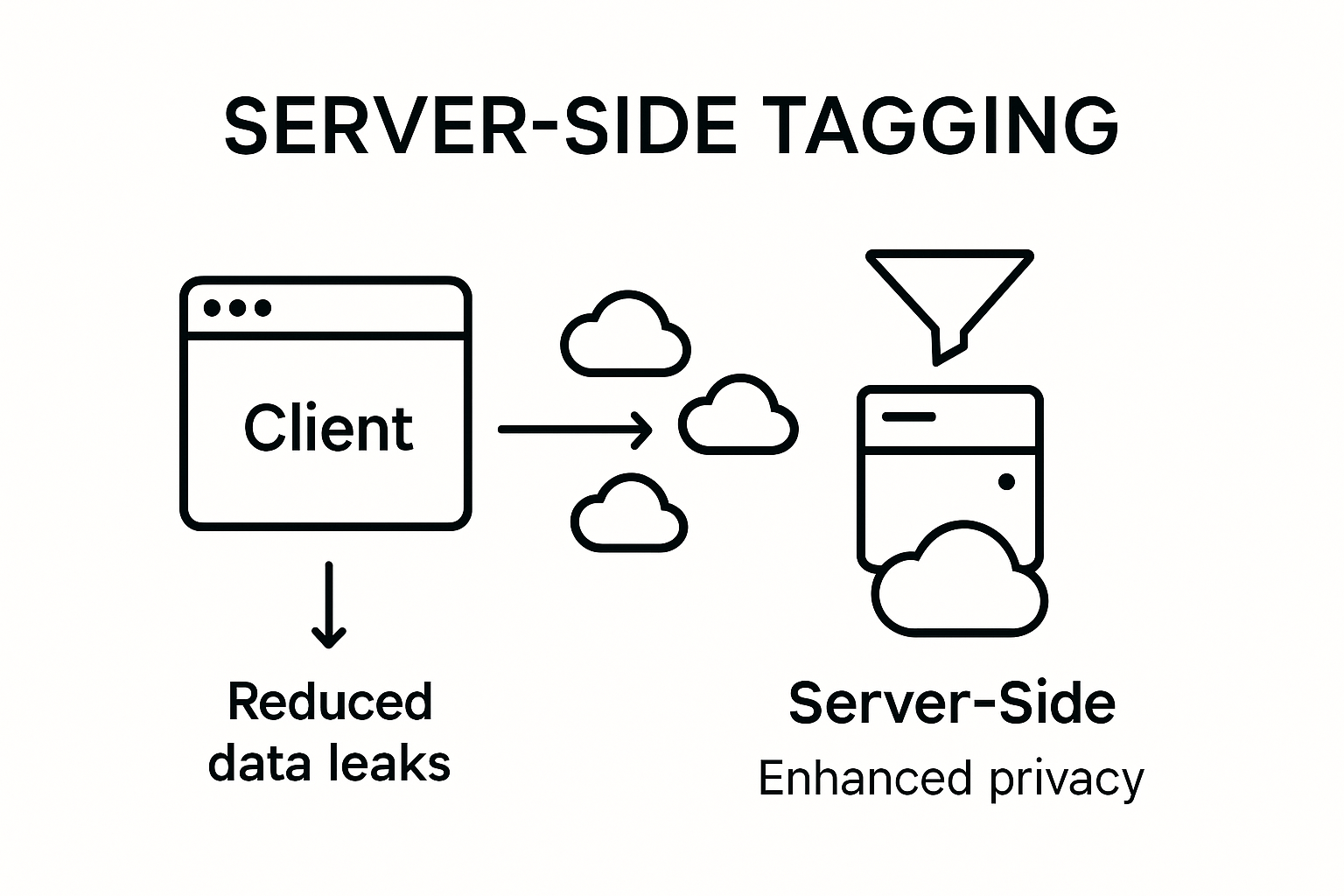
Client-side tracking typically involves inserting JavaScript snippets that collect data directly in the user’s browser, making them vulnerable to interference from ad blockers, privacy settings, and browser extensions data collection limitations. In contrast, server-side tagging processes tracking data on the website’s server, offering several critical advantages:
Key differences between tracking approaches:
-
Data Collection Method:
- Client-side: Browser-based JavaScript tracking
- Server-side: Backend data processing
-
Privacy and Tracking Reliability:
- Client-side: Easily blocked, less reliable
- Server-side: More robust, circumvents browser restrictions
-
Performance Impact:
- Client-side: Can slow page loading
- Server-side: Minimal website performance interference
By transitioning to server-side tagging, businesses can significantly enhance data accuracy, improve user privacy compliance, and create more resilient tracking infrastructures that provide comprehensive insights across diverse digital platforms.
Ensuring Data Accuracy And GDPR Compliance
Data accuracy and regulatory compliance represent critical challenges for digital analytics platforms, particularly in an era of increasing privacy concerns and complex regulatory landscapes data collection challenges. E-commerce businesses must navigate intricate requirements to maintain both precise tracking capabilities and robust user privacy protections.
The implementation of GDPR and similar data protection regulations has fundamentally transformed how organisations collect, process, and store digital user information impacts of privacy regulations. Critical considerations for maintaining compliance include:
Key compliance and data accuracy strategies:
-
User Consent Management:
- Implement clear, transparent consent mechanisms
- Provide granular opt-out options
- Maintain detailed consent records
-
Data Processing Transparency:
- Clearly communicate data collection practices
- Enable user data access and deletion requests
- Minimise unnecessary data collection
-
Technical Compliance Measures:
- Anonymise personal identifiers
- Implement robust data encryption
- Regularly audit data handling processes
Successful organisations recognise that data accuracy and regulatory compliance are not mere legal obligations, but fundamental components of building trust with digital consumers. By prioritising transparent, ethical data practices, businesses can create more meaningful and sustainable digital analytics strategies.
Elevate Your E-commerce Analytics with Precision Server-Side Tagging
Google Analytics offers invaluable insights into user behaviour and conversion tracking, yet many e-commerce businesses face challenges such as data loss, inaccurate measurement, and GDPR compliance complexities. With traditional client-side methods often blocked or slowed down by browser settings, achieving 100 percent conversion tracking and reliable user data collection becomes a significant hurdle. The shift towards server-side tagging as described in the article unlocks a new level of tracking accuracy and privacy protection, essential for optimising marketing performance and understanding customer journeys effectively.
AdPage specialises in overcoming these exact challenges by providing advanced server-side tagging solutions tailored for online retailers and marketing agencies. Our platform ensures seamless consent management, GDPR compliance, and robust data capture that mitigates weaknesses found in traditional tracking methods. By integrating easily with popular platforms like Shopify, WooCommerce, and Magento, AdPage helps you convert analytical insights into revenue growth with confidence.
Looking to fully harness Google Analytics 4 and solve your tracking reliability issues? Discover how AdPage’s server-side tagging empowers your marketing strategy with precise conversion monitoring and GDPR-friendly data handling.

Unlock the full potential of your e-commerce data today by visiting AdPage. Start improving your conversion rates with solutions designed for accuracy, privacy, and seamless integration. Take control now and transform your digital analytics into actionable business results.
Frequently Asked Questions
What is Google Analytics and how does it work for e-commerce?
Google Analytics is a web analytics platform that tracks and analyses user interactions on websites. For e-commerce, it helps businesses measure online consumer behaviour, sales pathways, and generates detailed reports on product performance and customer journeys.
What are the key features of Google Analytics for e-commerce tracking?
Key features include transaction-level revenue reporting, product performance analysis, customer purchase funnel visualisation, conversion rate tracking, and detailed customer segmentation, all designed to optimise marketing and enhance user experience.
How does Google Analytics 4 differ from Universal Analytics?
Google Analytics 4 utilises an event-driven, cross-platform tracking model, offering more granular insights into user behaviour compared to Universal Analytics, which relied on session-based tracking. GA4 also features improved data integration and predictive insights capabilities.
What are the advantages of server-side tagging over traditional client-side tracking in Google Analytics?
Server-side tagging processes data on the website’s backend, providing enhanced data accuracy, improved user privacy compliance, and minimal impact on website performance compared to traditional client-side tracking, which can be blocked or interfered with by browsers and ad blockers.