


.png)

Over 60 percent of British businesses still hold outdated beliefs about Google Analytics. Misconceptions can limit the way companies track results and improve online strategies. In reality, smart use of analytics tools can reveal hidden trends and drive lasting digital success. This guide uncovers common myths, explores server-side tracking, highlights privacy essentials, and shows how British brands can capture more accurate insights to fuel e-commerce growth.
Table of Contents
- Defining Google Analytics Help And Common Myths
- Server-Side Tagging Versus Traditional Methods
- Consent Management And Gdpr Requirements
- Ensuring Accurate Conversion And Event Tracking
- Integrating Analytics With E-Commerce Platforms
Key Takeaways
| Point | Details |
|---|---|
| Understanding Capabilities | Google Analytics offers advanced tracking features that can handle complex enterprise requirements and large datasets, contrary to common misconceptions. |
| Importance of Consent Management | GDPR compliance requires robust consent mechanisms to protect user privacy while maintaining effective data collection strategies. |
| Adoption of Server-Side Tagging | Transitioning to server-side tagging enhances data privacy, performance, and integrity, providing strategic advantages in analytics. |
| Focus on Conversion Tracking | Efficient conversion tracking methodologies leverage server-side technologies for improved data accuracy and strategic insights in digital marketing. |
Defining Google Analytics Help and Common Myths
Google Analytics represents a powerful web analytics service that enables businesses to track and understand their digital performance with precision. By investigating common misconceptions about web analytics, marketers can unlock more strategic insights.
At its core, Google Analytics is a web analytics service that tracks website traffic, delivering comprehensive insights into user behaviour and site performance. While some believe this tool is limited, the reality is far more nuanced. Many professionals misunderstand its capabilities, assuming it cannot handle complex enterprise requirements or large datasets. However, modern analytics platforms have evolved significantly, offering robust tracking mechanisms for businesses of all sizes.
Key myths about Google Analytics often stem from outdated perceptions. These misconceptions include:
- Believing Google Analytics only provides basic traffic numbers
- Assuming the platform cannot integrate with advanced marketing technologies
- Thinking enterprise-level tracking is impossible with this tool
- Misconceiving data privacy and compliance capabilities
Professional marketers understand that comprehensive web analytics strategies require more than surface-level understanding. By recognising and dispelling these myths, businesses can leverage Google Analytics more effectively, transforming raw data into actionable strategic insights that drive meaningful digital performance improvements.
Server-Side Tagging Versus Traditional Methods
Server-side tagging represents a transformative approach to web analytics that fundamentally changes how digital marketers collect and process tracking information. Advanced tracking strategies are reshaping how businesses understand user interactions and protect sensitive data.

Traditionally, web analytics relied on client-side tracking, which processes data directly in the user’s browser. However, modern server-side tracking mechanisms move data processing to a controlled server environment, offering significant advantages. This approach provides enhanced privacy controls, improved website performance, and superior data quality compared to conventional tracking methods.
Key differences between server-side and traditional client-side tracking include:
- Privacy Protection: Server-side tracking minimises direct browser data exposure
- Performance Optimisation: Reduces client-side script processing load
- Data Integrity: Offers more reliable and comprehensive data collection
- Security Enhancement: Provides greater control over sensitive tracking information
Professional digital marketers recognise that server-side tracking strategies are not just a technological upgrade but a strategic necessity. By migrating from traditional client-side methods, businesses can achieve more robust, privacy-compliant, and performance-driven analytics solutions that deliver deeper, more actionable insights into user behaviour and digital interactions.
Consent Management and GDPR Requirements
Consent management represents a critical aspect of modern digital analytics, ensuring organisations protect user privacy while maintaining effective data collection strategies. Understanding consent management frameworks has become increasingly important for businesses navigating complex privacy regulations.
The General Data Protection Regulation (GDPR) mandates strict requirements for handling personal data, compelling businesses to implement robust consent mechanisms. Comprehensive consent tracking strategies now involve obtaining explicit user permission before collecting or processing any personally identifiable information. This approach ensures transparency and gives users greater control over their digital footprint.
Key elements of effective GDPR-compliant consent management include:
- Clear and unambiguous consent requests
- Granular opt-in options for different data processing activities
- Easy-to-understand privacy language
- Simple withdrawal of consent mechanisms
- Documented consent records
- Age verification processes
Professional digital strategists recognise that consent management for conversion tracking is not just a legal requirement but a fundamental aspect of building trust with digital audiences. By implementing transparent, user-centric consent processes, businesses can simultaneously comply with regulatory requirements and maintain meaningful, ethical data collection practices that respect individual privacy rights.
Ensuring Accurate Conversion and Event Tracking
Conversion tracking represents a critical methodology for understanding digital marketing performance and user interactions. Advanced event tracking strategies enable businesses to capture precise insights into user behaviour and campaign effectiveness.
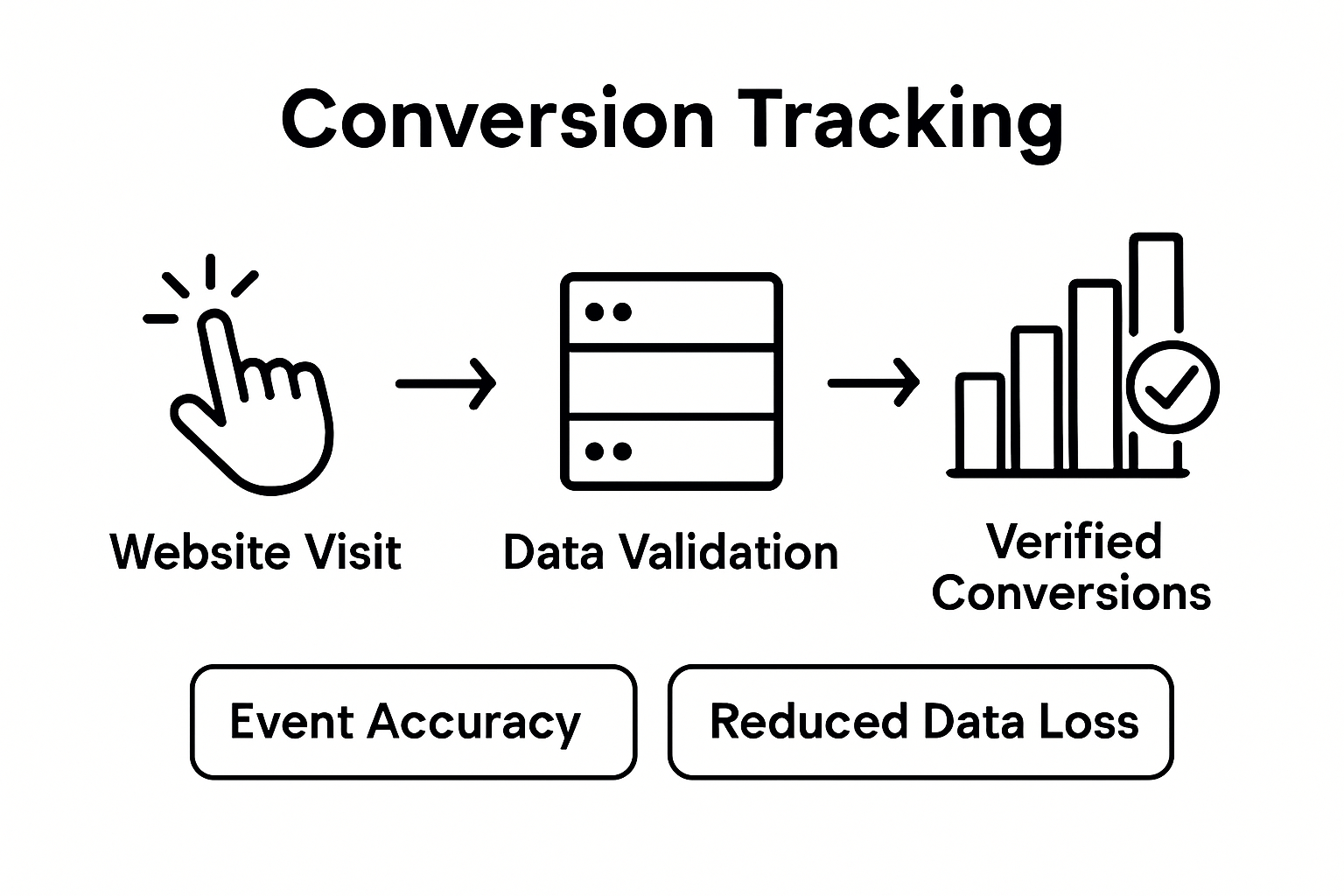
Modern analytics platforms have transformed how organisations measure digital performance. Efficient tracking mechanisms now leverage sophisticated server-side technologies that dramatically improve data accuracy. Research indicates that contemporary tag management systems can process and attribute metrics with remarkable precision, maintaining conversion tracking accuracy rates approaching 93 percent while simultaneously reducing client-side JavaScript execution complexities.
Key strategies for maximising conversion tracking accuracy include:
- Implementing robust server-side tracking mechanisms
- Configuring precise event definition parameters
- Minimising data collection interference
- Utilising multi-channel attribution models
- Regularly auditing tracking implementation
- Ensuring comprehensive consent management
Professional marketers understand that comprehensive conversion tracking approaches transcend simple metric collection. By developing nuanced, technically sophisticated tracking frameworks, organisations can transform raw data into strategic insights that drive meaningful business decision-making and optimise digital marketing performance.
Integrating Analytics With E-commerce Platforms
E-commerce analytics integration represents a sophisticated approach to understanding digital sales performance and customer interactions. Comprehensive analytics strategies enable businesses to transform raw transactional data into meaningful strategic insights.
Modern e-commerce platforms require advanced tracking mechanisms that transcend traditional analytics approaches. Innovative integration techniques now leverage sophisticated server-side technologies that provide precise data collection capabilities. Contemporary frameworks offer unified analytics solutions that enable cross-domain tracking in complex multi-server environments, dramatically enhancing businesses’ ability to capture comprehensive performance metrics.
Key considerations for effective e-commerce analytics integration include:
- Implementing robust server-side tracking mechanisms
- Ensuring seamless data transfer between platforms
- Configuring granular conversion tracking parameters
- Maintaining strict data privacy and compliance standards
- Developing multi-channel attribution models
- Integrating real-time performance monitoring
Professional digital strategists recognise that strategic data analytics approaches represent far more than technical implementation. By developing sophisticated, holistic tracking frameworks, organisations can transform complex digital interactions into actionable intelligence that drives meaningful business growth and optimises online sales performance.
Maximise Your Conversion Tracking Accuracy with AdPage
The article highlights how achieving precise conversion tracking through advanced server-side tagging is crucial for modern marketers facing challenges like data loss, consent management, and complex event tracking. If you are striving to overcome limitations of traditional client-side tracking and want to boost your e-commerce analytics with reliable, GDPR-compliant solutions, you are not alone.
AdPage specialises in delivering powerful server-side tagging tools that enhance data integrity and help you capture 100 percent of your conversions, reducing missed opportunities and empowering smarter marketing decisions. Our platform integrates seamlessly with major e-commerce systems such as Shopify and WooCommerce while ensuring full compliance with privacy regulations.
Get started on transforming your tracking accuracy today with AdPage server-side tagging solutions.
Unlock the full potential of your digital marketing by visiting AdPage for expert onboarding and tailored analytics strategies. Experience how easy it is to improve conversion rates, maintain compliance, and finally get the insights you deserve. Take action now and elevate your e-commerce performance.
Frequently Asked Questions
What are the key strategies for maximising conversion tracking accuracy?
To maximise conversion tracking accuracy, implement robust server-side tracking mechanisms, configure precise event definition parameters, minimise data collection interference, utilise multi-channel attribution models, regularly audit tracking implementation, and ensure comprehensive consent management.
How does server-side tracking improve conversion accuracy compared to client-side tracking?
Server-side tracking improves conversion accuracy by processing data in a controlled server environment, which enhances data integrity and reduces the loading stress on the client-side, resulting in more reliable data collection and fewer inaccuracies caused by browser inconsistencies.
What role does consent management play in conversion tracking?
Consent management ensures that businesses are compliant with data protection regulations by obtaining user permission before collecting any personally identifiable information, which ultimately helps maintain the integrity of the data collected for conversion tracking.
Why is event tracking important for understanding digital marketing performance?
Event tracking is crucial as it provides detailed insights into specific user actions and interactions with a website or app, allowing businesses to evaluate the effectiveness of their marketing campaigns and optimise user experience based on actual behaviour.