


.png)

Over 60 percent of British marketers now rely on advanced tracking tools to boost online campaign results. As the digital landscape shifts, knowing how to manage data effectively makes the difference between successful strategies and wasted ad spend. This article breaks down the Google Tag API, showing how it helps British businesses control what data they collect, improve security, and get clearer insights without technical confusion.
Table of Contents
- Google Tag API Explained Clearly
- Server‑Side Tagging API Types
- How Google Tag APIs Function
- Setup Requirements And Permissions
- Practical E‑commerce Use‑Cases
Key Takeaways
| Point | Details |
|---|---|
| Sophisticated Tracking Management | The Google Tag API enables digital marketers to manage tracking configurations effectively, enhancing data collection and processing between websites and analytics systems. |
| Server-Side Tagging Benefits | Server-side tagging improves performance, security, and provides granular control over tracking data, essential for modern digital marketing strategies. |
| Extensive Configuration Capabilities | The API supports comprehensive management of accounts, containers, workspaces, tags, triggers, and variables, allowing for complex data handling and user interaction analysis. |
| Robust Security Framework | Implementation requires careful attention to authentication, API key management, and user permissions to ensure secure and efficient tracking configurations. |
Google Tag API Explained Clearly
The Google Tag API provides digital marketing professionals a sophisticated mechanism for managing tracking configurations across web platforms. At its core, this powerful interface enables precise control over how data is collected, processed, and transmitted between websites and analytics systems. Server-side tagging configurations represent a critical component of modern digital tracking strategies.
Under the hood, the Google Tag API facilitates comprehensive management of digital tracking elements. Marketing teams can leverage this tool to configure and control multiple tracking components, including:
- Accounts: Organisational tracking hierarchies
- Containers: Specific tracking environments
- Workspaces: Collaborative development zones
- Tags: Individual tracking scripts
- Triggers: Event-based tracking activation rules
- Variables: Dynamic data collection parameters
The API’s architecture supports robust configuration management through a systematic quota system that ensures equitable resource distribution across different digital properties. Developers and marketing professionals can programmatically manage tracking configurations, enabling more sophisticated and nuanced data collection strategies. Server-side tracking for beginners provides additional insights into implementation techniques that complement the Google Tag API’s capabilities.
Programmatic access to the Google Tag Manager API requires careful application registration and user authorisation processes. This approach provides granular control over tracking configurations, allowing organisations to implement sophisticated data collection methodologies that adapt to complex digital marketing ecosystems. The result is a more precise, flexible, and comprehensive approach to understanding user interactions and digital performance metrics.
Server‑Side Tagging API Types
Server‑side tagging APIs represent a sophisticated technological framework for advanced digital tracking and data management. Server-side tagging advantages highlight the critical role these APIs play in modern digital marketing ecosystems. These APIs provide developers and marketing professionals with powerful tools to configure, manipulate, and transform tracking data with unprecedented precision.
The Google Tag Manager server-side tagging APIs encompass several key functional domains that enable comprehensive data handling:
- Data Access APIs: Retrieve and interact with tracking information
- Data Transformation APIs: Modify and process collected data
- Google Service Integration APIs: Connect with various Google platforms
- Utility Function APIs: Perform complex computational tasks
- Cryptography APIs: Secure and encrypt sensitive tracking information
- Request/Response Handling APIs: Manage network interactions
These APIs offer granular configuration capabilities for tracking implementation, enabling organisations to build sophisticated tracking infrastructures. Developers can leverage custom logic and advanced data manipulation techniques, transforming raw tracking data into actionable insights. The APIs support intricate permission management, allowing precise control over data access and processing.
Understanding the nuanced permissions and configuration requirements is crucial for effective implementation. Custom server-side tagging templates require specific authorisations, including management of private keys and Google Application Default Credentials. This approach ensures robust security protocols while providing marketing teams with flexible, powerful tracking capabilities that adapt to complex digital measurement requirements.
How Google Tag APIs Function
Google Tag APIs operate through a sophisticated hierarchical configuration system that enables precise digital tracking management. How Google Tag Manager works reveals a complex ecosystem designed to provide digital marketing professionals with granular control over data collection and processing strategies. These APIs function by exposing configuration entities that allow comprehensive tracking infrastructure development.
The core architectural components of Google Tag APIs include several critical operational domains:
- Accounts: Top-level organisational structures
- Containers: Specific tracking environments
- Workspaces: Collaborative development and configuration zones
- Tags: Individual tracking scripts
- Triggers: Event-based activation mechanisms
- Variables: Dynamic data collection parameters
At the heart of these APIs lies a robust quota management system designed to ensure equitable resource distribution and prevent system overload. This mechanism protects the infrastructure from potential performance degradation while enabling organisations to implement sophisticated tracking configurations. Developers can register applications and authorise user access, creating a secure and controlled environment for complex tracking implementations.
The API’s design emphasises flexibility and precision, allowing marketing teams to build intricate tracking frameworks that adapt to evolving digital measurement requirements. By providing granular configuration capabilities, these APIs transform raw data into actionable insights, enabling organisations to develop more intelligent, responsive digital tracking strategies that respond dynamically to user interactions and organisational needs.
Setup Requirements And Permissions
Implementing Google Tag APIs requires meticulous attention to authentication, credential management, and strategic configuration processes. How to implement tagging for e-commerce in 2025 highlights the critical importance of understanding comprehensive setup requirements before diving into advanced tracking implementations.
The fundamental setup requirements for Google Tag APIs encompass several key domains:
- Authentication Credentials: Secure access tokens and user permissions
- Service Account Configuration: Establishing organisational access levels
- API Key Management: Generating and protecting unique identifier keys
- Consent Management: Defining user data tracking permissions
- Environment Segregation: Creating separate preview and production clusters
- Security Protocol Implementation: Establishing robust data protection mechanisms
Server-side tagging configuration involves intricate processes such as setting up Docker containers, managing credentials for services like BigQuery and Firestore, and implementing granular permission structures. Developers must navigate complex authentication landscapes, including configuring Google Application Default Credentials and managing custom private key permissions.

The permission framework demands a strategic approach to access management. Organisations must carefully define user roles, implement principle of least privilege, and create robust security architectures that protect sensitive tracking data while maintaining the flexibility required for comprehensive digital measurement strategies. This nuanced approach ensures that tracking implementations remain both powerful and compliant with evolving data protection regulations.
Practical E‑commerce Use‑Cases
E-commerce organisations are increasingly leveraging server-side tagging to transform their digital tracking capabilities, addressing complex measurement challenges across multiple platforms. Understanding user data collection for e-commerce success reveals the critical role of sophisticated tracking mechanisms in modern online retail environments.
Practical applications of Google Tag APIs in e-commerce span several strategic domains:
- Cross-Device Tracking: Mapping user journeys across multiple devices
- Performance Optimisation: Reducing browser-side processing loads
- Enhanced Security: Protecting sensitive transaction data
- Advanced Conversion Attribution: Tracking complex purchase pathways
- Customer Segmentation: Creating granular audience profiles
- Real-Time Analytics: Enabling instant performance insights
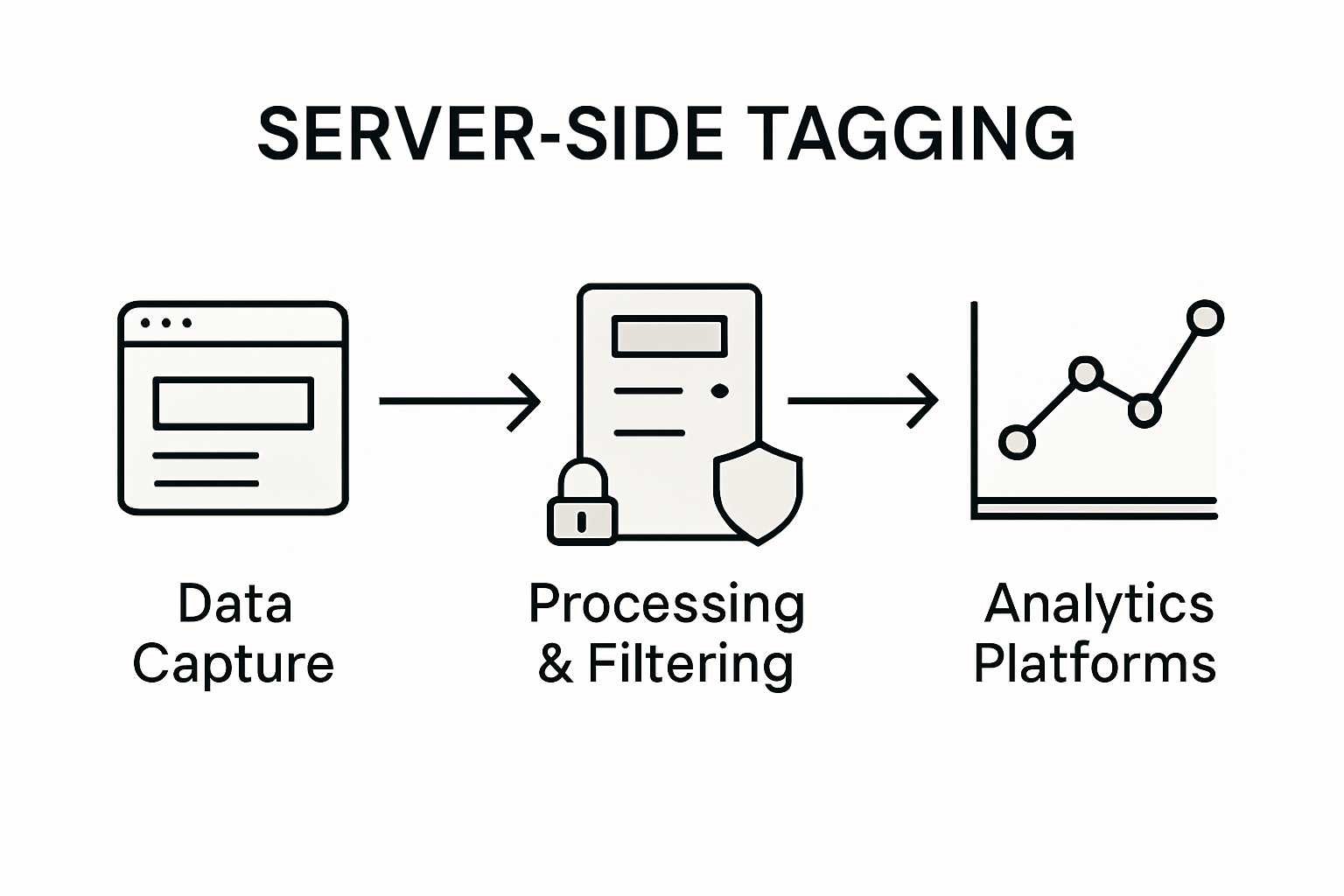
Server-side tracking mechanisms dramatically improve website performance by processing data on server infrastructure instead of client browsers. This approach provides e-commerce businesses unprecedented control over data collection, enabling more precise tracking of user interactions, purchase behaviours, and conversion funnel dynamics.
The transformative potential of these APIs extends beyond traditional analytics. By moving tag instrumentation to server-side processing containers, organisations can create more resilient, comprehensive tracking strategies that adapt to evolving digital commerce landscapes. This nuanced approach allows businesses to generate deeper insights, enhance user experiences, and make more informed strategic decisions based on comprehensive, accurate data collection methodologies.
Unlock Greater Precision with Server-Side Tracking Through AdPage
The article explores the critical challenges of managing complex tracking environments using the Google Tag API. Inaccurate data collection and limited control often hinder e-commerce businesses from fully understanding user interactions and optimising conversions. Key concepts like server-side tagging, quota management, and secure authentication highlight the necessity for a more robust, flexible, and privacy-compliant tracking solution. If you seek to eliminate data loss, improve consent management, and fully capture every conversion event, a powerful tracking platform is essential.

Experience the full potential of server-side tagging with AdPage. Our comprehensive platform is designed specifically for e-commerce marketers and agencies looking to optimise conversion tracking with advanced server-side solutions. Benefit from seamless integration with Shopify, WooCommerce, and Magento, GDPR-compliant consent management, and real-time visitor insights. Take control of your data today and transform your marketing strategy by visiting AdPage now. Learn more about server-side tagging benefits and how you can implement precise, secure tracking that drives measurable growth.
Frequently Asked Questions
What is the Google Tag API?
The Google Tag API is an interface that allows digital marketing professionals to manage tracking configurations across web platforms, enabling precise control over how data is collected and transmitted between websites and analytics systems.
How does server-side tagging improve tracking precision?
Server-side tagging improves tracking precision by processing data on server infrastructure instead of client browsers, which reduces browser-side processing loads and enhances data security, leading to more accurate measurements of user interactions.
What are the key components of the Google Tag API?
The key components of the Google Tag API include accounts, containers, workspaces, tags, triggers, and variables, each serving a specific role in managing digital tracking configurations effectively.
What setup requirements are necessary for implementing Google Tag APIs?
Implementing Google Tag APIs requires secure authentication credentials, service account configurations, API key management, consent management, environment segregation, and robust security protocol implementation.