


.png)

Most advice about Google Tag Manager class structure completely misses what professional British marketers care about most—control and clarity. With digital analytics evolving faster than ever, businesses need tracking solutions that deliver both precision and privacy. Nearly 60 percent of British companies now rely on advanced tracking classes to boost conversion accuracy and meet strict compliance standards. This guide breaks down the roles of container classes, helping you get the most from your Google Tag Manager setup while staying ahead of industry changes.
Table of Contents
- Defining Google Tag Manager Class In Tracking
- Types Of Container Classes And Their Uses
- How Classes Enhance Conversion Tracking Accuracy
- Integrating Classes With Server-Side Tagging
- Consent, Compliance, And Data Collection Risks
Key Takeaways
| Point | Details |
|---|---|
| Centralised Tag Management | Google Tag Manager allows businesses to manage tracking codes without extensive coding knowledge, enhancing efficiency in data collection. |
| Diverse Container Classes | GTM offers various container types, including web, AMP, and server-side containers, each designed for specific tracking needs and platforms. |
| Enhanced Conversion Tracking | Advanced classes in GTM improve the accuracy of conversion tracking by overcoming limitations inherent in traditional client-side methods. |
| Importance of Data Privacy | Effective consent management and compliance with regulations like GDPR and CCPA are crucial for mitigating risks associated with data collection practices. |
Defining Google Tag Manager Class in Tracking
Google Tag Manager (GTM) represents a sophisticated tracking platform that fundamentally transforms how digital marketers capture and analyse user interaction data. At its core, GTM serves as a centralised management system for tracking codes, enabling businesses to deploy and modify tracking implementations without extensive programming knowledge.
The platform functions through a structured framework of tags, triggers, and variables, which work harmoniously to capture precise user interactions across digital platforms. Tracking implementations within GTM can monitor everything from simple page views to complex e-commerce transaction details, providing granular insights into user behaviour.
Research demonstrates GTM’s remarkable capabilities in simplifying custom tracking options. Academic studies highlight its potential to track metadata fields as custom dimensions, which significantly enhances data collection strategies. By abstracting technical complexities, GTM allows marketing teams to implement sophisticated tracking mechanisms without requiring deep coding expertise.
Key characteristics of Google Tag Manager include:
- Centralised tag management across multiple digital platforms
- No-code tracking implementation
- Real-time tag deployment and modification
- Comprehensive user interaction tracking
- Seamless integration with analytics platforms
Professional marketers recognise GTM as a powerful tool that bridges technical implementation and strategic data analysis, transforming raw user interactions into actionable business intelligence.
Types of Container Classes and Their Uses
Container classes in Google Tag Manager represent specialised environments designed to manage and deploy tracking tags across different digital platforms. Google Tag Manager’s container architecture provides multiple types of containers, each tailored to specific tracking requirements and digital ecosystems.
Three primary container types dominate the GTM landscape: web containers, AMP (Accelerated Mobile Pages) containers, and server-side containers. Web containers traditionally manage client-side tracking for standard websites, capturing user interactions through browser-based JavaScript. Server-side containers offer a more sophisticated approach, processing tracking data directly on server infrastructure to enhance performance and provide greater data control.
AMP containers represent a specialised solution for mobile-optimised web pages, enabling lightweight tracking mechanisms that maintain rapid page load speeds. These containers are particularly crucial for mobile-first websites seeking to balance comprehensive analytics with optimal user experience. Server-side containers introduce significant advantages by:
- Reducing client-side processing overhead
- Improving data privacy and security
- Enabling more complex data transformation
- Minimising performance impact on user devices
- Providing enhanced tracking capabilities
Professional digital marketers leverage these diverse container classes strategically, selecting the most appropriate type based on specific platform requirements, performance goals, and data collection objectives.
How Classes Enhance Conversion Tracking Accuracy
Conversion tracking represents a critical aspect of digital marketing analytics, with Google Tag Manager (GTM) classes providing sophisticated mechanisms to improve data precision and reliability. Server-side tagging fundamentals demonstrate how advanced tracking classes can substantially enhance the accuracy of conversion measurement across digital platforms.

Traditional client-side tracking methods often suffer from limitations such as ad-blockers, browser restrictions, and JavaScript rendering issues. Server-side tagging approaches overcome these challenges by processing tracking data directly on server infrastructure, ensuring more reliable and comprehensive conversion data collection. This method allows marketers to capture interactions that might otherwise be missed by conventional tracking techniques.
The key advantages of using advanced GTM classes for conversion tracking include:
- Reduced data loss from client-side tracking limitations
- Enhanced privacy and security of tracking information
- Improved ability to track complex conversion pathways
- More accurate attribution of marketing channel performance
- Greater control over data processing and transformation
Conversion tracking strategies ultimately benefit from these sophisticated GTM classes, enabling businesses to gain deeper insights into user behaviour, optimise marketing spend, and make more informed strategic decisions based on precise, reliable conversion data.
Integrating Classes with Server-Side Tagging
Server-side tagging represents a transformative approach to data collection, enabling businesses to process tracking information with unprecedented precision and control. Methods for sending data to server-side containers demonstrate the sophisticated techniques available for configuring complex tracking architectures within Google Tag Manager.
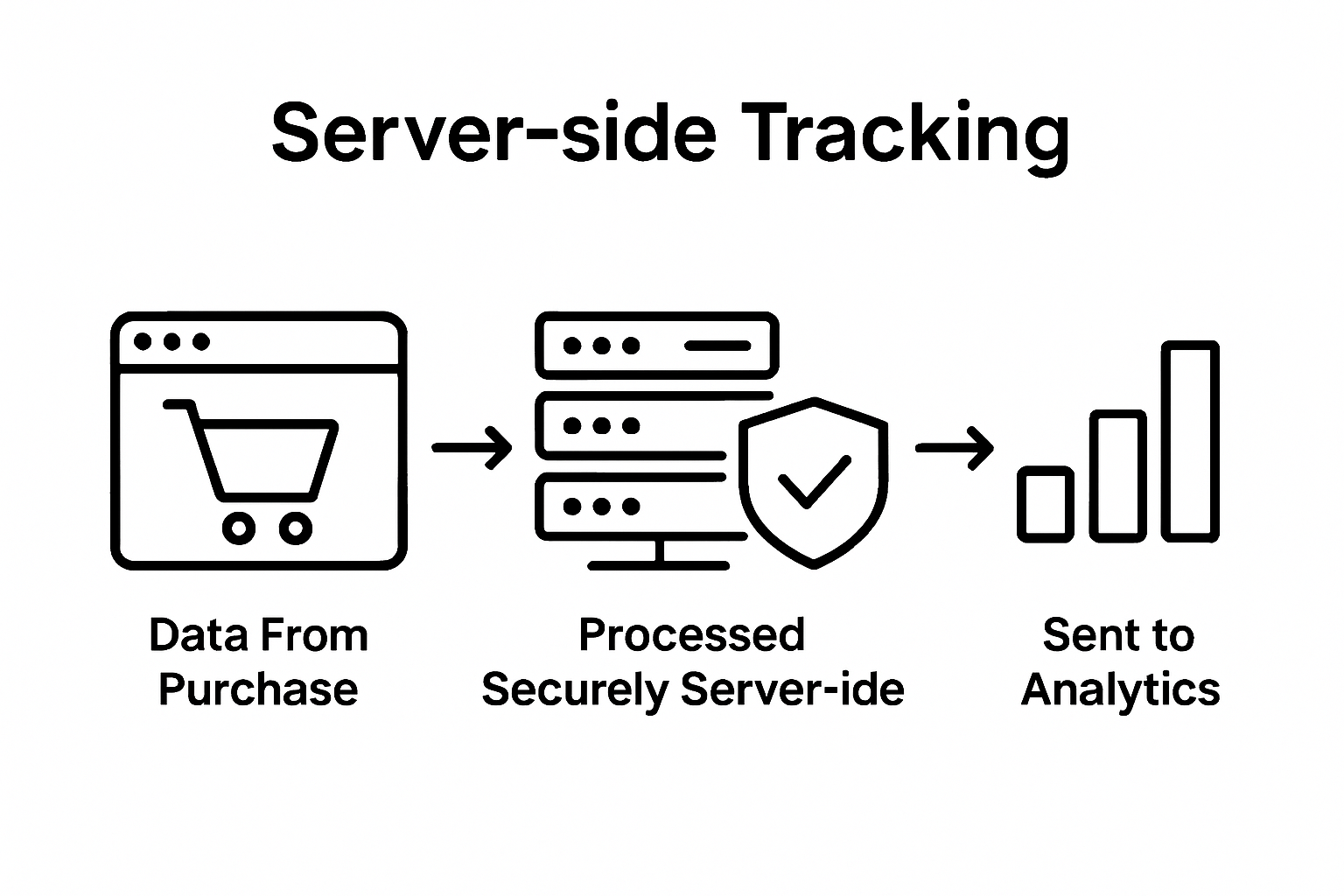
The integration process involves carefully configuring clients and establishing robust data processing mechanisms. Server container setup requires strategic planning, allowing marketers to create sophisticated tracking environments that transcend traditional client-side limitations. By moving data processing to server infrastructure, organisations can mitigate challenges associated with browser-based tracking, such as ad-blockers and privacy restrictions.
Key considerations for successful server-side tagging integration include:
- Establishing secure data transmission protocols
- Configuring multiple client endpoints
- Implementing advanced data transformation rules
- Managing cross-platform tracking consistency
- Ensuring comprehensive data privacy compliance
Server-side tagging advantages ultimately provide digital marketers with a powerful toolkit for capturing, processing, and analysing user interactions with unprecedented granularity and reliability, transforming raw data into actionable strategic insights.
Consent, Compliance, and Data Collection Risks
Data privacy has become a critical concern in digital marketing, with sophisticated tracking technologies introducing complex legal and ethical challenges. Research into privacy leaks reveals significant risks associated with unregulated data collection practices, particularly within advanced tracking platforms like Google Tag Manager.
Hidden data vulnerabilities demonstrate the intricate legal landscape surrounding digital tracking, where businesses must navigate stringent regulatory requirements. The potential for inadvertent data exposure necessitates robust consent management strategies that prioritise user privacy and comply with international data protection regulations such as GDPR and CCPA.
Key considerations for mitigating data collection risks include:
- Implementing transparent consent mechanisms
- Developing comprehensive user data protection policies
- Conducting regular privacy impact assessments
- Ensuring granular user control over personal information
- Maintaining clear audit trails of data processing activities
Consent management practices ultimately represent a critical defence mechanism, enabling organisations to build trust, protect user privacy, and maintain legal compliance while leveraging sophisticated digital tracking technologies.
Unlock the Full Potential of Your E-Commerce Tracking with Advanced GTM Classes
Mastering Google Tag Manager classes is essential for enhancing conversion tracking accuracy and overcoming challenges such as data loss from client-side tracking limitations. This article highlights critical issues including server-side tagging benefits, container class selection, and ensuring compliance with consent management. If you are striving to capture every conversion without compromising user privacy while gaining deeper insights into your customer behaviour, the right solution awaits.

Experience how AdPage empowers e-commerce businesses to optimise their tracking through server-side tagging solutions. Our platform seamlessly integrates with leading stores like Shopify, WooCommerce, and Magento delivering real-time, reliable data collection that tackles ad-blockers and browser restrictions head-on. Unlock 100% conversion monitoring, robust consent management, and GDPR-compliant data handling to transform your marketing strategy today. Visit AdPage and take the first step to elevate your tracking accuracy and conversion rates now.
Frequently Asked Questions
How does Google Tag Manager (GTM) improve e-commerce tracking?
GTM enhances e-commerce tracking by centralising tag management, allowing marketers to easily implement and modify tracking codes without extensive coding knowledge, thus capturing precise user interactions and conversion data.
What are the different types of container classes in Google Tag Manager?
The primary container classes in GTM include web containers for standard websites, AMP containers for mobile-optimised pages, and server-side containers that improve data control and reduce client-side processing overhead.
What advantages do server-side containers offer for e-commerce tracking?
Server-side containers provide reduced data loss, enhanced privacy, improved tracking of complex conversion pathways, and greater control over data processing, yielding more accurate insights into user behaviour and marketing channel performance.
How can businesses ensure compliance with data privacy while using GTM?
To ensure compliance, businesses should implement transparent consent mechanisms, develop robust data protection policies, conduct regular privacy impact assessments, and maintain clear audit trails of data processing activities.