


.png)

More than 60 percent of british e-commerce teams struggle to achieve accurate conversion tracking while remaining compliant with strict European privacy laws. Understanding Google Tag Manager core concepts is vital for marketers who want reliable analytics and error-free optimisation. This guide breaks down the essential tools and tracking strategies that help businesses gain precise insights, streamline analytics processes, and meet regulatory requirements with confidence.
Table of Contents
- Google Tag Manager GTM Core Concepts
- Comparing Server-Side And Client-Side Tracking
- Key Benefits For E-Commerce Businesses
- Integrating GTM With Leading Platforms
- Consent Management And GDPR Compliance
- Avoiding Common Server-Side GTM Mistakes
Key Takeaways
| Point | Details |
|---|---|
| Centralised Tag Management | Google Tag Manager streamlines the tracking process by allowing marketers to manage all analytics tags within a single interface, enhancing efficiency and control. |
| Comparison of Tracking Methods | Understanding the differences between client-side and server-side tracking is crucial, with server-side offering better data accuracy and privacy compliance. |
| E-commerce Advantages | Robust tracking through Google Tag Manager enables e-commerce businesses to gain granular insights for improved decision-making and targeted marketing strategies. |
| Compliance with Privacy Regulations | Implementing effective consent management in GTM is essential to align with GDPR requirements, ensuring transparent data practices and user trust. |
Google Tag Manager GTM core concepts
Google Tag Manager (GTM) represents a powerful web-based platform that simplifies tracking and analytics management for digital businesses. At its core, GTM functions as a centralised tag management system that enables marketers to deploy and update measurement codes without extensive technical intervention.
The fundamental architecture of GTM revolves around three primary components: tags, triggers, and variables. Tags represent specific tracking or analytics snippets that capture user interactions. Triggers determine when these tags should fire, acting like conditional statements that activate tracking under precise circumstances. Variables serve as dynamic information containers that can store and pass data between tags and triggers, creating a flexible tracking ecosystem.

One significant advantage of GTM is its ability to streamline complex tracking workflows. Instead of manually embedding multiple code snippets across a website, marketers can centralise all tracking requirements within a single container. This approach reduces potential errors, enhances deployment speed, and provides granular control over analytics implementation. GTM supports various tracking platforms including Google Analytics, Google Ads, Facebook Pixel, and numerous third-party analytics tools.
Pro tip: Always create a comprehensive testing environment in GTM before deploying tracking configurations to ensure accurate data collection and prevent potential tracking disruptions.
Comparing server-side and client-side tracking
Web analytics tracking has traditionally relied on client-side methods, where tracking scripts execute directly within a user’s web browser. However, emerging server-side tracking technologies are revolutionising how businesses collect and process digital interaction data. Client-side tracking involves JavaScript code running in the browser, capturing user interactions and sending data to analytics platforms in real-time.
The primary difference between client-side and server-side tracking lies in data transmission and processing mechanisms. Client-side tracking is vulnerable to browser restrictions, ad blockers, and privacy settings that can significantly reduce data accuracy. In contrast, server-side tracking routes user interactions through backend servers before transmitting data to analytics platforms, providing a more robust and reliable tracking methodology. This approach mitigates issues like incomplete data collection and enhances overall tracking precision.
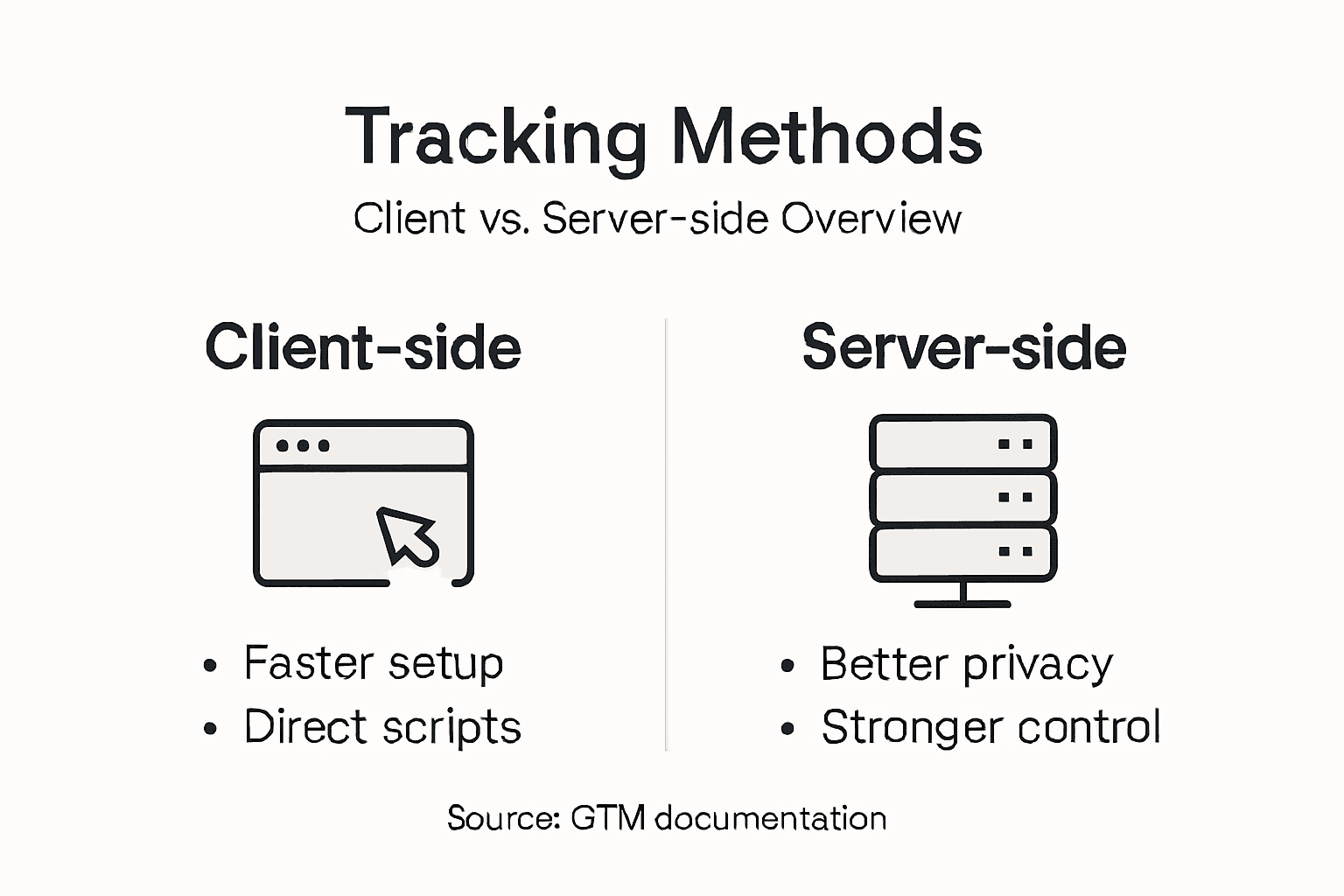
Server-side tracking offers several critical advantages for e-commerce businesses. It provides superior privacy compliance by centralising data management, enables more comprehensive consent handling, and reduces the risk of data loss. Marketers gain increased visibility into user interactions, with tracking occurring independently of browser limitations. Additionally, server-side approaches can integrate more seamlessly with complex marketing technology stacks, offering greater flexibility and control over data collection processes.
Here’s a concise comparison of client-side and server-side tracking for web analytics:
| Aspect | Client-side Tracking | Server-side Tracking |
|---|---|---|
| Data Accuracy | Prone to loss by ad blockers and browsers | Reliable, unaffected by browser restrictions |
| Privacy Compliance | Harder to manage user consent | Enhanced, easier consent management |
| Implementation Complexity | Easier, common JavaScript tags | More involved, requires backend setup |
| Visibility Into User Actions | May miss interactions due to script failures | Captures actions regardless of browser issues |
Pro tip: Implement a hybrid tracking approach that combines both client-side and server-side methods to maximise data collection accuracy and resilience.
Key benefits for e-commerce businesses
E-commerce tracking through Google Tag Manager offers transformative advantages for digital businesses seeking to optimise their online performance. Digital commerce strategies have evolved dramatically, enabling businesses to capture granular insights about customer behaviour, purchase patterns, and conversion dynamics with unprecedented precision.
The primary benefits of robust e-commerce tracking include enhanced data-driven decision-making and comprehensive performance analysis. Businesses can now track intricate customer journeys, identifying precise conversion points, understanding abandonment rates, and segmenting user interactions across multiple digital touchpoints. This level of analytical depth allows marketing teams to develop targeted strategies, personalise user experiences, and allocate resources more efficiently by understanding exactly how customers interact with online platforms.
Moreover, e-commerce tracking through Google Tag Manager provides critical capabilities for conversion rate optimisation. By implementing sophisticated tracking mechanisms, businesses can analyse micro-interactions, evaluate the effectiveness of marketing campaigns, and create detailed customer personas. These insights enable organisations to refine their digital strategies, improve user experience, and ultimately drive higher conversion rates and revenue generation. The ability to track and analyse complex user behaviours transforms digital commerce from a transactional model to an intelligent, responsive ecosystem.
Below are strategic benefits of e-commerce tracking powered by Google Tag Manager:
| Benefit | Description | Business Impact |
|---|---|---|
| Granular Customer Insights | Tracks individual behaviours and touchpoints | Enables data-driven marketing initiatives |
| Conversion Rate Optimisation | Analyses step-by-step user journeys | Improves campaign efficiency and ROI |
| Personalisation Potential | Segments audiences for tailored experiences | Increases customer engagement and loyalty |
| Resource Allocation | Reveals profitable channels and actions | Maximises marketing spend effectiveness |
Pro tip: Configure custom event tracking in Google Tag Manager to capture nuanced user interactions beyond standard pageviews, providing deeper insights into customer engagement patterns.
Integrating GTM with leading platforms
E-commerce platforms require seamless tracking integration, and Google Tag Manager offers robust solutions for connecting with various digital ecosystems. WordPress integration techniques enable marketers to implement sophisticated tracking mechanisms across different e-commerce environments, ensuring comprehensive data collection and analytics capabilities.
The integration process involves configuring Google Tag Manager containers across multiple platforms, including popular e-commerce solutions like WooCommerce, Shopify, and Magento. Each platform requires specific configuration strategies to ensure accurate data transmission, event tracking, and user interaction monitoring. Marketers must carefully map data layers, configure custom events, and establish precise trigger conditions to capture meaningful customer journey insights across different digital touchpoints.
Key considerations for successful platform integration include understanding platform-specific data structures, managing consent frameworks, and implementing flexible tracking methodologies. Advanced GTM configurations allow businesses to push rich metadata, track complex user interactions, and synchronise information across marketing, analytics, and customer relationship management systems. This holistic approach transforms raw digital interactions into actionable strategic intelligence, enabling organisations to develop more targeted and personalised customer experiences.
Pro tip: Create universal GTM container configurations that can be easily adapted across multiple e-commerce platforms, reducing implementation complexity and standardising tracking approaches.
Consent management and GDPR compliance
Digital privacy regulations have transformed how businesses collect and manage user data, making robust consent management strategies essential for e-commerce platforms. The General Data Protection Regulation (GDPR) establishes stringent requirements for obtaining, documenting, and managing user consent, compelling organisations to implement transparent and granular data collection practices.
Effective consent management involves creating comprehensive frameworks that allow users to understand, control, and modify their data sharing preferences. This requires developing clear, accessible consent mechanisms that provide granular options for users to select which types of data they are willing to share. Businesses must design intuitive consent interfaces that explain data usage in plain language, offer easy opt-out mechanisms, and maintain detailed records of user consent decisions to demonstrate regulatory compliance.
Google Tag Manager plays a crucial role in facilitating GDPR-compliant tracking by enabling sophisticated consent management configurations. By integrating consent modes, businesses can dynamically adjust tracking behaviours based on user preferences, ensuring that only approved data collection methods are activated. This approach allows organisations to respect user privacy while maintaining the ability to gather essential analytics insights, striking a delicate balance between regulatory compliance and business intelligence requirements.
Pro tip: Implement multi-layered consent mechanisms that provide users with granular control over different categories of data processing, ensuring transparency and building user trust.
Avoiding common server-side GTM mistakes
Server-side Google Tag Manager implementations require meticulous attention to detail, with fundamental programming challenges often leading to critical tracking errors. Marketers and developers must navigate complex technical landscapes to ensure seamless data collection and maintain robust analytics infrastructures.
Common mistakes in server-side GTM tracking frequently arise from inadequate input validation, poor error handling, and insufficient synchronisation between client and server-side tracking mechanisms. Technical teams must establish comprehensive validation protocols that scrutinise incoming data, implement comprehensive error management strategies, and create redundant verification processes to prevent data integrity issues. This approach requires developing sophisticated middleware that can intercept, validate, and transform tracking information before transmission to analytics platforms.
Securing server-side tracking configurations demands a holistic approach that transcends traditional tracking methodologies. Organisations must implement multi-layered security protocols, including encryption of sensitive data, strict authentication mechanisms, and granular access controls. By adopting a proactive stance towards potential vulnerabilities, businesses can create resilient tracking ecosystems that protect user privacy while maintaining comprehensive analytical capabilities. Critical considerations include implementing robust logging systems, creating clear audit trails, and developing adaptive tracking mechanisms that can respond dynamically to changing regulatory environments.
Pro tip: Regularly conduct comprehensive security audits and penetration testing on your server-side GTM infrastructure to identify and mitigate potential tracking vulnerabilities before they impact data collection.
Enhance Your E-Commerce Tracking with Advanced Server-Side Solutions
Many e-commerce businesses face challenges related to incomplete data caused by browser restrictions, ad blockers, and complex consent regulations. The article highlights vital pain points like data accuracy, privacy compliance, and the need for seamless integration across platforms such as Shopify and WooCommerce. If you want to elevate your tracking capabilities beyond traditional client-side methods and fully leverage concepts like server-side tagging and GDPR-compliant consent management, then taking action today is crucial.
AdPage offers a comprehensive platform designed specifically to address these challenges. With powerful server-side tagging technology, it ensures you capture 100 percent of your conversions without data loss. You gain granular control over customer insights and personalisation while maintaining full compliance with privacy regulations. Our seamless integration with popular e-commerce platforms makes adopting these advanced strategies effortless for marketing agencies and online marketers alike.
Discover how to transform your digital commerce tracking into a resilient, accurate, and legally compliant system. Visit AdPage now and unlock your e-commerce potential by adopting proven server-side tracking and consent management solutions.

Take charge of your e-commerce data today and benefit from optimised conversion tracking that drives real results. Explore our solutions at AdPage to start improving your tracking accuracy and marketing performance with expert onboarding and support.
Frequently Asked Questions
What is Google Tag Manager (GTM) and how does it enhance e-commerce tracking?
Google Tag Manager is a web-based platform that simplifies the management of tracking and analytics codes, allowing e-commerce businesses to deploy and update measurement codes efficiently without extensive technical expertise. It enhances e-commerce tracking by centralising all tracking requirements within a single container, improving data accuracy and facilitating more comprehensive user behaviour analysis.
What are the main components of Google Tag Manager?
The main components of Google Tag Manager are tags, triggers, and variables. Tags are snippets of tracking code, triggers determine when these tags fire based on user interactions, and variables store dynamic information that can be used across tags and triggers to build a flexible tracking system.
How does GTM improve data accuracy compared to traditional tracking methods?
GTM improves data accuracy by centralising tracking codes in a single container, reducing the risk of errors and ensuring consistent data collection. Additionally, it supports both client-side and server-side tracking, allowing businesses to mitigate issues caused by ad blockers and browser restrictions, leading to more robust and reliable data.
What role does consent management play in using GTM for e-commerce?
Consent management is critical when using GTM for e-commerce as it ensures compliance with data privacy regulations like GDPR. GTM enables businesses to implement sophisticated consent frameworks that allow users to manage their data sharing preferences effectively, ensuring transparency and regulatory compliance while still collecting valuable analytics data.