


.png)

More than 60 percent of British businesses now rely on advanced analytics and digital tracking to guide their marketing decisions. Understanding how tools like Google Tag Manager work can give companies a much-needed edge in the crowded online marketplace. By uncovering exactly what a Google Tag Manager ID is and why it matters, you can gain practical insight into running smarter, more efficient campaigns with greater confidence.
Table of Contents
- What Is A Google Tag Manager ID?
- How Tag Manager IDs Enable Tracking
- Server-Side Tagging Versus Client-Side
- Integrating Tag Manager IDs With E-Commerce
- Consent, Data Compliance And GDPR Risks
Key Takeaways
| Point | Details |
|---|---|
| Google Tag Manager ID | A unique identifier simplifies managing tracking codes and marketing tags without coding, enabling efficient tag deployment. |
| Tracking Efficiency | Google Tag Manager facilitates simultaneous implementation of multiple tracking scripts, allowing rapid adjustments without developer input. |
| Server-side vs Client-side Tagging | Server-side tagging enhances data privacy and performance, contrasting with client-side methodologies which may burden user experience. |
| GDPR Compliance | E-commerce businesses must prioritise consent management to meet data protection regulations, ensuring transparency and user control over data collection. |
What Is a Google Tag Manager ID?
A Google Tag Manager ID is a unique alphanumeric identifier that allows digital marketers and e-commerce professionals to manage tracking codes and marketing tags across their websites without manually editing code. This powerful tool simplifies the complex process of deploying and managing various tracking pixels, analytics scripts, and conversion tracking mechanisms.
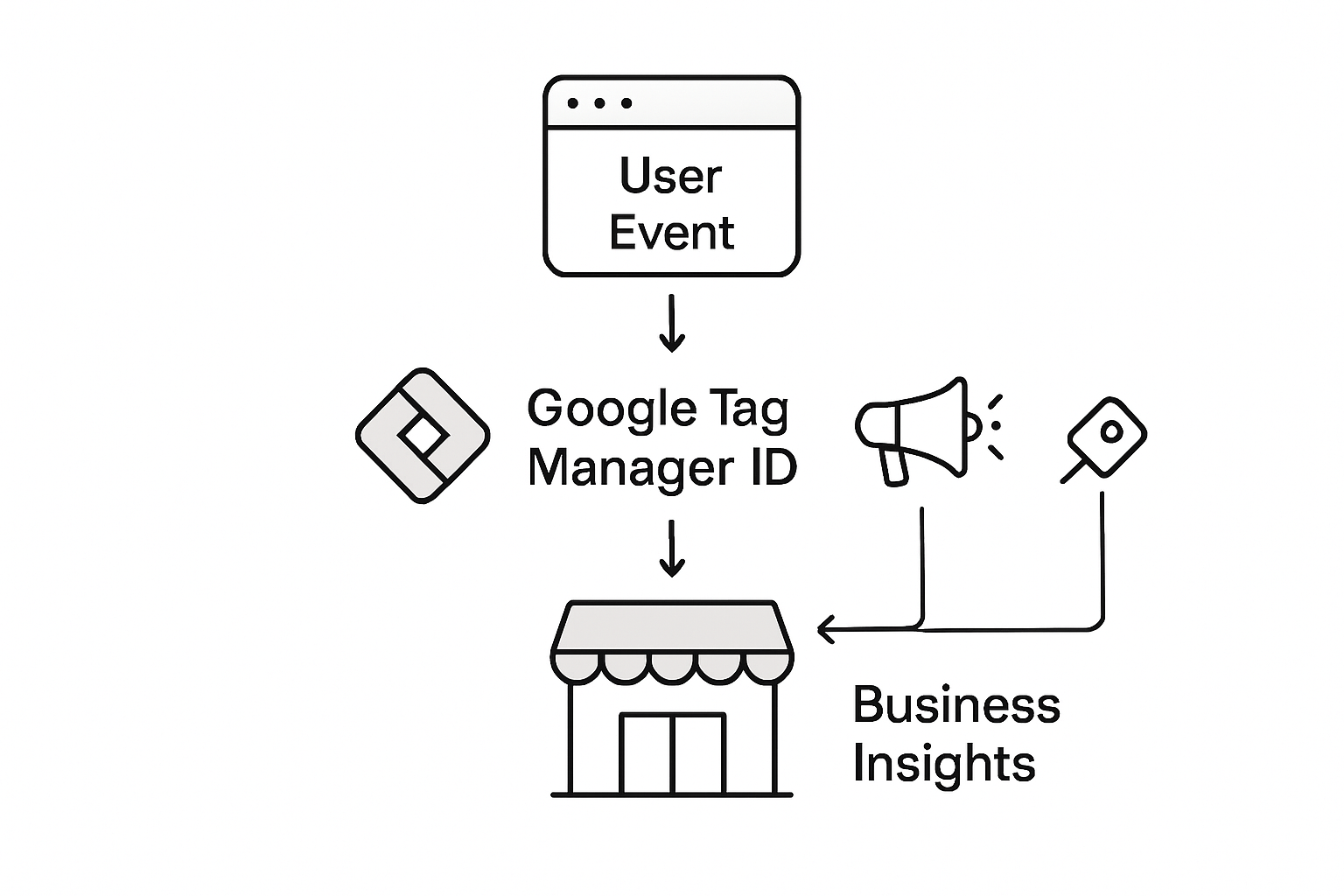
When you create a new container in Google Tag Manager, you are automatically assigned a distinctive ID, which typically starts with “GTM-” followed by a series of letters and numbers. Google Tag Manager enables seamless tag deployment by providing a centralised platform where website owners can configure tracking elements quickly and efficiently. The container ID acts as a crucial link between your website and the Google Tag Manager platform, enabling precise control over how tracking information is collected and processed.
The significance of a Google Tag Manager ID extends beyond simple identification. It serves as a critical component in streamlining digital marketing efforts by allowing professionals to:
- Install multiple tracking tags from different platforms simultaneously
- Manage conversion tracking without extensive coding knowledge
- Reduce website loading times by optimising tag deployment
- Implement advanced tracking configurations with minimal technical intervention
For e-commerce businesses, the Google Tag Manager ID represents more than just a technical identifier - it is a gateway to understanding user behaviour, tracking conversions, and making data-driven marketing decisions. By centralising tag management, businesses can quickly adapt their tracking strategies, test new marketing tools, and gain deeper insights into customer interactions without requiring constant developer support.
How Tag Manager IDs Enable Tracking
Tracker IDs fundamentally transform how e-commerce websites capture and process digital interaction data by providing a sophisticated mechanism for managing complex tracking configurations. Implementing the GTM container code enables comprehensive tracking of user interactions across multiple platforms without requiring intrusive website modifications.
The tracking process begins when a unique Google Tag Manager ID is integrated into a website’s infrastructure. This ID acts as a centralised control point, allowing marketers to deploy and manage various tracking tags seamlessly. Unlike traditional tracking methods that require manual code interventions, the GTM ID facilitates dynamic tag management, enabling businesses to:
- Implement multiple tracking scripts simultaneously
- Configure event tracking without technical expertise
- Monitor user interactions across different digital touchpoints
- Adapt tracking strategies rapidly without developer intervention
For e-commerce platforms, these tracking capabilities are transformative. The Google Tag Manager ID essentially creates a flexible, intelligent tracking ecosystem that captures nuanced user behaviours, conversion pathways, and engagement metrics. Advanced tagging strategies enable businesses to gain granular insights into customer journeys, helping them optimise marketing strategies, improve user experiences, and drive more targeted conversions.

Server-Side Tagging Versus Client-Side
Server-side tagging and client-side tagging represent two fundamentally different approaches to tracking digital interactions, each with distinct advantages and implications for e-commerce businesses. The implementation of server-side tagging offers significant improvements in data processing and website performance, fundamentally transforming how digital tracking mechanisms operate.
In client-side tagging, tracking scripts are executed directly within the user’s web browser, which can create several potential challenges. These include increased page load times, potential privacy concerns, and vulnerability to ad-blockers or browser extensions that might interrupt tracking processes. The browser must download, parse, and execute multiple tracking scripts, which can significantly impact website performance and user experience.
Conversely, server-side tagging shifts the computational burden from the user’s browser to the backend infrastructure. This approach offers multiple critical advantages:
- Reduced website loading times
- Enhanced data privacy and security
- Greater control over tracking mechanisms
- Improved resistance to ad-blocking technologies
- More reliable and consistent data collection
Advanced server-side tagging strategies enable businesses to create more robust, efficient tracking ecosystems. By processing tracking data on the server, companies can maintain more precise control over their analytics, protect sensitive user information, and create more seamless digital experiences that prioritise both performance and privacy.
Integrating Tag Manager IDs with E-commerce
Integrating Google Tag Manager IDs with e-commerce platforms represents a sophisticated approach to capturing comprehensive digital transaction data. Commerce platforms increasingly rely on GTM modules to track enhanced e-commerce events, enabling businesses to gain unprecedented insights into customer behaviours and purchasing patterns.
The integration process involves strategically embedding the unique Tag Manager ID across critical e-commerce touchpoints. This allows businesses to track nuanced user interactions such as product page views, cart additions, purchase completions, and even abandoned transaction sequences. By implementing these tracking mechanisms, companies can create a granular understanding of their sales funnel, identifying potential friction points and optimising conversion strategies.
Key integration strategies for e-commerce platforms include:
- Configuring product view tracking
- Monitoring cart interaction events
- Capturing purchase confirmation details
- Tracking user navigation pathways
- Analysing conversion rate performance
Advanced e-commerce analytics implementation transforms raw transactional data into actionable business intelligence. By leveraging Tag Manager IDs effectively, businesses can create a comprehensive digital ecosystem that not only tracks sales but provides deep insights into customer behaviour, preferences, and potential areas for strategic improvement.
Consent, Data Compliance and GDPR Risks
Navigating the complex landscape of data privacy requires e-commerce businesses to implement robust consent management strategies when utilising Google Tag Manager. Website administrators must carefully ensure tracking scripts comply with stringent data protection regulations, understanding the precise data being collected and its intended usage.
The General Data Protection Regulation (GDPR) introduces significant challenges for digital tracking technologies. Businesses must obtain explicit, informed consent from users before collecting or processing their personal data, which fundamentally transforms how tracking mechanisms operate. This means e-commerce platforms using Google Tag Manager must implement transparent consent workflows that:
- Clearly explain data collection purposes
- Provide granular opt-in/opt-out mechanisms
- Ensure user data can be deleted upon request
- Maintain comprehensive consent records
- Allow users to withdraw consent easily
Advanced data compliance strategies have become essential for mitigating potential legal risks. E-commerce businesses must proactively design their tracking infrastructure to prioritise user privacy, implementing technical safeguards that not only meet regulatory requirements but also build trust with customers by demonstrating a commitment to responsible data management.
Unlock the Full Potential of Your Google Tag Manager ID with Server-Side Tagging
Managing a Google Tag Manager ID effectively is crucial for precise e-commerce tracking, but challenges such as data loss, consent compliance, and slower website performance often hold businesses back. The article highlights the complexity of deploying multiple tracking tags and the risks of traditional client-side tagging, emphasising the need for smarter, more reliable solutions that enhance data accuracy and protect user privacy.
At AdPage, we understand these pain points deeply. Our platform specialises in server-side tagging which not only improves website loading times but also ensures you can monitor 100 percent of your conversions without the usual gaps caused by ad blockers or browser limitations. With built-in consent management to help you stay fully compliant with GDPR and seamless integration with popular e-commerce platforms like Shopify and WooCommerce, AdPage empowers marketing agencies and online marketers to turn raw data into actionable insights.

Take control of your e-commerce tracking by visiting AdPage today. Discover how our comprehensive tools and onboarding services can optimise your Google Tag Manager ID setup, secure customer data, and ultimately maximise your conversion rates. Do not wait to transform your digital marketing efforts with trusted server-side tagging solutions designed to meet the evolving needs of e-commerce businesses.
Frequently Asked Questions
What is a Google Tag Manager ID and why is it important?
A Google Tag Manager ID is a unique identifier that helps manage tracking codes and marketing tags on websites without the need for manual code editing. It streamlines digital marketing efforts, allowing for efficient tag deployment and easier tracking of user behaviour and conversions.
How does the Google Tag Manager ID enable tracking on e-commerce websites?
The Google Tag Manager ID allows for the seamless integration of tracking scripts, enabling businesses to monitor user interactions, track enhanced e-commerce events, and adapt tracking strategies without extensive coding knowledge. This flexibility enhances data collection and marketing insights.
What are the advantages of server-side tagging compared to client-side tagging?
Server-side tagging reduces website loading times, enhances data privacy, and provides greater control over tracking mechanisms. Unlike client-side tagging, which runs scripts in the user’s browser, server-side tagging processes data on the backend, making it more resistant to ad-blockers and improving overall data reliability.
How can e-commerce platforms effectively integrate Google Tag Manager IDs?
E-commerce platforms can integrate Google Tag Manager IDs by embedding them across key touchpoints to track actions such as product views, cart activity, and purchase confirmations. This detailed tracking allows businesses to analyse customer behaviour and optimise their sales strategies.