


.png)

Trying to pinpoint which campaigns actually drive sales can feel complicated for any E-commerce marketing manager. Clear KPI definitions are essential for guiding optimisation and strategic decisions, as shown by recent research from Harvard Business School Online. Choosing precise metrics and robust tracking methods empowers you to transform scattered data into valuable insight, helping you shape real customer journeys and refine your marketing performance.
Table of Contents
- Step 1: Define Relevant KPIs And Desired Outcomes
- Step 2: Establish Robust Conversion Tracking Systems
- Step 3: Implement Server-Side Tagging For Accurate Data
- Step 4: Analyse Results Using Reporting Tools
- Step 5: Verify Measurement Accuracy And Data Compliance
Quick Summary
| Key Message | Explanation |
|---|---|
| 1. Define Clear KPIs | Establish metrics aligned with business goals to measure customer journey effectively. |
| 2. Implement Comprehensive Tracking | Use both client-side and backend methods to capture accurate conversion data from all channels. |
| 3. Utilize Server-Side Tagging | Enhance data privacy and tracking accuracy by adopting server-side tagging solutions. |
| 4. Leverage Advanced Reporting Tools | Transform raw marketing data into actionable insights for better decision-making. |
| 5. Ensure Data Compliance and Quality | Establish rigorous validation processes to maintain data integrity and comply with regulations. |
Step 1: Define relevant KPIs and desired outcomes
Successful e-commerce marketing relies on identifying precise metrics that align with your business objectives. Your goal is to establish clear, measurable performance indicators that track meaningful progress through each stage of the customer journey.
To create effective marketing KPIs, start by understanding the specific stages of customer interaction. These typically include awareness, consideration, and decision stages. Each stage requires distinct metrics that provide actionable insights. For instance, quantifiable marketing measures help evaluate whether your marketing efforts are meeting strategic goals.
Key metrics to consider across different stages include:
-
Awareness Stage Metrics:
- Website traffic volume
- Social media impressions
- Brand search volume
- Content engagement rates
-
Consideration Stage Metrics:
- Social media interactions
- Email open and click-through rates
- Time spent on product pages
- Whitepaper or resource downloads
-
Decision Stage Metrics:
- Conversion rates
- Average order value
- Sales revenue
- Customer acquisition cost
When defining KPIs, ensure they follow the SMART framework - Specific, Measurable, Achievable, Relevant, and Time-bound. This approach provides clear direction and allows for precise tracking of marketing performance.

Here is a summary of how each KPI stage maps to business priorities and strategic impact:
| KPI Stage | Primary Objective | Typical Measurement Frequency | Influence on Strategy |
|---|---|---|---|
| Awareness | Maximise brand visibility | Weekly | Shapes content and ad spend |
| Consideration | Drive qualified leads and interest | Bi-weekly | Informs nurture campaigns |
| Decision | Optimise sales and conversions | Daily | Directs product offers & ROI |
Effective KPIs transform raw data into strategic insights that drive meaningful business decisions.
Pro tip: Regularly review and adjust your KPIs to ensure they continue reflecting your evolving business objectives and market dynamics.
Step 2: Establish robust conversion tracking systems
Converting website visitors into customers requires a sophisticated approach to tracking and understanding user interactions. Your primary objective is to implement a comprehensive system that captures precise conversion data across multiple marketing channels and touchpoints.
To build an effective conversion tracking strategy, you’ll need to integrate both client-side and backend tracking systems. Efficient event instrumentation enables more accurate identification of conversion sources by combining multiple data collection methods. This approach helps you understand exactly which marketing efforts are driving genuine business results.
Key components of a robust conversion tracking system include:
-
Data Collection Channels:
- Website analytics platforms
- Social media tracking pixels
- Email marketing conversion tags
- Customer relationship management (CRM) integrations
-
Tracking Implementation Techniques:
- Server-side event logging
- Cross-platform tracking
- Multi-touch attribution modelling
- Advanced conversion funnel analysis
-
Essential Tracking Parameters:
- Unique customer identifiers
- Traffic source information
- User journey touchpoints
- Conversion value and type
Comprehensive conversion tracking transforms raw data into actionable strategic insights that drive marketing performance.
Pro tip: Regularly audit your tracking systems to ensure data accuracy and compatibility across different marketing platforms and technologies.
Step 3: Implement server-side tagging for accurate data
Sophisticated e-commerce marketing requires precise data collection strategies that go beyond traditional tracking methods. Your mission is to implement server-side tagging to capture more reliable and comprehensive user interaction data across your digital platforms.

Server-side tagging improves data privacy by processing tracking information through organisational servers, effectively addressing critical challenges in modern digital analytics. This approach provides multiple strategic advantages for e-commerce teams seeking robust data collection methods.
Key considerations for implementing server-side tagging include:
-
Technical Infrastructure Requirements:
- Dedicated server environment
- Secure data processing capabilities
- Scalable cloud infrastructure
- Advanced computational resources
-
Data Privacy and Compliance Benefits:
- Enhanced user data protection
- Reduced vulnerability to browser restrictions
- Improved compliance with global data regulations
- Minimised impact of ad blocker technologies
-
Tracking Accuracy Improvements:
- More comprehensive conversion tracking
- Reduced data loss
- Improved attribution modelling
- Consistent cross-platform measurement
Server-side tagging represents a transformative approach to capturing authentic, unfiltered user interaction data across digital platforms.
Pro tip: Invest in robust cloud infrastructure and regularly validate your server-side tracking configurations to maintain optimal data collection integrity.
The table below compares client-side and server-side tracking for e-commerce marketing:
| Tracking Approach | Data Precision | Privacy Compliance | Resilience to Ad Blockers |
|---|---|---|---|
| Client-side | Vulnerable to loss | Often limited | Low |
| Server-side | Highly accurate | Strong data protection | High |
Step 4: Analyse results using reporting tools
Transforming raw marketing data into meaningful insights requires strategic use of advanced reporting tools. Your goal is to convert complex datasets into clear, actionable intelligence that drives informed decision-making across your e-commerce marketing efforts.
KPI-driven reporting systems enable real-time tracking and rapid optimization of marketing campaigns by integrating data governance, automation, and strategic visualization. This approach helps e-commerce teams synthesise large datasets into meaningful strategic insights.
Key strategies for effective reporting tool analysis include:
-
Data Visualization Techniques:
- Interactive dashboard creation
- Comparative performance charts
- Trend analysis graphing
- Segmented performance overlays
-
Reporting Tool Capabilities:
- Real-time data synchronisation
- Customisable metric frameworks
- Cross-platform integration
- Predictive analytics features
-
Insight Generation Approaches:
- Descriptive performance summaries
- Comparative campaign analysis
- Conversion pathway mapping
- Predictive performance modelling
Sophisticated reporting transforms complex data into clear strategic narratives that drive intelligent marketing decisions.
Pro tip: Develop a standardised reporting template that aligns with your specific business objectives to ensure consistent and meaningful data interpretation.
Step 5: Verify measurement accuracy and data compliance
Ensuring the reliability and legal integrity of your marketing data requires a meticulous approach to measurement verification and regulatory adherence. Your primary objective is to establish rigorous validation processes that protect both your data quality and organisational reputation.
Quality assurance standards emphasise transparency, data protection, and methodological precision in maintaining marketing research integrity. These standards are critical for ensuring accurate measurement and compliance across global jurisdictions.
Key strategies for verification and compliance include:
-
Data Validation Techniques:
- Cross-referencing multiple data sources
- Statistical significance testing
- Sample representativeness assessment
- Anomaly and outlier detection
-
Compliance Verification Processes:
- GDPR documentation review
- Consent management audits
- Data anonymisation protocols
- International regulatory alignment
-
Measurement Accuracy Checks:
- Sampling method validation
- Respondent incentive analysis
- Systematic error identification
- Continuous quality assessment
Rigorous data verification transforms raw information into trustworthy insights that drive ethical and strategic decision-making.
Pro tip: Develop an automated compliance dashboard that provides real-time monitoring of data quality and regulatory adherence across your marketing measurement systems.
Unlock Precise Marketing Measurement with AdPage
The challenge of measuring marketing success for e-commerce teams lies in defining clear KPIs, ensuring accurate conversion tracking, and using robust reporting tools to analyse data effectively. If you are striving to implement server-side tagging to enhance data accuracy, comply with GDPR, or want to tackle data loss from traditional analytics, your solution starts here. AdPage offers a powerful platform designed specifically to capture 100% of your conversions and provide deep insights through seamless integration with Shopify, WooCommerce, and Magento.
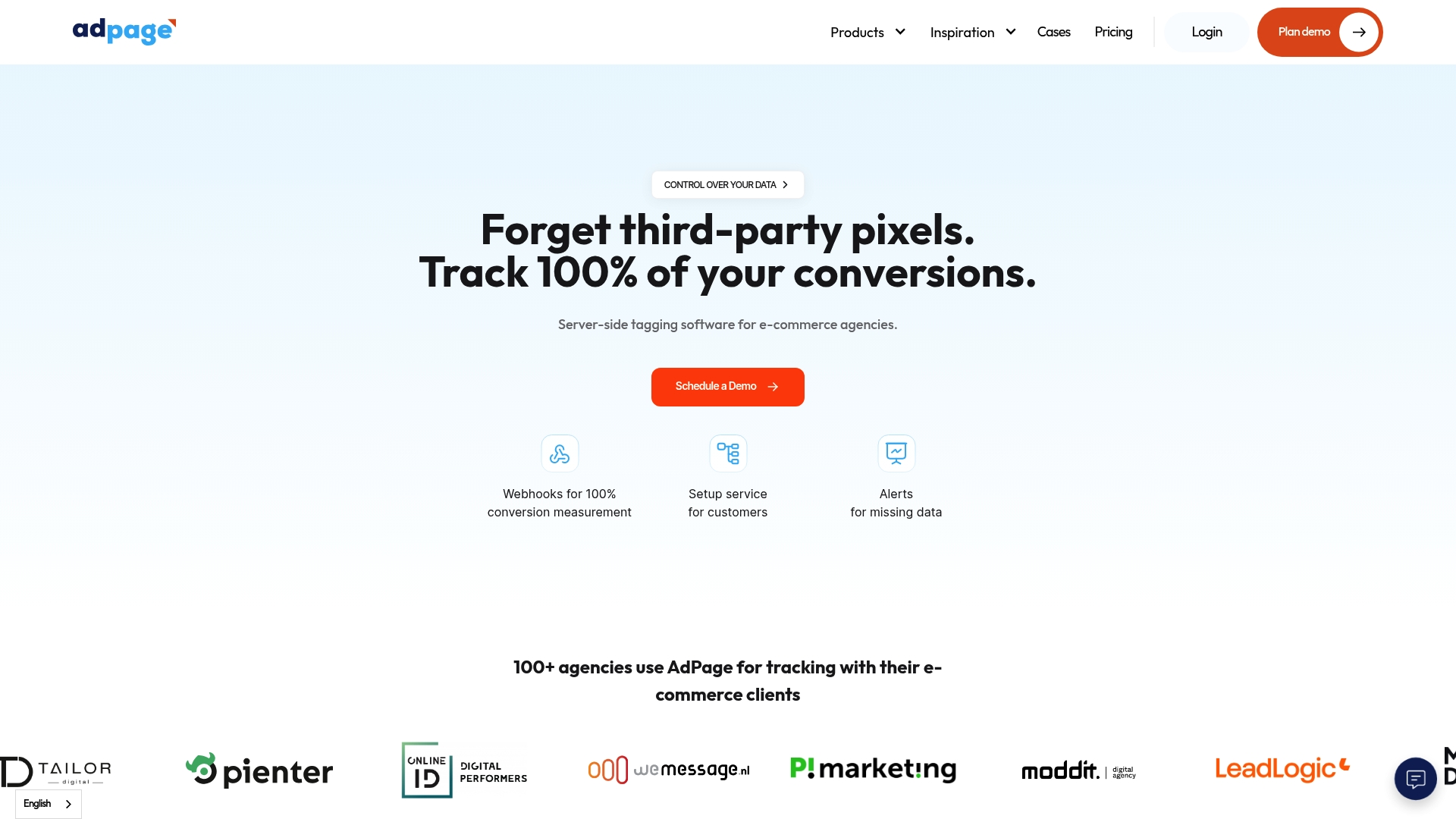
Take control of your marketing data now and elevate your e-commerce strategy with AdPage’s all-in-one tools including consent management, visitor identity services, and real-time reporting dashboards. Explore how AdPage can help you implement server-side tagging and achieve trustworthy data compliance by visiting the official landing page today. Don’t let inaccurate measurement hold back your business – optimise your marketing success with AdPage and unlock the full potential of your campaigns.
Frequently Asked Questions
How do I define relevant KPIs for my e-commerce marketing efforts?
To define relevant Key Performance Indicators (KPIs), identify precise metrics that align with your business objectives at each customer interaction stage: awareness, consideration, and decision. Start by selecting metrics like website traffic volume or conversion rates, and ensure they are specific, measurable, achievable, relevant, and time-bound.
What tools can I use for robust conversion tracking in e-commerce?
You can utilise a combination of website analytics platforms, social media tracking pixels, and customer relationship management systems to establish effective conversion tracking. Implement client-side and backend tracking to capture comprehensive conversion data across all marketing channels.
How can server-side tagging enhance my data accuracy?
Server-side tagging significantly improves data accuracy by processing tracking information through dedicated servers, thus capturing more reliable user interaction data. To enhance your tracking systems, invest in secure cloud infrastructure and validate your configurations regularly.
What are the key strategies for analysing my marketing results effectively?
To analyse your marketing results effectively, use data visualisation techniques such as interactive dashboards and trend analysis graphs. This will help you synthesise large datasets into actionable insights and allow for better-informed decision-making.
How do I ensure measurement accuracy and data compliance in my marketing?
To ensure measurement accuracy and data compliance, implement rigorous validation processes such as cross-referencing data sources and conducting consent management audits. Regularly assess your data handling procedures to maintain consistent quality and adherence to regulations.
How often should I review my marketing KPIs?
You should review your marketing KPIs regularly, ideally every 30 to 60 days, to ensure they reflect your evolving business objectives and market conditions. Regular adjustments will help you stay aligned with your strategic goals and optimise performance.