


.png)

Missing up to 25% of your user data due to browser restrictions and ad blockers means your UX decisions rely on incomplete information. Advanced server-side tracking recaptures lost data, giving you the complete picture needed to optimize user experience and drive conversions. This guide walks you through prerequisites, setup, consent management, data analysis, troubleshooting, and realistic results you can expect in 2026.
Table of Contents
- Prerequisites And What You Need
- Technical Setup Of Server-Side Tracking
- Best Practices For Consent Management
- How To Use Conversion Data To Optimize UX
- Common Mistakes And Troubleshooting In Conversion Tracking
- Alternative Tracking Approaches And Their Tradeoffs
- Expected Results And Outcomes From Advanced Tracking
- Enhance Your Conversion Tracking With AdPage Solutions
- FAQs On Improving User Experience With Advanced Tracking
Key Takeaways
| Point | Details |
|---|---|
| Advanced tracking boosts accuracy | Server-side tagging reduces data loss by over 20%, capturing nearly 100% of conversions for better decision-making. |
| Consent management increases opt-ins | Transparent consent practices can boost user opt-in rates by 30%, improving data quality while maintaining GDPR compliance. |
| Technical setup requires preparation | Platform compatibility, infrastructure readiness, and proper validation are essential for reliable server-side tracking implementation. |
| Data-driven UX testing accelerates results | Complete conversion data enables precise A/B testing and faster identification of high-impact user experience improvements. |
| Common mistakes undermine accuracy | Poor validation and consent mismanagement cause significant tracking failures that mislead optimization efforts. |
Prerequisites and What You Need
Before implementing advanced server-side tracking, confirm your infrastructure and knowledge base meet essential requirements. Platform compatibility is your first checkpoint. Shopify, WooCommerce, and Magento support server-side tagging, but each requires specific integration steps.
Technical readiness goes beyond platform choice. You need access to server environments, tagging container management tools, and the ability to configure DNS settings. Understanding the benefits of server-side tagging helps you appreciate why this technical investment pays dividends in data accuracy.
Privacy compliance cannot be an afterthought. GDPR requires explicit consent for tracking cookies and personal data collection. Prepare documentation of your data processing activities and ensure your consent mechanisms meet legal standards before deploying tracking code.
Infrastructure preparation includes:
- Cloud hosting environment with reliable uptime for your tagging server
- SSL certificates for secure data transmission between client and server
- Adequate server resources to handle traffic spikes without latency
- Backup and monitoring systems to catch configuration errors early
The advantages of server-side tagging justify the setup complexity. You gain control over data flow, reduce reliance on client browsers, and improve page load speeds by reducing client-side JavaScript.
Many e-commerce marketers benefit from onboarding support during initial setup. Review GTM server-side tracking tips to understand configuration nuances before diving in. Having expert guidance reduces trial and error, getting you to accurate data faster.
Technical Setup of Server-Side Tracking
Deploying server-side tagging requires methodical execution across five core steps. Follow this sequence to minimize errors and validate accuracy at each stage.
- Configure your tagging server environment by selecting a cloud provider and deploying the container. Google Cloud Platform, AWS, or Azure all work well.
- Connect your e-commerce platform to the server container by installing the client-side snippet that forwards data to your server endpoint instead of directly to analytics platforms.
- Map data layer variables from your platform to server-side tags, ensuring product details, transaction values, and user identifiers pass through correctly.
- Configure destination tags on the server to forward cleaned data to Google Analytics, Facebook Pixel, and other marketing platforms you use.
- Implement validation checks by comparing server-side data against a test transaction to confirm accuracy before going live.
Server-side tagging reduces data loss by over 20% compared to traditional methods. This improvement stems from bypassing browser restrictions that block or limit client-side scripts.
Integrate consent management during setup, not as an afterthought. Your server container should check consent status before firing marketing tags. This ensures compliance while maintaining tracking continuity for users who grant permission.
Pro Tip: Use preview mode extensively before publishing changes. GTM server containers let you test configurations without affecting live data, catching misconfigurations that would otherwise corrupt your analytics.
Common early errors include incorrect endpoint URLs, missing authentication tokens, and data layer variable name mismatches. Check server-side tagging examples to see proper configurations across different platforms.
For paid advertising, Google Ads server tracking integration ensures conversion data flows accurately without attribution gaps. Server-side conversion tracking improves bid optimization by giving algorithms complete data.
Validation goes beyond initial setup. Schedule weekly checks comparing server-side reported conversions against your e-commerce platform’s order data. Discrepancies above 2% indicate configuration drift requiring immediate investigation. Review the e-commerce conversion tracking guide for comprehensive validation techniques.
Best Practices for Consent Management
GDPR compliance starts with lawful consent collection that respects user autonomy while maximizing opt-in rates. Transparency builds trust, which translates directly to higher consent rates and better data quality.
Key requirements for lawful consent include:
- Clear, plain language explaining what data you collect and why
- Separate, unbundled consent choices for different tracking purposes
- Easy withdrawal mechanisms that honor user preferences immediately
- Documentation proving consent was freely given and informed
Transparency techniques that increase user opt-in by 30% focus on value exchange. Explain how tracking improves user experience through personalized recommendations and faster checkout processes.
Consent management platforms automate legal compliance while optimizing consent flows. Choose a CMP that integrates with your tagging infrastructure, automatically blocking non-consented tags until permission is granted. The consent management checklist covers essential CMP features.
Pro Tip: Test your consent banner on mobile devices where screen space is limited. Unclear or intrusive consent requests on mobile drive higher rejection rates than desktop implementations.
Missing or invalid consent causes significant data gaps. Users who reject tracking disappear from your analytics, creating blind spots in funnel analysis. Respect their choice while working to improve opt-in rates through clearer value propositions.
Ethical data practices extend beyond legal minimums. Only collect data you actually use for business decisions. Excessive data collection without clear purpose erodes user trust and provides little analytical value. Compare top consent management solutions to find platforms aligned with your privacy philosophy.
Regularly audit consent flows to ensure they remain compliant as regulations evolve. GDPR interpretation continues developing through case law, making annual legal reviews essential for ongoing compliance.
How to Use Conversion Data to Optimize UX
Comprehensive conversion data transforms from numbers into actionable UX improvements through systematic analysis and testing. Start by mapping complete conversion funnels to identify where users encounter friction.

With 100% conversion capture, you see every user journey, not just the ones browsers allowed you to track. This complete view reveals bottlenecks invisible in partial data. High drop-off at specific funnel stages signals UX problems requiring immediate attention.
Data-driven optimization strategies include:
- A/B testing checkout flows using accurate conversion attribution to determine winners confidently
- Analyzing device-specific behavior patterns to optimize mobile experiences separately from desktop
- Segmenting users by traffic source to customize landing page experiences based on intent signals
- Tracking micro-conversions like add-to-cart and wishlist actions to understand pre-purchase behavior
Detailed reporting accelerates decision-making by surfacing insights faster. When you trust your data completeness, you act on findings immediately rather than waiting for statistical significance with incomplete samples. Review 2026 tracking essentials for current best practices.
Iterative testing compounds improvements over time. Small UX enhancements validated through accurate conversion tracking accumulate into substantial performance gains. Test one variable at a time to isolate what drives results.
Prioritize high-impact fixes by calculating potential conversion uplift against implementation effort. Changes affecting high-traffic pages or late-stage funnel steps typically deliver the biggest returns. E-commerce analytics dashboards help visualize opportunity size.
Recognize that not all data requires action. Focus on statistically significant patterns rather than chasing every minor fluctuation. Following analytics best practices prevents analysis paralysis while keeping optimization efforts focused on measurable outcomes.
Common Mistakes and Troubleshooting in Conversion Tracking
Poor validation causes significant inaccuracies from day one. 35% of new implementations report data problems from inadequate testing, often discovering issues only after making flawed business decisions based on bad data.
Consent mismanagement creates tracking failures and compliance risks simultaneously. When consent signals fail to reach your tagging server, you either track users illegally or miss data from consenting users. Both scenarios undermine your analytics program.
Relying solely on client-side tagging means accepting up to 25% data loss as normal. This massive gap skews every metric, making optimization efforts less effective and ROI calculations unreliable.
Frequent tracking mistakes include:
- Deploying tags without testing in preview mode first
- Ignoring data layer variable changes after platform updates
- Failing to document custom implementation details for future troubleshooting
- Mixing test and production data during configuration phases
- Neglecting regular validation against source-of-truth transaction records
Misinterpreting analytics causes misguided UX decisions. Understanding statistical significance, sample sizes, and correlation versus causation prevents expensive mistakes. Jumping to conclusions from insufficient data wastes resources on ineffective changes.
| Challenge | Client-Side Impact | Server-Side Impact |
|---|---|---|
| Ad blocker interference | Blocks 20-30% of tracking | Minimal impact, data reaches server |
| Browser privacy features | Deletes cookies within days | Uses server cookies with longer retention |
| Configuration errors | Difficult to debug across browsers | Centralized troubleshooting in one environment |
| Consent management | Complex per-tag logic | Centralized consent checking |
| Page load impact | Slows page with multiple scripts | Reduces client-side JavaScript burden |
Check common tracking mistakes for detailed solutions to frequent implementation problems. Many issues stem from overlooking basic validation steps during rushed deployments.
Alternative Tracking Approaches and Their Tradeoffs
Client-side tagging remains popular for its simplicity but loses up to 25% of user data to browser restrictions. This approach executes JavaScript directly in user browsers, making implementation straightforward but vulnerable to blocking.
Server-side tagging improves accuracy and reduces maintenance downtime by 50% through centralized control. The server acts as an intermediary, receiving data from a lightweight client script and forwarding cleaned data to marketing platforms. This architecture bypasses many tracking limitations.
| Method | Accuracy | Setup Complexity | Maintenance | Ad-Blocker Resistance | GDPR Compliance |
|---|---|---|---|---|---|
| Client-Side Only | 70-75% capture | Low | Medium | Poor | Moderate |
| Server-Side | 95-100% capture | High | Low | Excellent | Strong |
| Hybrid Approach | 85-90% capture | Medium | Medium | Good | Strong |
Key tradeoffs to consider:
- Privacy compliance favors server-side implementations with centralized consent checking
- Technical resources required for server-side setup may exceed small team capabilities initially
- Ongoing costs include server hosting, though savings from reduced data loss often offset expenses
- Migration effort from existing client-side implementations requires careful planning to avoid data gaps
Ad blockers affect client-side tracking severely by blocking scripts before they execute. Server-side endpoints look like first-party domains to browsers, avoiding detection. This fundamental architectural difference explains the substantial accuracy improvement.
Choosing the right approach depends on your platform capabilities, technical resources, and required data precision. Server-side tagging platforms vary in features and complexity. High-volume stores benefit most from server-side investment due to the scale of data loss they prevent.
Smaller operations might start with hybrid approaches, using server-side for critical conversion tracking while maintaining some client-side tags for less sensitive data. Review server-side tagging advantages to understand when the investment justifies the implementation effort for your specific situation.
Expected Results and Outcomes from Advanced Tracking
Realistic benchmarks help you measure success and identify when implementation needs adjustment. Most e-commerce businesses implementing advanced tracking see measurable improvements within the first quarter.
Conversion attribution increases 15-25% within three months as previously invisible transactions appear in your analytics. This jump reflects recaptured data rather than actual business growth, but accurate attribution enables genuine growth through better optimization.
Data capture approaches 100% with proper server-side implementation, compared to 70-75% with client-side only. This completeness eliminates blind spots that previously skewed funnel analysis and segment comparisons.
Measurable outcomes include:
- User consent opt-in rates improving by 30% through transparent, well-designed consent flows
- Tracking inaccuracies dropping below 5% when validated against platform transaction records
- Decision-making speed increasing 40% as teams trust data quality enough to act on findings immediately
- A/B test durations shortening due to reaching statistical significance faster with complete sample data
| Metric | Before Advanced Tracking | After 3 Months | After 6 Months |
|---|---|---|---|
| Conversion capture rate | 70-75% | 95-98% | 98-100% |
| Data accuracy | 80-85% | 93-95% | 96-98% |
| User consent opt-in | 40-50% | 60-70% | 65-75% |
| Attribution confidence | Low | High | Very High |
| Optimization cycle time | 4-6 weeks | 2-3 weeks | 1-2 weeks |
These improvements compound over time as better data enables better decisions, which improve user experience, which drives more conversions. The e-commerce metrics guide explains how to track and interpret these outcomes systematically.
Timelines vary by implementation quality and starting point. Stores with severely broken tracking see faster relative improvements, while those with decent client-side setups notice more gradual gains. Regardless of starting position, comprehensive tracking provides the foundation for systematic, data-driven optimization.
Enhance Your Conversion Tracking with AdPage Solutions
Achieving these results requires robust tools designed specifically for e-commerce tracking challenges. AdPage offers comprehensive solutions that seamlessly integrate with Shopify, WooCommerce, and Magento, bringing advanced server-side tagging and consent management to marketers without requiring deep technical expertise.
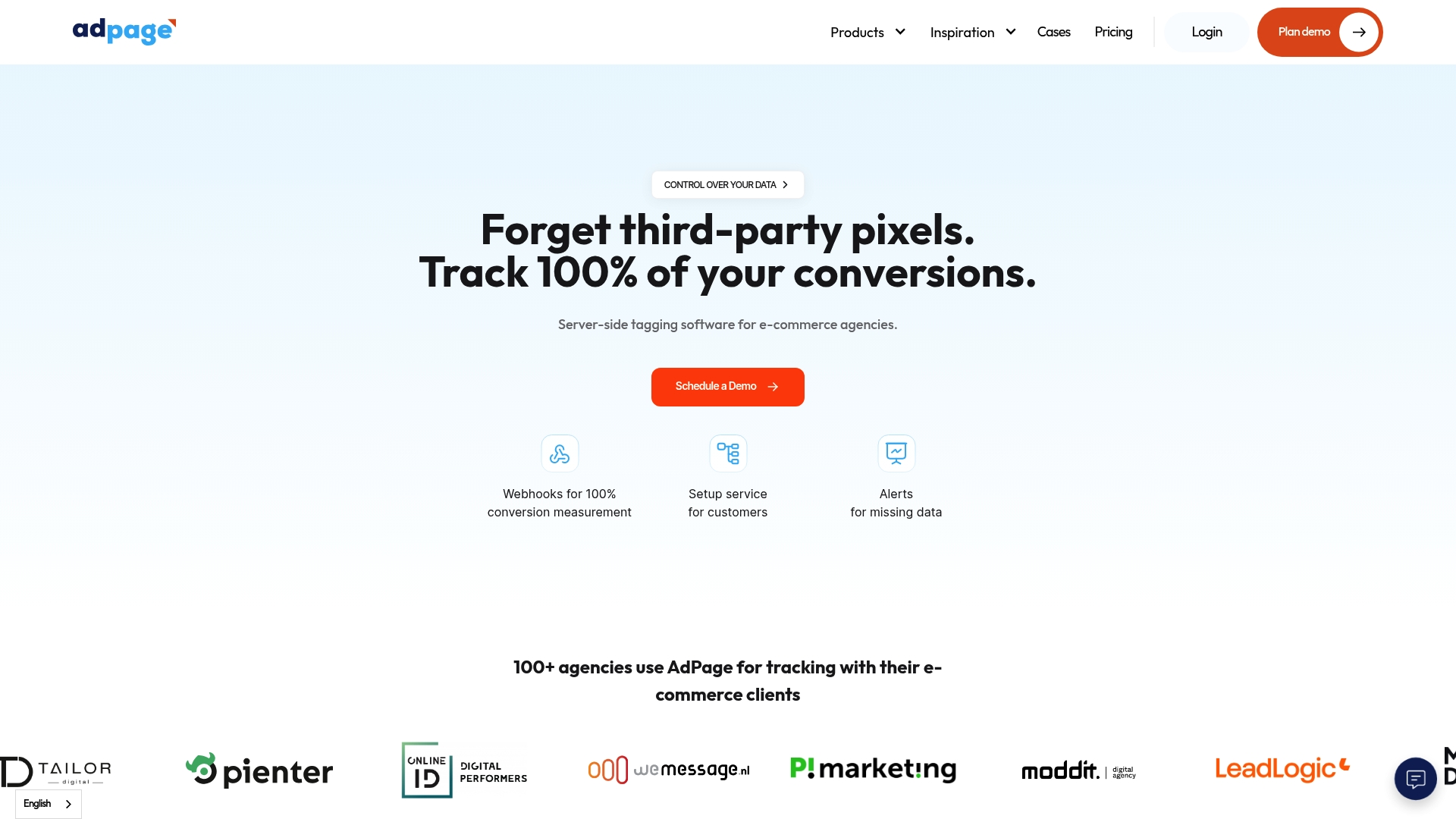
Our platform combines the accuracy improvements detailed in this conversion tracking guide with user-friendly implementation. Capture 100% of conversions while maintaining full GDPR compliance through integrated consent management.
Expert onboarding support means you avoid common setup pitfalls that plague DIY implementations. We handle technical complexities while you focus on using complete, accurate data to optimize user experience and drive growth. Explore server-side tagging examples showing how AdPage clients achieve measurable improvements in conversion tracking accuracy and marketing ROI.
FAQs on Improving User Experience with Advanced Tracking
What are the main benefits of server-side tagging for e-commerce UX?
Server-side tagging captures up to 25% more user data by bypassing browser restrictions and ad blockers. This complete view of user behavior enables precise identification of UX friction points and accurate measurement of optimization efforts.
How quickly can I expect to see conversion improvements after setup?
Most implementations show 15-25% attribution improvements within three months as previously lost data appears in analytics. Actual conversion rate improvements from UX optimizations based on better data typically manifest within 4-6 months of iterative testing.
Is consent management really necessary for data accuracy and compliance?
Absolutely. Proper consent management is legally required under GDPR and can increase opt-in rates by 30% through transparent practices. Without it, you risk both compliance violations and significant data gaps from improperly handled consent signals.
Can small stores implement server-side tagging without a tech team?
Yes, though support platforms like AdPage simplify the process significantly. Basic implementations require moderate technical skills for initial setup, but ongoing management becomes straightforward once properly configured. Onboarding assistance reduces complexity and accelerates time to accurate data.
How does server-side tagging handle ad blockers compared to other methods?
Server-side tracking routes data through first-party domains that ad blockers cannot distinguish from essential website functionality. Client-side tracking uses third-party scripts that blockers explicitly target, explaining why server-side achieves 95-100% data capture versus 70-75% for client-side approaches.