


.png)

Tracking every step your customers take is no small feat when ad blockers and changing privacy rules threaten to hide the truth behind your numbers. For agencies and freelancers handling multiple E-commerce clients, even tiny gaps in tracking can mean reporting errors, missed opportunities, and lost trust. By focusing on accurate tagging as your foundation, you can transform scattered browser events into actionable insights and deliver results that prove your worth every single time.
Table of Contents
- Tagging Fundamentals For Ecommerce Tracking
- Types Of Tags And Server-Side Approaches
- How Tags Enhance Data Accuracy
- Integrating Tags With E-commerce Platforms
- Risks, Compliance, And Common Mistakes
Key Takeaways
| Point | Details |
|---|---|
| Importance of Tagging | Effective tagging is essential for accurate e-commerce conversion tracking and understanding client ROI. |
| Client-Side vs Server-Side Tags | Server-side tagging mitigates data loss from ad blockers and privacy regulations, enhancing data integrity. |
| Integration Strategies | Tailor tagging implementation to each client’s platform to ensure accurate data flow and avoid discrepancies. |
| Compliance Necessity | Ensuring compliance with privacy regulations is crucial to prevent legal repercussions and maintain client trust. |
Tagging Fundamentals for Ecommerce Tracking
Tags are the foundation of accurate conversion tracking. They capture user actions—purchases, form submissions, page views—and send that data to your analytics and marketing platforms. Without proper tagging, you’re essentially flying blind.
Think of tags as digital breadcrumbs. Each user interaction leaves a trail, and your tags collect those breadcrumbs to paint a complete picture of customer behaviour. For e-commerce agencies managing multiple clients, precise tagging directly impacts whether you can prove ROI or admit data loss.
What Tags Actually Do
Tags perform three critical functions in e-commerce tracking:
- Capture events: Record specific user actions like viewing a product, adding items to the cart, or completing a purchase.
- Send data: Transmit that information to your analytics platforms, ad networks, and CRM systems in real time.
- Enable attribution: Allow you to connect conversions back to specific marketing channels, campaigns, and touchpoints.
Without tags, a purchase happens in your Shopify store, but Google Analytics has no way to know about it. Your client’s conversion rate stays unknown. Their ad spend ROI becomes impossible to calculate.
Proper tagging transforms disconnected data points into actionable insights that drive client growth and justify your service fees.
The Problem Most Agencies Face
You already know this: traditional client-side tagging loses data. Ad blockers, privacy regulations, and browser restrictions strip away 20–40% of your conversion events before they even reach your platform. Your client’s dashboard shows incomplete numbers. You’re making decisions on incomplete data.
This is where server-side tagging approaches change the game. By processing user data on your server rather than in the browser, you capture conversions that would otherwise disappear.
Key Tag Types for E-Commerce
Most e-commerce tracking relies on four tag categories:
- Page view tags: Fire when a user lands on any page, creating the baseline for your analytics.
- Event tags: Trigger on specific actions—product clicks, cart additions, wishlist saves.
- Conversion tags: Fire only when a purchase or other high-value action completes.
- Audience tags: Segment users for retargeting and lookalike campaigns.
Each tag type serves a purpose. Page view tags build your funnel. Event tags show where users drop off. Conversion tags prove sales. Audience tags feed your ad platforms with qualified prospects.
Implementation Reality for Agencies
Your clients use different platforms. One runs Shopify. Another uses WooCommerce or Magento. A third built a custom solution. Implementing tags across these systems requires consistency without rigidity.
This is why understanding tagging implementation strategies upfront saves countless hours troubleshooting later. You’ll know exactly what data flows where, catch configuration errors before they propagate across ten client accounts, and explain tracking setups confidently to clients who don’t understand the technical details.
The Real Cost of Poor Tagging
A misconfigured tag means lost conversion data. Lost data means inaccurate ROI calculations. Inaccurate ROI means your client questions your value. One agency I worked with spent three months optimising a campaign based on incomplete conversion data, only to discover 30% of sales weren’t being tracked. They’d been optimising blindly.
Proper tagging prevents this. It ensures every conversion, every user interaction, every revenue pound flows into your reporting system cleanly and completely.
Pro tip: Start every new client engagement by auditing their existing tags—document what’s firing, what’s missing, and what’s misconfigured. This audit becomes your baseline for measuring improvement and protecting your reputation.
Types of Tags and Server-Side Approaches
Not all tags work the same way. Understanding the difference between tag types and deployment methods determines whether your tracking survives privacy updates or collapses when browsers tighten restrictions.
Client-side tags—the traditional approach—live in the browser. They fire JavaScript code directly on a user’s device, sending data to your analytics platform. Server-side tags work differently. They process user interactions on your server, then relay that data downstream. This distinction matters enormously for agencies managing conversion accuracy.
Client-Side Tags: The Vulnerable Foundation
Client-side tags are what you’ve probably used for years. Google Analytics, Facebook Pixel, conversion tracking pixels—they all work by executing code in the visitor’s browser.
The problem is obvious: browsers now block them.
- Ad blockers strip out tracking scripts entirely.
- Privacy regulations (GDPR, CCPA) restrict data collection without explicit consent.
- Safari and Firefox block third-party cookies by default.
- iOS updates make cross-domain tracking nearly impossible.
Result? Your client loses 20–40% of conversion data before it even reaches your platform. You’re flying blind whilst claiming to optimise campaigns.
Client-side tags give you a false sense of accuracy because you never see what’s missing—the data that never arrived in the first place.
Server-Side Tags: Capturing What Client-Side Misses
Server-side tagging shifts the responsibility to your infrastructure. When a user completes a purchase on your client’s site, the browser sends raw event data to your server. Your server then forwards that data to Google Analytics, Facebook, or any other platform you need.

This approach captures conversions that client-side tags would lose entirely. The advantages of server-side tagging for marketers include data recovery, consent compliance, and protection against future browser restrictions.
Server-side tags also give you control. You can validate data before sending it. You can enrich events with customer information from your database. You can prevent bad data from polluting your analytics.
To help clarify the differences between client-side and server-side tagging, here’s a concise comparison table:
| Aspect | Client-Side Tagging | Server-Side Tagging |
|---|---|---|
| Data Collection | Executed in browser | Processed on server |
| Data Loss Risk | High—ad blockers and privacy | Lower—bypasses browser barriers |
| Compliance Handling | Limited control | Greater ability to enforce |
| Data Enrichment | Minimal | Enrich with internal data |
| Maintenance | Frequent manual updates | Centralised configuration |
Core Server-Side Tag Types
Server-side implementations typically involve three tag categories:
- First-party server tags: Your server collects data directly from user browsers and forwards it to analytics platforms.
- Webhook tags: External services send data to your server, which then processes and distributes it.
- API-based tags: Your server queries external APIs to retrieve or send data on behalf of users.
Each method serves different use cases. First-party tags capture website behaviour. Webhook tags integrate CRM or email platform data. API tags sync with advertising networks for audience updates.
Practical Deployment Considerations
Moving to server-side tagging requires infrastructure. You’ll need somewhere to process requests, validate events, and forward data reliably. This is why many agencies adopt managed server-side tagging solutions rather than building from scratch.
Comparing available solutions helps you choose the right balance of control, cost, and complexity. When evaluating options, server-side tagging tool comparisons can guide your decision based on your client base’s needs.
The right solution depends on your technical resources, client requirements, and growth plans. Some agencies start simple and scale up. Others invest upfront in robust infrastructure from day one.
Pro tip: Start with one client’s conversion tracking and build your server-side infrastructure there. Once you’ve proven the reliability and seen the data recovery gains, scaling to your full client roster becomes straightforward.
How Tags Enhance Data Accuracy
Accurate data is the difference between making informed decisions and guessing. Tags are the mechanism that transforms raw user behaviour into trustworthy metrics. Without proper tagging, your conversion reports are fiction.
Here’s the reality: most e-commerce tracking loses data systematically. Browser blockers, privacy settings, and analytics delays create gaps in your data. Tags—when implemented correctly—close those gaps and reveal the complete picture of customer behaviour.
The Data Loss Problem
You already see this in your client accounts. Your Shopify store records 500 daily purchases. Google Analytics reports 320. The gap isn’t an error. It’s data loss from tracking failures.
Where does the missing data go?
- Browser extensions block pixels before they fire.
- Network delays cause timeout failures on slow connections.
- Page navigation interrupts tag execution before data transmits.
- Cookie restrictions prevent cross-domain tracking.
- Bot traffic pollutes your metrics with fake conversions.
Each source of data loss compounds. Your client optimises campaigns based on incomplete numbers. They allocate budget to channels showing false performance. ROI calculations become meaningless.
Incomplete data feels real because your analytics dashboard looks professional—you just don’t see what’s missing.
How Tags Close the Gaps
Proper tags capture events closer to the source. Instead of relying on a browser to fire a pixel when the page loads (which might never happen), tags can capture data directly from your server where network failures don’t exist.
This approach transforms your data accuracy dramatically. You capture conversions that pixel-based tracking misses entirely. You eliminate bot traffic by validating transactions server-side. You record customer data that persists regardless of browser settings.
The benefits of server-side tagging for e-commerce include recovery of lost conversions, reduced tracking lag, and immunity to future browser privacy changes.
Validation and Data Cleaning
More data means nothing if the data is wrong. Tags enable validation at the point of collection. You can verify that a purchase is legitimate before sending it to your analytics platform.
Validation prevents several common accuracy problems:
- Duplicate transactions: Catch when the same purchase is recorded twice.
- Incomplete events: Reject conversions missing critical fields like order value.
- Fraudulent activity: Flag suspicious patterns before they pollute your reports.
- Bot-generated events: Filter out automated traffic mimicking real conversions.
Validation happens on your infrastructure, not in the browser. This means your reports reflect actual customer behaviour, not noise.
Attribution Accuracy Through Complete Event Tracking
Attribution requires complete data. You can’t attribute a conversion to a Google Ads campaign if you never recorded the conversion in the first place. Proper tagging ensures every touchpoint is captured.
When tags fire reliably, you can build accurate attribution models. You see which campaigns drive early awareness. You identify which channels close deals. You measure influence across the entire customer journey.
This level of accuracy only works when your tagging foundation is solid. One missing conversion breaks your attribution model for that entire user journey.
Pro tip: Set up a daily reconciliation process comparing your e-commerce platform’s transaction records against your analytics reports. The gap you find is your data loss baseline—this motivates prioritising tagging improvements and proves ROI once you implement fixes.
Integrating Tags with E-commerce Platforms
Your clients’ e-commerce platforms—Shopify, WooCommerce, Magento—already track transactions internally. But that data stays locked in their systems. Tags are the bridge connecting your client’s store to Google Analytics, Facebook, and every other platform where you measure performance.
Integrating tags with e-commerce platforms means connecting these systems so data flows automatically. Done correctly, you get complete visibility into customer behaviour and sales performance. Done poorly, you get conflicting numbers and impossible reconciliations.
Platform-Specific Integration Challenges
Each e-commerce platform has different native capabilities and limitations. Shopify has built-in analytics but limited customisation. WooCommerce offers flexibility but requires manual configuration. Magento provides power but demands technical expertise.
Your integration strategy depends on your client’s platform:
- Shopify: Use built-in integrations first, then supplement with custom tags for enhanced tracking.
- WooCommerce: Implement tags via plugins or custom code, ensuring compatibility with existing extensions.
- Magento: Leverage enterprise-grade tagging solutions designed for complex multi-store setups.
- Custom platforms: Build tags directly from transaction data using webhooks and APIs.
One-size-fits-all approaches fail. Your Shopify client needs different implementation than your WooCommerce client.
The following table summarises integration considerations for popular e-commerce platforms:
| Platform | Integration Complexity | Customisation Potential | Common Challenge |
|---|---|---|---|
| Shopify | Simple built-in setups | Moderate | Limited flexibility |
| WooCommerce | Plugin or code required | High | Extension conflicts |
| Magento | Technical expertise needed | Very high | Multi-store management |
| Custom | Bespoke development | Unlimited | API and webhook reliability |
Platform-specific integration isn’t extra complexity—it’s the only way to capture data accurately across your diverse client base.
Capturing the Right E-commerce Events
E-commerce tracking requires capturing specific events at critical moments. GA4 ecommerce tracking via structured setup defines which events matter: product impressions, product clicks, detail views, add-to-cart actions, and purchases.
Each event tells a different story. Product impressions show reach. Clicks show interest. Add-to-cart shows strong intent. Purchases show conversion. Missing any of these events means blind spots in your analysis.
Proper integration ensures all events fire reliably, regardless of network conditions or user behaviour.
Data Flow Architecture
Understand where data moves through your system. Your client’s checkout process generates a transaction. That transaction flows through your tagging infrastructure—either client-side, server-side, or hybrid—and lands in your analytics platform.

Breaks anywhere in this chain mean lost data. A misconfigured tag on the order confirmation page means no purchase events. A timeout during payment processing means incomplete transaction records. Unclear variable naming means you can’t separate refunded orders from completed ones.
Mapping this flow upfront prevents integration disasters later.
Configuration Without Mistakes
E-commerce tagging configuration is where small errors become big problems. A tag firing twice doubles your revenue. A tag firing zero times hides sales. Variables mapped incorrectly mix up products and categories.
Configuration best practices prevent these errors:
- Document every tag’s purpose before implementation.
- Test on staging environments before touching production.
- Verify data in real time during the first week of deployment.
- Create manual reconciliation processes comparing platform data to analytics.
- Set up alerts if daily transaction counts drop unexpectedly.
These steps take time upfront but save countless hours troubleshooting later.
Pro tip: Before integrating tags with any new client platform, run a week-long parallel tracking test—collect data through both the old and new tagging methods simultaneously. This proves your new setup captures the same transaction volume before you deactivate the old system.
Risks, Compliance, and Common Mistakes
Proper tagging isn’t just a technical problem—it’s a legal one. Collecting customer data without consent violates privacy laws. Misconfiguring tags causes financial losses. Poor implementation creates liability exposure that extends beyond your agency to your clients.
Understanding these risks prevents costly mistakes that damage client relationships and your reputation.
The Compliance Reality
GDPR, CCPA, and emerging privacy legislation fundamentally changed what you can track. You cannot simply fire tags at every user and hope consent happens later. Data collection requires explicit consent upfront, documented proof of consent, and the ability to delete customer data on request.
Non-compliance carries real penalties. GDPR fines reach 4% of annual turnover. State-level CCPA violations cost £2,500 per violation. One misconfigured tag collecting data from UK residents without consent could cost your client thousands.
This is why data compliance in marketing matters beyond theory—it’s your legal obligation and your client’s protection.
Compliance isn’t a box to tick; it’s the foundation preventing legal disaster for you and your clients.
Common Tagging Mistakes
Most agencies repeat the same errors across clients. Understanding common tracking mistakes helps you avoid them before they happen.
The most dangerous mistakes include:
- Firing tags before consent: Collecting data before users accept your privacy policy.
- Tracking without transparency: Not informing users what data you collect or why.
- Mixing first-party and third-party data: Creating cross-domain tracking without proper consent mechanisms.
- Failing to respect opt-out requests: Not honouring user preferences to stop tracking.
- Storing unencrypted customer data: Exposing sensitive information to security breaches.
Each mistake creates liability. One unencrypted database breach can trigger notification requirements, lawsuits, and regulatory investigations.
Consent Management Complexity
Consent is the foundation of compliant tagging. Users must understand what they’re consenting to, actively agree (not just passively receive), and retain the right to withdraw consent anytime.
This requires infrastructure. You need consent management tools that record exactly when and what users agreed to. You need the ability to fire different tags based on consent status. You need logging that proves compliance during audits.
Half-hearted consent approaches create legal exposure. A cookie banner that doesn’t actually control tag firing is worse than no banner—it suggests you’re hiding non-compliance.
Risk Assessment Checklist
Before deploying tags for any client, audit your setup:
- Verify explicit consent is collected and documented before any data fires.
- Test tag firing logic to confirm tags only fire when consent exists.
- Audit data storage to ensure sensitive information is encrypted.
- Document your process to prove compliance during regulatory reviews.
- Set up audit trails logging exactly when tags fire and for whom.
- Review retention policies ensuring you delete data after legal holds expire.
These steps take time but cost far less than regulatory fines.
Pro tip: Add a quarterly compliance audit to your client retainer—review consent mechanisms, test tag firing logic, and verify data deletion requests are processed. This proactive approach prevents compliance creep where non-compliant practices accumulate over time without anyone noticing until regulators do.
Unlock Accurate Conversion Tracking with AdPage
If you have encountered challenges like data loss from ad blockers, privacy regulations, and browser restrictions that the article highlights, you are not alone. These hurdles disrupt client-side tagging, causing incomplete conversion tracking and unreliable ROI measurements. The solution lies in adopting server-side tagging and consent management strategies that secure every purchase, form submission, and user event without compromise.
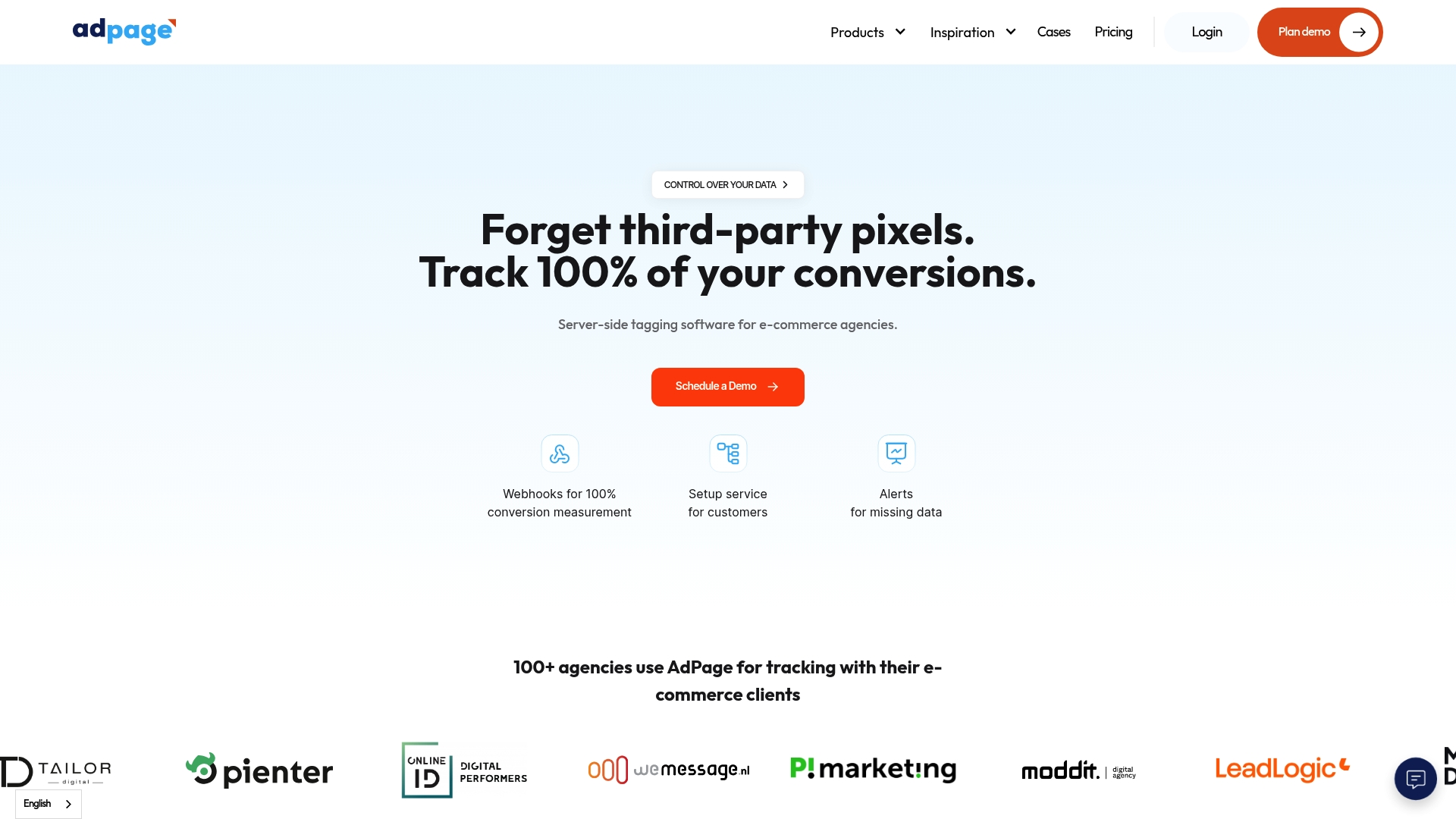
Take control today by exploring how AdPage empowers e-commerce agencies and marketers with advanced server-side tagging solutions, designed to recover lost data and boost conversion accuracy across platforms like Shopify, WooCommerce, and Magento. Act now to protect your client relationships and deliver undeniable value through precise, compliant tracking. Discover more about optimising your tagging infrastructure with our server-side tagging approaches and start your seamless integration journey at AdPage platform.
Frequently Asked Questions
What are tags in ecommerce tracking?
Tags are code snippets that track user interactions on e-commerce platforms, capturing events such as purchases, form submissions, and page views to send data to analytics and marketing platforms. They are essential for accurate conversion tracking and understanding customer behaviour.
How do client-side and server-side tagging differ?
Client-side tags operate in the user’s browser and can suffer from data loss due to ad blockers and privacy regulations. In contrast, server-side tags process data on your server, reducing data loss and enhancing control over data accuracy and compliance.
What are the key types of tags used in e-commerce?
The key types of e-commerce tags include page view tags, event tags, conversion tags, and audience tags. Each serves a specific purpose, such as tracking general site visits, specific user actions, high-value conversions, and segmenting users for retargeting.
Why is proper tagging important for conversion tracking?
Proper tagging is crucial because it ensures that all conversion data is accurately captured and reported. Misconfigured tags can lead to lost data, which in turn affects return on investment calculations and overall campaign optimisation.