


.png)

Tracking conversions can quickly become frustrating when browser restrictions and ad blockers disrupt your data flow. For American e-commerce marketers handling diverse platforms, getting complete and reliable analytics is essential. Advanced server-side tracking transforms how you measure and optimise by shifting event collection to a controlled environment, offering more robust and precise insights. This resource guides you through server-side tracking infrastructure setup and integration, designed for those ready to overcome client-side limitations and lead data-driven campaigns.
Table of Contents
- Step 1: Set Up Server-Side Tracking Infrastructure
- Step 2: Integrate AdPage Tools With Your E-Commerce Platform
- Step 3: Configure User Consent And Data Compliance Settings
- Step 4: Monitor And Verify 100 Percent Conversion Tracking
- Step 5: Optimise Reporting And Analysis For Marketing Results
Quick Summary
| Key Insight | Explanation |
|---|---|
| 1. Establish server-side tracking | Use a dedicated server for enhanced data accuracy and control over marketing analytics. |
| 2. Integrate AdPage tools effectively | Ensure compatibility and secure data flow for seamless conversion tracking across platforms. |
| 3. Implement robust consent management | Create clear consent mechanisms to uphold user privacy and legal compliance. |
| 4. Monitor conversion tracking diligently | Regularly verify tracking mechanisms to maintain data integrity and uncover insights. |
| 5. Optimise marketing reporting regularly | Use advanced analytics to transform data into actionable insights for improved performance. |
Step 1: Set up server-side tracking infrastructure
Setting up server-side tracking infrastructure transforms how your e-commerce marketing tracks conversion data by shifting measurement from client-side to a controlled server environment. This approach provides more robust and accurate analytics across multiple digital platforms.
To establish your server-side tracking, you’ll need to configure a dedicated tagging server using cloud platforms like Google Cloud Platform. The process involves several critical steps to ensure comprehensive data collection and privacy compliance:
- Identify your primary tracking platforms
- Select a cloud hosting environment
- Configure API endpoints for event collection
- Map custom tracking domains
- Establish secure data transmission protocols
The core advantage of server-side tagging approaches involves reducing reliance on client-side browsers and mitigating potential data loss from ad blockers or browser restrictions. By centralising event tracking through a backend infrastructure, you create a more reliable data collection mechanism that transcends individual application limitations.
Here’s a summary of how client-side and server-side tracking methods differ for e-commerce platforms:
| Aspect | Client-Side Tracking | Server-Side Tracking |
|---|---|---|
| Data Accuracy | Prone to losses from blockers | Reliable, less data loss |
| Privacy Compliance | Harder to enforce | Easier granular control |
| Scalability | Limited by browser rules | Scalable across platforms |
| Maintenance Effort | Frequent manual updates | Centralised updates possible |
| Integration Flexibility | Restricted by front-end scripts | Back-end integration is versatile |
Server-side tracking provides a unified approach to collecting user interaction data across web, mobile, and desktop platforms.
To implement this effectively, collaborate closely with your development team to design a tracking plan that supports comprehensive data collection. This involves mapping event triggers, establishing consistent data schemas, and ensuring seamless integration across different digital touchpoints.
Insider Tip: Configure multiple backup data collection methods to ensure redundancy and minimise potential tracking interruptions.
Step 2: Integrate AdPage tools with your e-commerce platform
Integrating AdPage tools with your e-commerce platform enables seamless conversion tracking and advanced analytics across your digital sales infrastructure. This critical step transforms how you monitor and optimise your marketing performance by creating a direct connection between your tracking tools and existing platform.
The integration process typically involves several key stages that ensure smooth data transmission and compatibility:
- Verify platform compatibility
- Review API documentation
- Generate unique API credentials
- Configure webhook endpoints
- Test data transmission connections
Most modern e-commerce platforms support straightforward platform integrations through native connectors or flexible API frameworks. You’ll want to focus on establishing secure, reliable communication channels that allow real-time data synchronisation between your tracking infrastructure and sales platforms.
Successful integration requires careful mapping of data points and consistent event tracking protocols.
To maximise your implementation, work closely with your technical team to ensure all tracking scripts are properly embedded and that data flows correctly between systems. Pay special attention to permissions, security protocols, and potential data transformation requirements during the integration process.

Insider Tip: Always create a staging environment for testing integrations before deploying to your live production system to prevent potential tracking disruptions.
Step 3: Configure user consent and data compliance settings
Configuring user consent and data compliance settings is a critical step in establishing transparent and legally compliant conversion tracking for your e-commerce platform. This process ensures you’re collecting and managing user data responsibly while maintaining the integrity of your marketing analytics.
Key elements of effective consent management include:
- Create clear consent mechanisms
- Define granular consent options
- Implement consent logging
- Enable user consent withdrawal
- Establish data retention policies
By leveraging server-side consent management techniques, you can selectively process and transmit user data based on explicit consent status. This approach allows you to maintain precise control over data sharing while respecting user privacy preferences.
Robust consent management protects both user rights and your organisation’s legal compliance.
To implement comprehensive compliance settings, collaborate with your legal and technical teams to design consent frameworks that align with regulations like GDPR and CCPA. This involves developing transparent consent interfaces, documenting consent interactions, and creating secure mechanisms for data handling and user preferences.
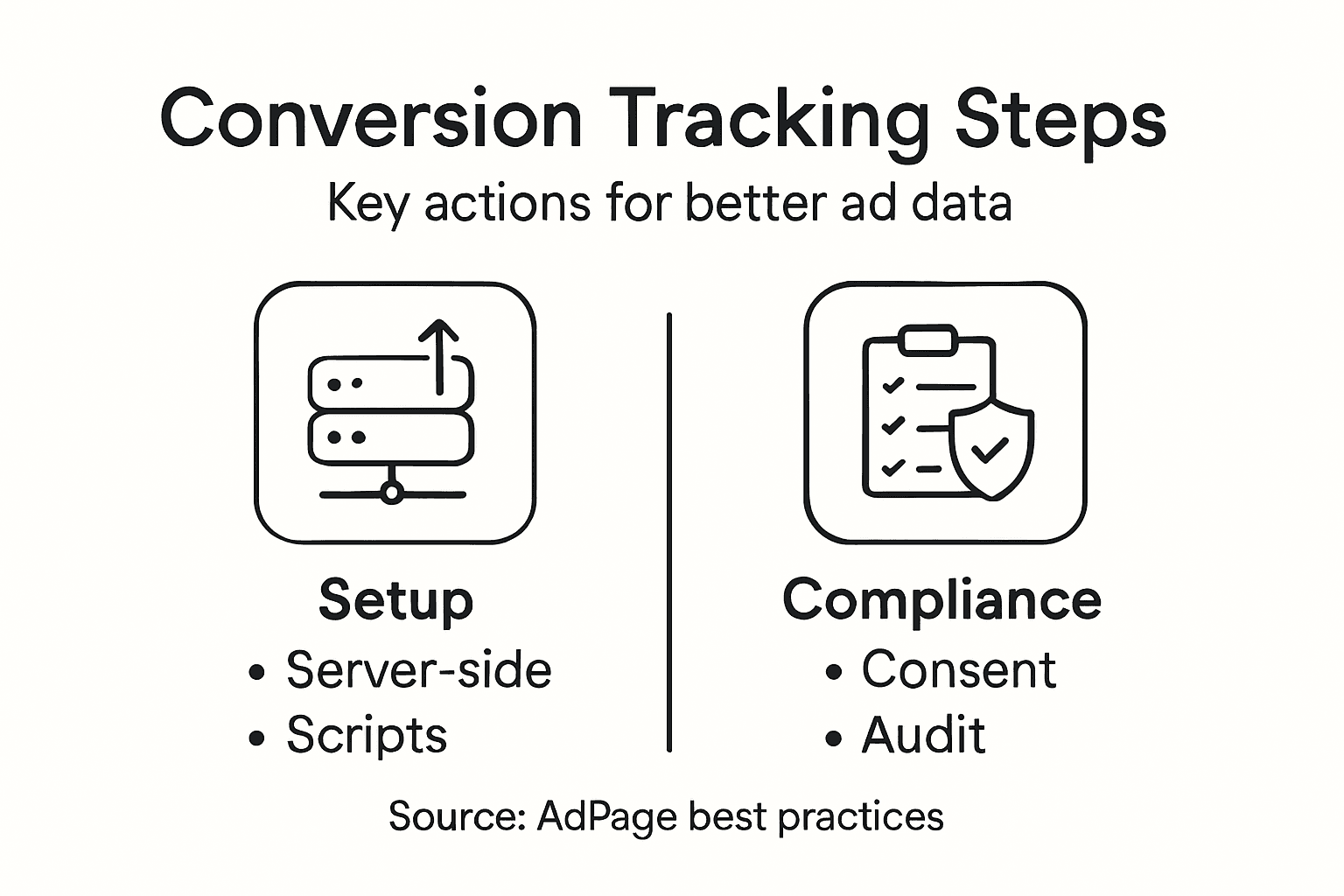
Below is a quick reference explaining the business value of key compliance elements for user consent management:
| Consent Element | Business Value | Implementation Priority |
|---|---|---|
| Clear Consent Mechanisms | Builds user trust, reduces complaints | High |
| Granular Consent Options | Enables personalisation, increases opt-ins | Medium |
| Consent Logging | Provides audit trail for compliance | High |
| Consent Withdrawal | Improves user control, avoids penalties | High |
| Data Retention Policies | Ensures regulatory alignment | Medium |
Insider Tip: Regularly audit and update your consent management processes to ensure ongoing alignment with evolving privacy regulations and user expectations.
Step 4: Monitor and verify 100 percent conversion tracking
Achieving comprehensive conversion tracking requires a systematic approach to monitoring and verifying every single interaction across your digital marketing ecosystem. This critical step ensures you capture accurate data that drives meaningful insights and strategic decision-making for your e-commerce performance.
Key components of robust conversion tracking verification include:
- Configure comprehensive event tracking
- Implement multi-layer monitoring protocols
- Set up redundant tracking mechanisms
- Create detailed conversion dashboards
- Establish real-time alert systems
Server-side tracking diagnostics are essential for preventing data loss caused by ad blockers, browser restrictions, or technical interruptions. By proactively monitoring all event parameters, you can maintain a precise record of user interactions and transaction details.
Consistent monitoring transforms raw data into actionable marketing intelligence.
To guarantee maximum tracking accuracy, develop a comprehensive verification strategy that includes regular audits, cross-platform data reconciliation, and continuous performance assessments. This approach helps identify and resolve potential tracking discrepancies before they impact your marketing analytics.
Insider Tip: Implement automated tracking validation scripts that run daily checks and generate comprehensive reports to ensure ongoing data integrity and completeness.
Step 5: Optimise reporting and analysis for marketing results
Optimising your marketing reporting and analysis transforms raw data into strategic insights that drive business growth. By leveraging advanced analytics techniques, you can uncover deeper understanding of campaign performance and customer behaviour.
Key strategies for effective marketing analysis include:
- Create comprehensive performance dashboards
- Segment data by campaign parameters
- Implement advanced conversion attribution models
- Track multi-channel interaction paths
- Visualise complex performance metrics
Server-side tracking enhances marketing analysis by providing more accurate and complete data collection mechanisms. This approach enables deeper insights into user behaviour while overcoming traditional tracking limitations imposed by privacy restrictions and ad blockers.
Precise data analysis transforms marketing from guesswork into strategic decision-making.
To maximise your reporting effectiveness, develop a holistic approach that combines quantitative metrics with qualitative insights. This involves creating dynamic reporting frameworks that adapt to changing marketing landscapes and provide actionable intelligence for continuous improvement.
Insider Tip: Rotate your analysis perspectives quarterly to prevent data interpretation bias and maintain a fresh, objective view of your marketing performance.
Boost Your Conversion Tracking Accuracy with AdPage Solutions
The article highlights common challenges such as data loss from ad blockers, browser restrictions and difficulties in maintaining comprehensive consent management while striving for accurate conversion data. These pain points can leave marketers frustrated with incomplete insights and lost revenue opportunities. By embracing server-side tagging and centralised tracking infrastructures, you gain reliable data collection across multiple platforms and full visibility into your users’ journey.
AdPage is designed exactly for businesses seeking to overcome these hurdles. Our platform specialises in advanced server-side tagging that minimises data loss, ensures compliance with GDPR through sophisticated consent management and monitors 100 percent of your conversions. Seamlessly integrating with popular e-commerce platforms such as Shopify or WooCommerce, our tools empower marketing agencies and online marketers with precise, trustworthy analytics.
Ready to transform your conversion tracking and create unbeatable marketing strategies?

Discover how AdPage can optimise your tracking systems and maximise your marketing ROI. Don’t let fragmented data hold your business back. Visit our platform now and start capturing every valuable interaction today.
Frequently Asked Questions
How can I set up server-side tracking for enhanced conversion data accuracy?
To set up server-side tracking, configure a dedicated tagging server using a cloud platform. Ensure you identify primary tracking platforms and establish secure data transmission protocols to maintain data integrity.
What are the benefits of server-side tracking over client-side tracking?
Server-side tracking reduces reliance on client-side browsers, leading to fewer data losses from ad blockers or browser restrictions. This means you can expect more reliable and accurate data from your marketing efforts.
How do I integrate AdPage tools with my e-commerce platform?
Integrate AdPage tools by verifying platform compatibility and configuring API endpoints for event collection. This will ensure seamless data transmission and help you monitor conversion tracking effectively.
What steps should I take to ensure user consent and data compliance settings are configured correctly?
Create clear consent mechanisms and implement granular options for users. Collaborate with your team to establish data retention policies and enable users to withdraw their consent easily, ensuring compliance with legislation.
How can I monitor and verify 100 percent conversion tracking?
To achieve thorough conversion tracking, implement comprehensive event tracking and establish real-time alert systems. Regularly audit your tracking mechanisms and set up redundant processes to prevent data loss due to any issues.